The Future of Higher Education Under Generative AI: A Professor's Growing Unease
May 25, 2026 - 19:31

Conversations about generative AI in higher education tend to follow a few predictable patterns. There is the panel discussion where someone from a teaching center assures everyone that these tools are just another calculator. That comparison really bothers me. There is the training session that opens with a slide listing opportunities and challenges, featuring some tool that was "vibe coded." There is the meeting with a senior manager whose enthusiasm for AI literacy grows in inverse proportion to their ability to define it. And then there is the corridor conversation, the one that ends with a friend half-laughing but clearly dying inside, saying they no longer know what their job is.
I find the corridor conversations more honest than the panels. But none of them match the scale of what is happening to the work we do.
I work in higher education as a lecturer who specializes in how computers interact with text and language. I understand how large language models like ChatGPT work. And I am deeply worried that I do not know what my profession will look like in five years. The more I think about generative AI, the less sure I am of what to teach my students come September.
Writing is the most obvious problem. Writing is not just output. In most disciplines, it is the main instrument through which thinking happens. Writing paragraphs is the actual process by which an argument takes shape. It is how we realize our ideas are less complete than we first thought. Reading someone else's writing means learning what they thought hard enough to notice. That slow, grinding labor of producing and absorbing prose has always been the central pedagogical engine of education. We are now living through a moment when that engine can be replaced or very convincingly mimicked by software.
It also troubles me that many people in academia seem fine with this. I am not going to judge anyone who is confident they have figured out their coursework in the age of generative AI. But anyone who genuinely believes they have figured out responsible or ethical AI use in the classroom should publish their practices in a peer-reviewed journal for the rest of us. Anyone who thinks generative AI cannot do what they teach is either out of touch or a few years away from feeling what I feel now. These tools and how students use them will only get better and will come for all disciplines.
I am being sent AI-generated work that is not fit for undergraduate presentation. I have a new rule: if you send me AI slop, I just ignore it.
My response has been to go back to invigilated handwritten exams. But there is defeatism in that. A student who can produce a coherent essay in two hours under invigilation is being measured on retrieval, not on sustained inquiry. Oral assessment disadvantages non-native speakers, students with anxiety disorders, students with various neurodivergences, and myself included, as I hate public speaking. None of this means we should not adapt our assessment methods. But we need to accept that every adaptation has a cost, that the cost falls unequally, and that our current pedagogical vocabulary is not always equipped to name these costs.
I am okay with being told I am overly pessimistic. But I am no longer willing to pretend that the people offering confident roadmaps should not have their authority challenged. My LinkedIn is now full of consultants with frameworks, vendors with platforms, and fellow educators whose enthusiasm I respect but whose certainty I cannot share. The willingness to say plainly that you do not yet know what to do is becoming a minor scholarly virtue.
There is probably a farther shore. The history of new technologies in education is not uniformly catastrophic. But I cannot point to a time when my profession has faced anything worse than this. The way to the shore is not by pretending we can already see it when we cannot. Right now, all I can see is that the practices we built higher education on, reading, writing, the slow and difficult stuff, are being replaced by something extractive and passive.
MORE NEWS

October 8, 2026 - 00:04
Virginia doubles ‘distinguished’ schools as state accountability results show major gainsVirginia has nearly doubled the number of schools earning its top accountability rating, with 44 percent of campuses now designated as distinguished. That marks a 21 percent jump in performance...

October 7, 2026 - 00:30
Connecticut Should Reject the Federal Scholarship Tax CreditThe U.S. Treasury has released guidance on Trump`s Federal Scholarship Tax Credit, and the picture it paints for public schools and students is bleak. The program, described by critics as the...
October 6, 2026 - 02:41
Jason Woods Takes on Undergraduate Recruitment Role at Maryville UniversityMaryville University has appointed Jason Woods as its new Associate Vice President for Undergraduate Recruitment. Woods steps into the position with a strong background in enrollment management and...
October 5, 2026 - 12:53
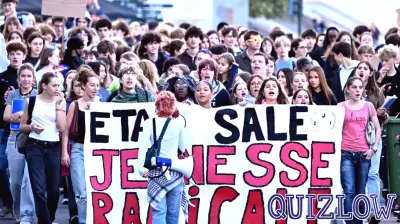
Tensions Rise in Liege as Student Protests Lead to Arrests and Weapon FindsProtests in the Belgian city of Liege continued this week as students marched against proposed changes to the national education system. Authorities reported ten arrests during the demonstrations,...