How Policy Can Help Make Schools More Inclusive for LGBTQ+ Students
14 April 2026
Let’s be honest: school can be tough for anyone. But when you're LGBTQ+ in a world that still struggles with acceptance, it can feel like you're stuck playing a video game where all the levels are on hard mode. Classrooms become minefields of bias, restrooms sources of anxiety, and teachers? Sometimes they just don’t know how to help—or worse, they ignore the problem altogether.
That’s where policy steps in.
Policies are more than just boring documents buried in a school administrator’s file cabinet. When written with intention and care, policies become powerful tools—like a set of blueprints that help build an environment where every student, regardless of their gender identity or sexual orientation, feels seen, safe, and supported.
So, how exactly can policy transform schools into inclusive spaces for LGBTQ+ students? Let’s dig in.
Why LGBTQ+ Students Need Stronger Support in Schools
Before we talk about policies, we need to understand the current landscape. LGBTQ+ students still face significant barriers in educational settings.Think about it: studies consistently show that LGBTQ+ youth are more likely to experience bullying, harassment, and psychological distress. According to The Trevor Project, over 70% of LGBTQ+ youth report feeling unsafe at school because of their sexual orientation or gender identity.
The result? Higher rates of absenteeism, lower academic performance, and tragically, increased risk for depression and suicide.
But it doesn’t have to be this way.
Schools can be places of growth and joy for everyone—but only if policies actively promote inclusion, respect, and belonging. That’s not just a nice idea; it’s a necessity.
What Does an Inclusive School Look Like?
Imagine walking into a school where every hallway, poster, curriculum, and staff member sends the message: “You belong here.” That’s what inclusion looks like.But inclusion isn’t accidental. It’s built—deliberately—through policy.
Inclusive schools:
- Respect pronouns and chosen names
- Teach LGBTQ+ history and contributions
- Have gender-neutral bathrooms
- Train staff to prevent bullying and discrimination
- Encourage Gay-Straight Alliances (GSAs)
- Offer mental health resources tailored to LGBTQ+ needs
Now, let’s look at how policies can put these into action.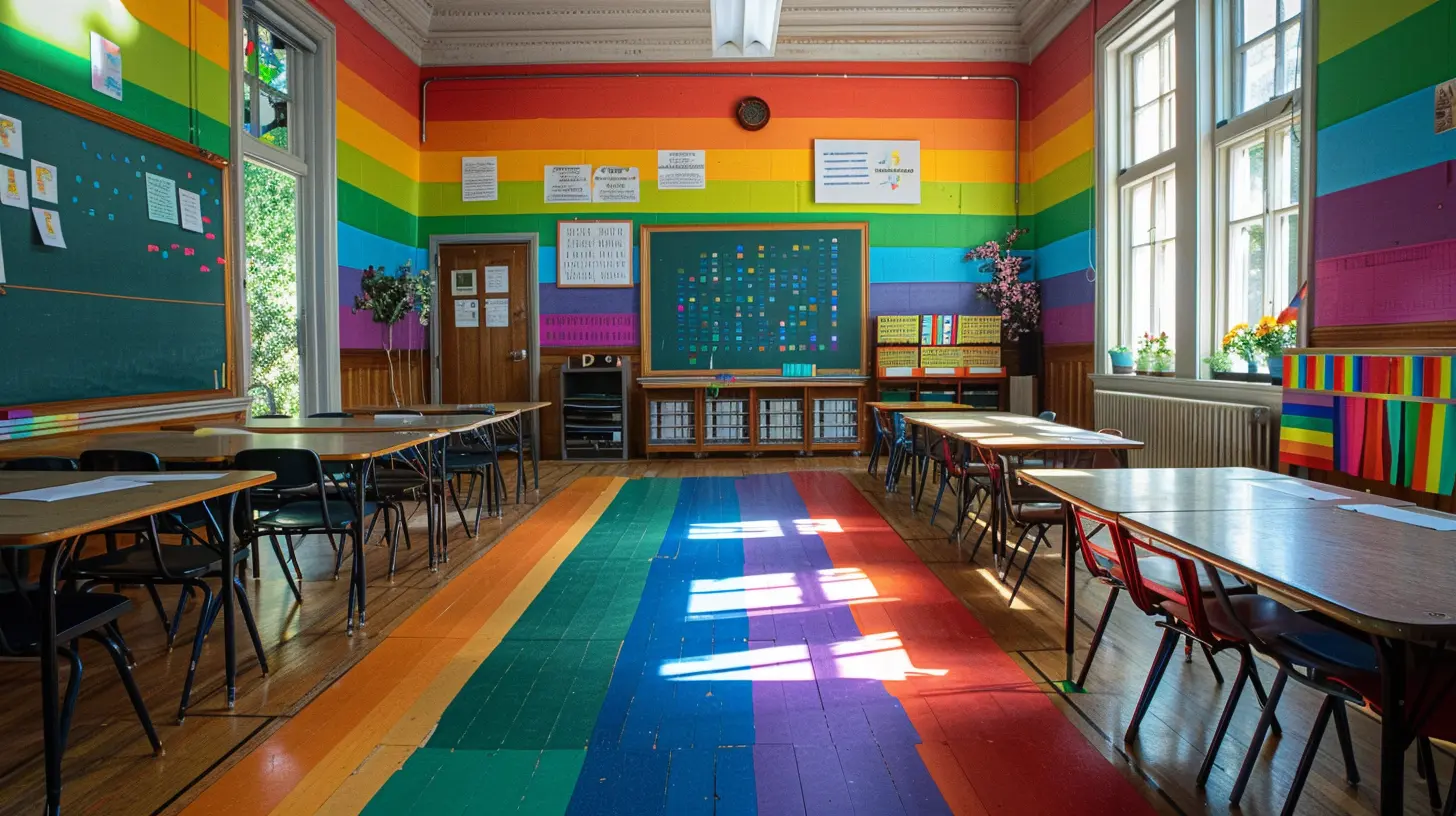
1. Anti-Discrimination Policies: Drawing the Line in the Sand
The first step? Making it crystal clear that discrimination isn’t tolerated—period.Too often, existing school policies lump “sexual orientation” or “gender identity” under vague terms like “other reasons.” That’s not enough.
Effective policies should explicitly state that harassment or exclusion based on a student’s LGBTQ+ identity is prohibited. These policies act like the rulebook—when everyone knows the rules, it’s easier to play fair.
But here’s the catch: policies only work if they’re enforced. That means training staff, educating students, and holding violators accountable. Think of it like setting a curfew—useless unless someone’s checking the clock.
2. Gender-Affirming Policies: Making Identity Visible
Misgendering a student or refusing to use their chosen name might seem minor to some, but to the student? It’s a daily reminder that they don’t belong.That’s why policies around names, pronouns, and gender presentation are crucial.
A strong gender-affirming policy includes:
- Respect for chosen names and pronouns in all school records and interactions
- Freedom to dress in alignment with gender identity
- Support for transitioning students, including mental health resources
These policies don’t just protect trans and non-binary students—they validate them. And validation? It’s like sunlight for self-esteem.
3. Inclusive Curriculum: Teaching Beyond the Binary
Let’s get real—if LGBTQ+ students never see themselves in textbooks, it's like being erased from history. What message does that send?Curriculum policies should mandate the inclusion of LGBTQ+ people, events, and topics across subjects—not just in health class.
Imagine a literature class discussing queer authors like James Baldwin or a history lesson on the Stonewall Riots. That kind of representation tells LGBTQ+ students: “You matter. Your stories matter.”
And the bonus? It educates everyone, creating empathy and reducing ignorance-driven hate.
4. Safe Spaces and GSAs: Building Community
Another way policy can drive inclusion is by formally supporting GSAs (Gender and Sexuality Alliances) and other safe spaces on campus.These student-run groups provide a sense of belonging and advocacy. But without policy protection, they can face resistance from administration or community members.
A school policy might include:
- Official recognition and support for GSAs
- Protection from censorship or disbandment
- Access to meeting spaces and resources
Think of GSAs as beacons in the storm—places where LGBTQ+ students can just breathe.
5. Bathroom and Locker Room Access: Tackling the Tough Conversations
This one’s tricky—but it’s essential.For many trans and non-binary students, using the restroom can be terrifying. That’s not an exaggeration—it’s a daily stressor that cisgender students rarely think about.
Policies need to guarantee access to facilities that align with a student’s gender identity and/or offer gender-neutral options for those who prefer them.
And no, this doesn’t create chaos. It creates dignity. Everyone deserves to use the restroom without fear.
6. Educator Training: Empowering the Adults in the Room
Even the most well-meaning teacher can mess up if they’re not informed.That’s why professional development policies are key. These should require regular training on:
- LGBTQ+ terminology and identities
- How to handle bullying and harassment
- How to support transitioning students
- Legal rights and responsibilities
When educators are equipped, they become allies. And trust me—LGBTQ+ students notice who their allies are. Sometimes, knowing just one teacher has your back can change everything.
7. Mental Health Support: More than Just a Counselor’s Office
Policies should ensure mental health services are inclusive and responsive to LGBTQ+ needs.This might include:
- Hiring trained LGBTQ+ affirming counselors
- Covering topics like identity, coming out, and family rejection
- Offering group therapy sessions or peer support
Let’s be real: navigating adolescence is hard enough. Doing it while questioning your identity takes a toll. Having accessible mental health resources is like handing students a flashlight in a dark tunnel.
8. Family & Community Engagement: Bringing Everyone to the Table
Policies shouldn’t just focus on the students—they need to involve families too, even when those conversations are uncomfortable.This could include:
- Hosting LGBTQ+ awareness events
- Providing resources for families
- Addressing parental concerns with empathy, not judgment
When schools engage with families and communities, they don’t just build support—they build bridges.
The Role of Lawmakers and School Boards
None of this happens in a vacuum.Local, state, and federal laws play a huge role in shaping how inclusive school policies can be. For example, Title IX interpretations, state mandates, and school board decisions can either protect or harm LGBTQ+ students.
Advocacy matters.
Parents, students, and educators must speak up at school board meetings, vote for inclusive leaders, and support legislation that upholds the dignity of all students.
Because in the end, a school's inclusivity is only as strong as the policies that support it—and the people who fight for them.
The Big Picture: Why Inclusive Policies Benefit Everyone
Here’s the thing: inclusive policies might focus on LGBTQ+ students, but the ripple effects help everybody.When schools champion diversity, they foster empathy. When kids learn about different identities, they grow into compassionate adults. And when students feel safe and seen, guess what happens? They thrive—academically, socially, and emotionally.
So while writing policies might sound dull, crafting them with heart and purpose can transform entire school cultures.
It’s like planting seeds—you might not see the full bloom right away, but the roots are growing deeper with every inclusive choice you make.
Final Thoughts: It’s Time to Write a New Chapter
We’ve come a long way, but there’s still work to do. LGBTQ+ students deserve more than tolerance—they deserve celebration. They deserve school environments where they can speak up, show up, and be unapologetically themselves.Policies aren’t just paperwork—they’re promises. Promises that everyone gets to show up fully, safely, and proudly.
So whether you're a teacher, parent, or student reading this—ask yourself: how are your school’s policies shaping the story of inclusion?
And more importantly... what chapter comes next?
all images in this post were generated using AI tools
Category:
Education PolicyAuthor:

Monica O`Neal
Discussion
rate this article
2 comments
Seraphis Sullivan
Inclusion starts with understanding and compassion. By implementing thoughtful policies, we can create safe and welcoming environments for LGBTQ+ students. Every step toward inclusivity not only empowers these students but enriches our entire school community. Let's champion equality and celebrate diversity together!
April 29, 2026 at 10:15 AM
Monica O`Neal
Absolutely. Thoughtful policies are essential for fostering understanding and compassion. When we create safe spaces, we not only empower LGBTQ+ students but also strengthen our entire community. Let's keep pushing for equality and celebrate our diversity.
Rune Valentine
Thank you for highlighting the importance of inclusive policies for LGBTQ+ students. Your insights remind us that creating safe and supportive school environments is essential for fostering diversity and enriching the educational experience for all.
April 22, 2026 at 3:37 AM
Monica O`Neal
I appreciate your feedback. It's vital that we prioritize safety and support for LGBTQ+ students to enhance everyone's educational journey.