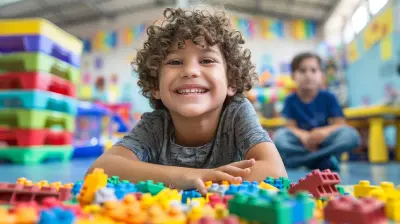
The Growing Importance of Soft Skills in K–12 Education by 2026
4 May 2026
Let me ask you something. When you think back to your own school days, what do you actually remember? Is it the quadratic formula you crammed for but never used again? Or is it that one teacher who taught you how to listen, how to work with others, or how to bounce back after failing a test?
If you're like most people, the soft stuff sticks. And by 2026, K-12 education is going to lean hard into that truth. We're talking about a major shift. Schools are starting to realize that teaching kids how to code or memorize state capitals isn't enough. The world is changing fast, and the skills that machines can't replicate-empathy, communication, adaptability-are becoming the real currency of success.
So, why is this happening now? And what does it mean for your child, your classroom, or your school district? Let's break it down.
Why Soft Skills Matter More Than Ever
Think of hard skills like the engine of a car. They get you from point A to point B. But soft skills? Those are the steering wheel, the brakes, and the GPS. Without them, you're just a fast-moving pile of metal with no direction.By 2026, the job market will look nothing like it did in 2010. Automation and AI are swallowing up routine tasks. A kid who can memorize facts but can't collaborate or think critically will struggle. A kid who can lead a team, resolve conflict, and adapt to change? That kid will thrive.
The data backs this up. Surveys from major employers consistently rank communication, teamwork, and problem-solving above technical skills. Companies are tired of hiring brilliant people who can't talk to each other. Schools are finally listening.
The Shift Happening Right Now
You might think this is just another trend that'll fade. But look closer. States are rewriting curriculum standards. Schools are adding "social-emotional learning" (SEL) blocks to daily schedules. Even standardized tests are starting to include questions about collaboration and decision-making.By 2026, expect this to be the norm, not the exception. Teachers will spend as much time on "how to work with others" as they do on "how to solve for x." And that's a good thing.
What Social-Emotional Learning Actually Looks Like
SEL isn't just a buzzword. It's a structured approach to teaching kids how to manage emotions, set goals, show empathy, and build relationships. In a K-12 setting, this might mean:- Morning meetings where kids check in with each other and practice active listening.
- Group projects that require negotiation and compromise, not just dividing up tasks.
- Reflection journals where students write about their feelings and challenges.
- Conflict resolution workshops that teach kids how to disagree without tearing each other down.
It sounds simple, but it's powerful. Kids who learn these skills early carry them for life.
The Role of Technology in Soft Skills Training
Wait, isn't tech the enemy of soft skills? Not exactly. By 2026, we'll see smart tools that actually help kids build these abilities. Virtual reality simulations can put students in tricky social scenarios. AI chatbots can role-play conversations. Gamified apps can teach empathy through storytelling.The key is balance. Screens aren't going away, but we can use them to teach human skills. Think of it like training wheels for emotional intelligence. You still need real human interaction, but tech can prep kids for those moments.
How Teachers Are Adapting
Let's be real. Teachers are already stretched thin. Adding soft skills to the curriculum sounds great, but who has the time? The answer is: teachers are finding creative ways to weave it in.Instead of a separate "soft skills class," they're embedding these lessons into existing subjects. A history lesson becomes a debate about perspective. A science lab becomes a team challenge. A book report becomes a discussion about character motivation.
By 2026, expect teacher training programs to include modules on facilitating group dynamics and managing emotional safety in the classroom. It's not just about content anymore. It's about connection.
The Hardest Part for Teachers
Here's the honest truth. Soft skills are hard to grade. You can't give a multiple-choice test on empathy. So schools are moving toward portfolio-based assessments, peer evaluations, and self-reflection rubrics. It's messy, but it's better than ignoring the elephant in the room.Teachers are also learning to model these skills. You can't teach patience if you're yelling. You can't teach collaboration if you're micromanaging. Kids watch everything. By 2026, we'll see more professional development focused on emotional intelligence for educators themselves.
Why Parents Should Care
If you're a parent, you might be thinking, "Great, another thing my kid has to learn." But here's the thing: soft skills are the ultimate life hack.Your kid might ace math, but if they can't network, they'll struggle to find a job. They might win a spelling bee, but if they can't handle rejection, they'll crumble in their first performance review. Schools are finally admitting what parents have known all along: character matters.
By 2026, you'll see more parent-teacher conferences that discuss "how your child works with others" instead of just "how your child performs on tests." That's a win for everyone.
The Economic Argument
Let's talk money. Employers are desperate for workers who can communicate, lead, and adapt. These skills are in short supply. That means higher salaries for people who have them. A kid who graduates with strong soft skills has a massive advantage.Think of it like compound interest for your career. The earlier you invest in these skills, the bigger the payoff later. Schools that ignore this are doing their students a disservice. By 2026, we'll see business partnerships with schools to create soft skills programs. Companies know it's cheaper to train a kid early than to retrain an adult later.
The Danger of Going Too Far
I'm not saying we should ditch algebra for feelings. That's silly. Hard skills still matter. You can't be a doctor without knowing anatomy. You can't be an engineer without math.But the pendulum has swung too far toward rote memorization and test prep. By 2026, we'll find a middle ground. Kids will learn both. They'll know how to code and how to collaborate. They'll understand spreadsheets and empathy. That balance is the goal.
What About Standardized Testing?
Standardized tests are the 800-pound gorilla in the room. They drive curriculum, funding, and stress. But even testing companies are evolving. You'll see tests that include scenario-based questions like "How would you handle a teammate who isn't pulling their weight?" or "What's the best way to resolve this disagreement?"It's not perfect, but it's progress. By 2026, expect at least a few states to include soft skills in their accountability metrics. That's a big deal.
Practical Steps for Schools Right Now
You don't have to wait until 2026 to start. Here's what schools can do today:1. Start small. Pick one soft skill per month. Focus on listening in September, teamwork in October, and resilience in November.
2. Train staff. Give teachers tools to facilitate group work and handle emotional moments.
3. Involve parents. Send home simple activities that reinforce these skills.
4. Celebrate wins. Recognize students who show empathy, not just those who get A's.
It doesn't have to be complicated. Sometimes a simple "thank you for helping your classmate" goes a long way.
The Big Picture
We're living in a world that's more connected but less human. Kids are glued to screens. They text instead of talk. They swipe instead of engage. Schools have a choice: fight that trend or ignore it.By 2026, the smartest schools will embrace soft skills as a core part of education. They'll teach kids how to be human in a digital age. That's not just nice. It's necessary.
Imagine a classroom where kids learn to disagree respectfully. Where they know how to comfort a friend. Where they can pitch an idea and take feedback without crumbling. That's the future we're building.
And honestly? It's about time.
A Final Thought
Soft skills aren't soft. They're the hardest things to learn and the most valuable to have. By 2026, K-12 education will finally treat them that way. Whether you're a teacher, parent, or student, this shift is coming for you.So, what's your next move? Start practicing now. Listen more. Collaborate better. Adapt faster. Because the kids who master these skills won't just survive the future. They'll shape it.
all images in this post were generated using AI tools
Category:
Education TrendsAuthor:

Monica O`Neal
Discussion
rate this article
2 comments
Pia Harris
This article highlights a crucial shift in K-12 education. As the demand for soft skills grows, educators must adapt their curricula to foster collaboration, communication, and critical thinking, preparing students for future challenges in an increasingly complex world.
July 17, 2026 at 11:18 AM
Monica O`Neal
Thanks for your insights. It's essential for educators to prioritize soft skills, as they play a key role in shaping adaptable and capable future leaders.
Jackson McVaney
Fostering soft skills in K-12 is essential for preparing students for a collaborative and adaptive future.
May 10, 2026 at 11:15 AM
Monica O`Neal
I completely agree. Soft skills are crucial for students to thrive in teamwork and adaptability as they prepare for the future.