What It Means to Be a Global Student Citizen in 2027
7 September 2026
You have probably heard the phrase "global citizen" thrown around in university brochures, LinkedIn posts, and TEDx talks. It sounds noble, vague, and a little exhausting. By 2027, though, the idea has stopped being a buzzword and has become a practical survival skill. Being a global student citizen no longer means just studying abroad for a semester or joining an international club. It means something sharper, more personal, and far more demanding than posting photos of your passport stamps.
Let me paint a picture of what this actually looks like in 2027, because it is not what most people imagine. It is not about being well-traveled. It is about being well-adjusted to a world that refuses to sit still.
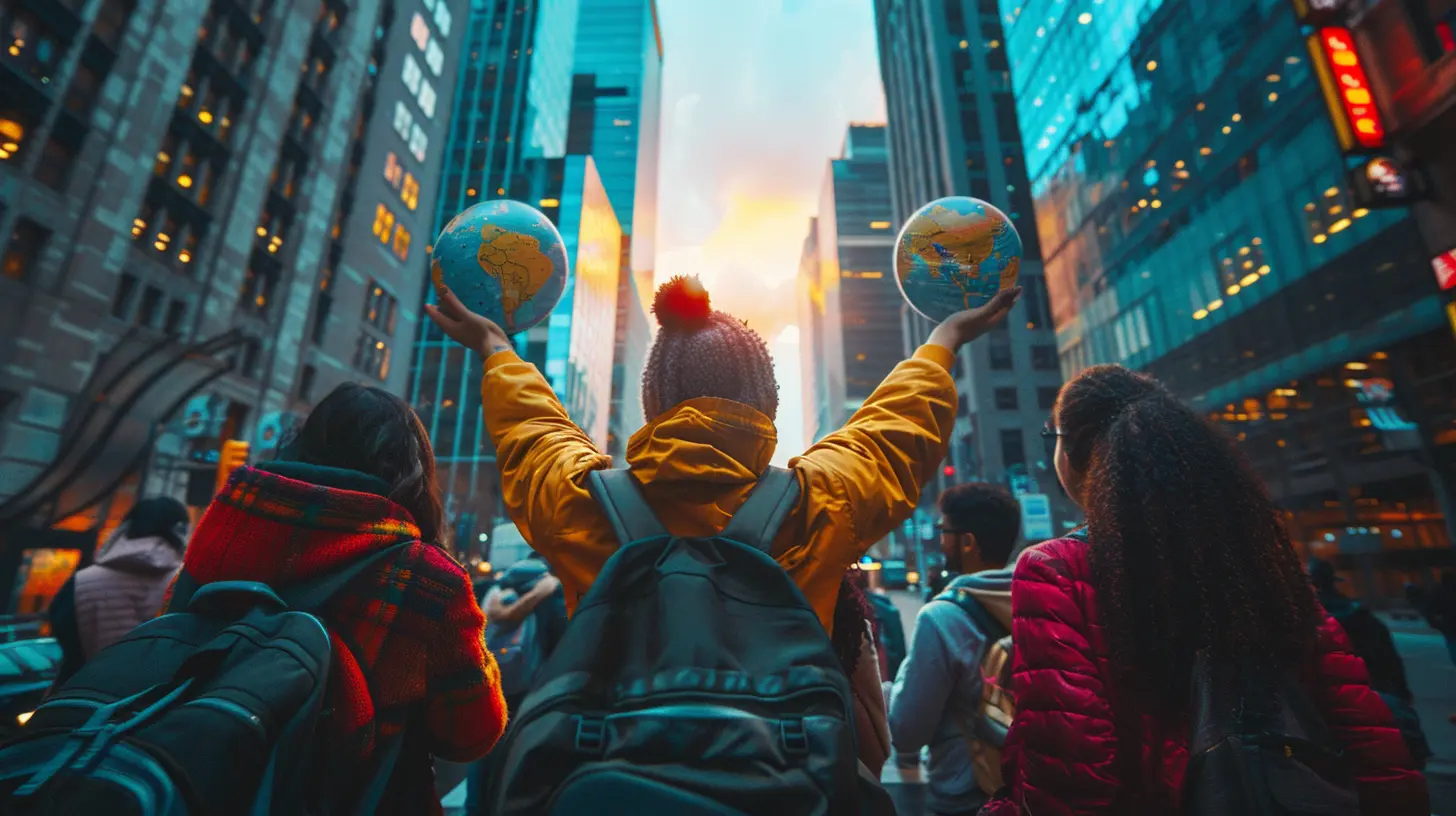
The Old Definition Is Dead
Ten years ago, a global student was the one who had an exchange year in London, a summer internship in Singapore, and a WhatsApp group full of friends from different time zones. That version still exists, but it is no longer special. Cheap flights and Zoom made that version of globalness accessible to anyone with a decent credit score and a tolerant internet connection.In 2027, the global student citizen is someone who can operate effectively across three different layers of reality simultaneously: the physical campus, the distributed digital workspace, and the shifting geopolitical landscape that decides who gets to study what, where, and with whom.
That sounds heavy. It is. But it is also liberating, because once you understand the new rules, you stop chasing the old badges of honor and start building real competence.
What Actually Changed by 2027
Three major shifts have redefined the global student experience.First, the classroom is no longer the center of gravity. Hybrid learning has matured beyond the awkward 2020 version. Now, a typical course might have students physically present in one country, joining via asynchronous video from another, and collaborating in real time with a third group in a completely different time zone. The professor might be recording from a research station. The teaching assistant might be an AI tutor that has been trained on the course materials and the students' past questions.
Second, credentials have fragmented. The degree still matters, but it is no longer the only proof of competence. Micro-credentials, project portfolios, and verifiable skill badges from recognized industry bodies now sit alongside the diploma. A global student citizen in 2027 knows that their transcript is just one page of a much longer story.
Third, the concept of "home" has stretched. Many students now have a legal residence in one country, a family base in another, and a digital identity that spans several platforms. Visa rules have tightened in some places and loosened in others. The student who can navigate this patchwork without losing their mind has a genuine advantage.
The Core Competencies Nobody Teaches You
Let us get practical. What skills actually matter in 2027 for a global student citizen? I am not talking about language fluency or cultural awareness, though those help. I am talking about the underlying operating system.Digital Sovereignty
This is the biggest one. In 2027, your ability to control your own data, choose your platforms, and understand where your information flows is not a technical hobby. It is a citizenship requirement.A global student citizen does not blindly use whatever collaboration tool the university mandates without understanding its data residency policies. They know that a cloud server in a different jurisdiction can affect their privacy, their access to certain materials, and even their safety if they are studying something politically sensitive.
Practical advice: Before you sign up for any new academic platform, ask where the data is stored, who has access, and what happens if you delete your account. If the answer is unclear, that is a red flag. This does not mean you become paranoid. It means you make informed choices. For example, if you are studying human rights law and your government is hostile to that topic, you might want to use a university VPN and avoid storing sensitive drafts on commercial cloud services that cooperate with local authorities.
Temporal Agility
Time zones are not just a scheduling inconvenience. They are a power structure. The student who always demands meetings at their own convenience is inadvertently asserting dominance over others. The global student citizen understands that time is a resource that must be negotiated with empathy.In 2027, the most effective students use asynchronous communication as their default. They write clear, detailed messages that do not require immediate responses. They record short video updates instead of forcing everyone into a live call. They reserve synchronous time for the few moments when real-time brainstorming actually matters.
This sounds simple, but it is surprisingly rare. Most people still default to "let me just call you" without thinking about what that does to someone who is eight hours ahead and trying to sleep.
Context Switching Without Burnout
Here is the hidden challenge. A global student citizen in 2027 is constantly shifting between different cultural contexts, academic norms, and communication styles. A discussion forum with peers in Japan requires a different tone than a group chat with classmates in Brazil. An essay for a German professor expects a different structure than one for an American professor.The mistake most students make is treating this as a simple matter of translation. It is not. It is a matter of cognitive load. Every context switch costs mental energy. If you do not manage that energy, you will burn out by mid-semester.
The best practice I have seen is to create "context blocks" in your day. Instead of switching between a Japanese discussion forum and a Brazilian group chat every ten minutes, you dedicate a solid hour to each. You shift your entire mindset, review the previous exchanges, and then respond. This reduces the friction and improves the quality of your contributions.
The New Geography of Opportunity
In 2027, where you study matters less than what you can access from where you are. The global student citizen is not limited to the opportunities that exist within a two-hour radius of their dorm.Consider the case of a student in Nairobi who wants to work on climate policy. In the old model, they would need to transfer to a university in Europe or North America to get the right connections. In the new model, they can take a course from a Dutch university online, join a research group based in Indonesia, and intern remotely with a non-profit in Washington D.C. All without leaving their home country.
This is not hypothetical. Many universities have created global research collaboratives where students from different campuses work on shared projects. The student in Nairobi brings local knowledge and field data. The student in Amsterdam brings analytical tools. The student in Jakarta brings community connections. Together, they produce work that none of them could have done alone.
The trade-off is that this model requires a level of self-direction that many traditional students lack. There is no professor standing over you telling you what to do next. You have to manage your own deadlines, coordinate across time zones, and deal with the fact that your teammates might have different academic calendars and holiday schedules.
The Remote Internship Trap
Let me warn you about something. Remote internships and global virtual programs sound amazing on paper, but many of them are thinly disguised busywork. A global student citizen in 2027 knows how to evaluate an opportunity for its actual learning value, not just its brand name.Questions to ask yourself before accepting a remote position:
Will I have meaningful interaction with senior professionals, or will I be talking mostly to other interns?
Will I produce work that someone actually uses, or will my output be filed away and forgotten?
Will I get feedback that helps me improve, or just a generic evaluation at the end?
If the answer to any of these is unclear, ask directly. If the organization cannot give you a straight answer, that is a sign that the opportunity is not as valuable as it appears.
Cultural Intelligence Beyond Stereotypes
Here is a trap that catches many well-meaning students. They think being globally aware means learning a list of do's and don'ts for each culture. Do bow in Japan. Do not show the soles of your feet in Thailand. Do maintain eye contact in the United States.This is not cultural intelligence. This is cultural tourism. It treats people as representatives of a static checklist rather than as individuals with their own personalities, preferences, and contexts.
The real skill in 2027 is reading the situation, not the stereotype. A Japanese student who has lived in London for three years might prefer direct feedback. A Brazilian student who grew up in a corporate household might value punctuality over flexibility. The global student citizen does not assume. They ask, they observe, and they adjust.
This is harder than it sounds because it requires you to hold two conflicting ideas at once. You need to be aware of general cultural tendencies without letting them become rigid expectations. You need to be sensitive without being condescending. You need to adapt your behavior without losing your own authenticity.
The best approach is to be explicit about your own communication preferences early in a relationship. Say something like, "I tend to give direct feedback and I welcome the same from you. If that style does not work for you, let me know and we can adjust." This opens a negotiation rather than imposing a default.
The Language of Power
In 2027, English remains the lingua franca of global academia and business, but it is no longer the only game in town. The rise of real-time translation tools has changed the calculus. A student who speaks only English is no longer at a severe disadvantage in everyday conversation, because AI translation can handle basic exchanges.But here is the nuance. Translation tools are great for conveying information, but they are terrible for conveying trust, humor, and nuance. The global student citizen who wants to build deep relationships will still invest in learning at least one other language at a conversational level. Not because they need it for basic communication, but because the act of learning another language signals respect and opens doors that translation tools cannot.
Think of it this way. Speaking someone else's language, even badly, shows that you have made an effort to enter their world. Relying on a translation app shows that you expect them to enter yours. The difference in perception is enormous.
Which Language Should You Learn?
There is no universal answer. It depends on your field, your interests, and your likely future geography. That said, a few patterns have emerged by 2027.If you are in technology or business, Mandarin remains extremely valuable, though it is difficult to learn well. If you are in international relations or law, Arabic, French, or Russian might serve you better depending on your focus. If you are in the humanities, Spanish and Portuguese open up vast literary and cultural worlds. If you are in public health, you might consider languages relevant to regions with emerging health systems.
The mistake is choosing a language based on what sounds impressive rather than what you will actually use. A student who learns conversational Vietnamese because they plan to work in Southeast Asian supply chains will get more value than one who learns French because it sounds elegant but never visits a Francophone country.
The Ethics of Being a Global Student
Let us talk about something uncomfortable. The global student experience is not equally available to everyone. It requires money, time, and often a passport that grants easy access to other countries. Acknowledging this privilege does not mean you should feel guilty about your own opportunities. It means you should use them responsibly.A global student citizen in 2027 recognizes that their mobility is a form of power. They use that power to amplify voices that are less mobile. When they write papers, they cite scholars from the regions they study, not just the famous Western academics. When they work on projects, they make sure that local partners are credited and compensated fairly. When they return from a study abroad experience, they do not treat it as a souvenir to show off. They treat it as a responsibility to share what they have learned.
This is not about being a savior. It is about being a decent collaborator. The world has enough people who fly in, extract stories or data, and fly out without leaving anything behind. The global student citizen aims to be the opposite.
The Volunteerism Trap
Many global programs encourage students to do volunteer work in developing countries. Some of this is genuinely helpful. A lot of it is harmful, even when well-intentioned. The classic example is the medical student who goes on a two-week trip to build a clinic or teach hygiene. The problem is that unskilled volunteers often displace local workers, provide inconsistent care, and leave behind projects that fall apart after they leave.A better model, which has gained traction by 2027, is the "reverse exchange." Instead of sending students to do volunteer work abroad, programs bring local practitioners to share their expertise with international students. Or, students work remotely on projects that are designed and led by local organizations, with the students serving as support rather than the main event.
If you are considering a volunteer program, ask yourself: Does this project have a local leader who will continue after I leave? Am I providing skills that are actually needed, or am I providing free labor that takes work away from local professionals? If you cannot give a clear answer, keep looking.
Practical Tools and Habits for 2027
Let me give you a concrete toolkit. These are not revolutionary, but they are the ones that consistently separate successful global student citizens from those who struggle.The Second Brain
By 2027, most serious students maintain some form of a personal knowledge management system. This is not just note-taking. It is a searchable, interconnected database of everything you read, hear, and think. Tools like Notion, Obsidian, or even a well-structured set of Markdown files can serve this purpose.The key habit is to record not just what you learned, but why it matters, where it connects to other ideas, and how you might use it later. This turns passive consumption into active knowledge building. When you meet someone from another country and they mention a concept you have never heard of, you do not just nod and forget. You write it down, look it up, and connect it to your existing knowledge.
The Digital Business Card
In 2027, a static resume is almost useless. You need a dynamic, linkable identity that shows who you are, what you have done, and how you think. This could be a personal website, a well-maintained LinkedIn profile, or a portfolio on a platform like GitHub for technical work.The global student citizen keeps this identity updated in real time. When they finish a project, they post a reflection. When they learn a new skill, they add it. When they have an insight, they share it. This does two things. It builds a record of your growth that is more credible than any transcript. And it makes you findable by people who might offer opportunities you did not even know existed.
The Time Zone Calendar
Do not rely on your memory for international scheduling. Use a calendar that shows multiple time zones and color-code your commitments by region. This prevents the embarrassment of missing a call because you forgot that Tokyo is 14 hours ahead of New York. It also helps you see, at a glance, when you have overlapping obligations that will require careful planning.Common Mistakes and How to Avoid Them
Let me walk you through the mistakes I see most often, so you can avoid them.Mistake One: Treating Everyone the Same
Some students, in an effort to be egalitarian, ignore cultural differences entirely. They treat a colleague from Seoul exactly the same as a colleague from Cairo. This sounds fair, but it is actually a form of disrespect. It ignores the fact that people have different expectations around hierarchy, feedback, and personal space. The skilled global citizen adapts their style to the person they are working with, not out of condescension, but out of respect for their preferences.Mistake Two: Overadapting
The opposite mistake is losing yourself entirely. You become a chameleon who changes their opinions, their tone, and even their values depending on who they are with. This is exhausting and ultimately dishonest. The goal is not to become a different person in every context. The goal is to be clear about who you are while being flexible about how you communicate.Mistake Three: Confusing Activity with Progress
Joining every club, attending every conference, and saying yes to every opportunity feels productive. It is often a way of avoiding the harder work of focusing on a few things that actually matter. A global student citizen in 2027 knows their priorities and is comfortable saying no to opportunities that do not align with them.Mistake Four: Ignoring the Local
Here is a paradox. The more global you become, the more important it is to stay rooted in your local community. The student who knows everything about international affairs but nothing about the neighborhood around their campus is missing half the picture. Global citizenship is not about escaping the local. It is about understanding how the local and the global interact.
The Mental Health Dimension
Nobody talks about this enough, but being a global student citizen in 2027 is mentally taxing. You are constantly navigating different expectations, dealing with isolation from your home culture, and managing the pressure to be excellent at everything.The students who thrive are not the ones who push through without rest. They are the ones who build strong support networks, both at home and abroad. They maintain regular contact with family and old friends. They find communities of like-minded students, even if those communities are virtual. They are honest about their struggles instead of projecting an image of effortless success.
If you are feeling overwhelmed, that is a normal response to an abnormal situation. The global student experience is genuinely harder than the traditional one. Do not compare your inside to other people's outside. Everyone is struggling more than they let on.
What the Future Holds
The trends we see in 2027 are not going to reverse. The world will become more connected, not less, even if the political rhetoric sometimes suggests otherwise. The students who learn to navigate this complexity now will have a significant advantage in their careers and their lives.But let me be clear about what that advantage looks like. It is not about having a more impressive passport or a longer list of countries visited. It is about being someone who can sit down with a stranger from anywhere, understand their perspective, find common ground, and build something together. That skill is rare, valuable, and genuinely human.
The global student citizen in 2027 is not a superhero. They are just someone who decided to take the difficult path of understanding the world rather than staying comfortable in their own corner of it. That path is open to you, regardless of where you start.
A Final Word of Caution
Do not fall for the idea that you need to be everywhere and do everything to be a global citizen. You do not. You can be deeply global while staying physically in one place for years. What matters is your mindset, your skills, and your willingness to engage with perspectives that challenge your own.The best global student citizens I know are not the ones with the most stamps in their passport. They are the ones who ask the best questions, listen more than they speak, and treat every interaction as an opportunity to learn something new. That is the real definition. Everything else is just logistics.
So as you move through 2027, forget about trying to look global. Focus on being useful, being curious, and being kind. If you do those three things, the rest will follow.
all images in this post were generated using AI tools
Category:
Student LifeAuthor:
Monica O`Neal
Discussion
rate this article
2 comments
Zevros McVeigh
This article beautifully captures the essence of global citizenship. Embracing diverse perspectives can profoundly enrich our educational journeys and foster meaningful connections.
September 23, 2026 at 2:54 AM
William McKinley
Embracing diversity and innovation is crucial for future global citizens.
September 8, 2026 at 12:58 PM