Top Collaboration Strategies for the Workplace of 2027
27 April 2026
Let’s be real for a second: if the word "collaboration" makes you think of a sticky note–covered whiteboard and someone aggressively nodding while saying “synergy,” you’re not alone. But here’s the thing—by 2027, the workplace will have evolved so much that "collaboration" won’t just mean sharing a Google Doc and hoping for the best. It’ll mean surviving a chaotic blend of AI agents, remote holograms, and your colleague’s cat walking across their keyboard during a critical meeting.
So, how do we actually work together without losing our minds? Grab your favorite caffeinated beverage (or a stress ball), because I’m about to walk you through the Top Collaboration Strategies for the Workplace of 2027—and I promise, no buzzwords that make you want to throw your laptop out the window.
Why 2027 Collaboration Is Like Herding Digital Cats
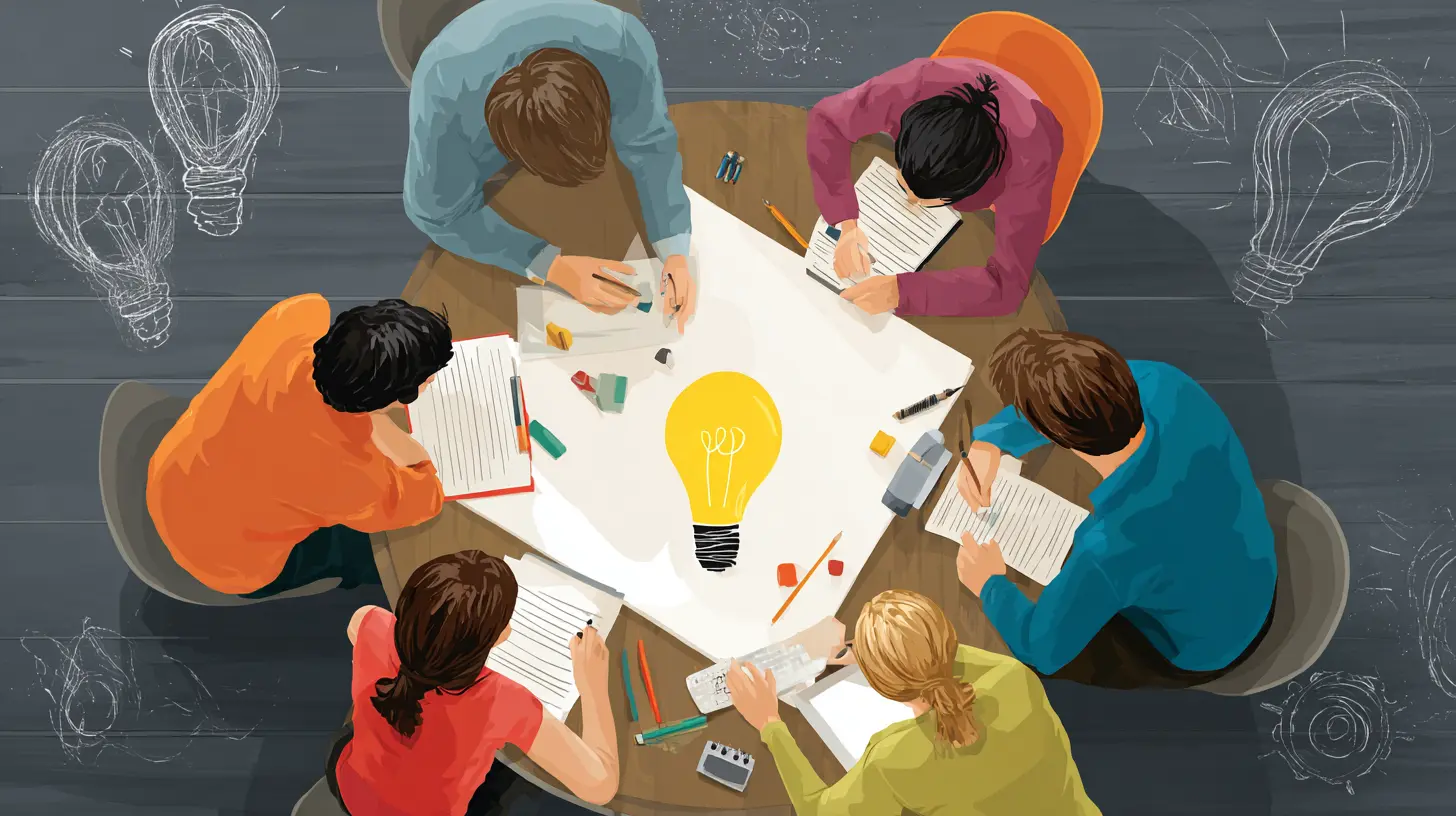
Picture this: It’s 2027. Your team spans five time zones. You’ve got humans, AI assistants, and maybe even a digital twin of your boss that replies to emails at 3 AM. Collaboration is no longer about sitting in the same room—it’s about syncing up across realities. It’s messy, it’s chaotic, and it’s absolutely hilarious when someone forgets to mute their AI that suddenly starts narrating their grocery list.The old “let’s have a 30-minute stand-up” is dead. Dead as a doornail. In 2027, collaboration strategies need to be flexible, personalized, and a little bit weird. Because let’s face it—if you’re still using the same tactics from 2022, you’re basically trying to drive a Tesla with a horsewhip.

Strategy #1: The "Asynchronous First" Mindset (Because No One Wants to Wake Up at 4 AM)
What It Is (And Why It’s a Lifesaver)
Asynchronous collaboration means you work on your own schedule, not everyone else’s. Think of it like a potluck dinner: everyone brings their dish when they’re ready, and you all eat when it makes sense. No one is forced to chug cold coffee at 6 AM just to hear a status update that could’ve been an email.By 2027, this isn’t just a nice-to-have—it’s survival. Teams are global. Your coworker in Tokyo doesn’t want to join your 2 PM stand-up any more than you want to join theirs at 2 AM. So, what do you do? You ditch the live meetings for async updates.
- Use tools like Loom or Async-Notes: Record a 2-minute video of your progress. No more “can you repeat that?” moments.
- Set clear response windows: “I’ll reply within 24 hours” is the new “I’ll get back to you in a jiffy.”
- Celebrate the “slow burn”: Not every decision needs to be made in real-time. Let ideas marinate like a good stew. (Metaphor alert: Don’t rush the brisket.)
How to Pull It Off Without Looking Lazy
Here’s the trick: async doesn’t mean absent. You still need to be responsive, but on your terms. Create a shared “decision log” (like a Google Doc, but fancier) where everyone adds their thoughts. Then, vote with emojis. Yes, emojis. 🚀 for “let’s go,” 🐢 for “slow down.” It’s ridiculous, but it works.Rhetorical question alert: Would you rather spend 30 minutes in a meeting hearing Bob talk about his weekend, or spend 3 minutes reading a bulleted list? Exactly.

Strategy #2: AI as the "Third Wheel" You Actually Want Around
The Awkward Truth About AI in Collaboration
By 2027, AI won’t just be a tool—it’ll be a teammate. And like any teammate, it can be annoying. Imagine an AI that interrupts your brainstorming session with “Actually, based on the data, your idea has a 12% chance of success.” Ouch. But also, useful.The best collaboration strategy is to treat AI like a super-organized intern who never sleeps. Let it handle the boring stuff: scheduling meetings, summarizing long threads, and reminding people about deadlines. But don’t let it run the show. You’re the human. You bring the creativity, the empathy, and the ability to laugh at a bad pun.
- Use AI for "meeting triage": Before a live sync, have your AI scan everyone’s async updates and highlight the top 3 conflicts. No more “let’s circle back” nonsense.
- Let AI mediate conflicts: If two team members disagree, an AI can suggest compromises based on past decisions. It’s like having a robot therapist—without the couch.
- Don’t let AI write your jokes: Trust me, it’ll be cringey. Keep the humor human.
The "Human-in-the-Loop" Rule
Always, always keep a human in the loop. AI can suggest, but you decide. Think of it like GPS: it can tell you to turn left, but if there’s a parade blocking the road, you have the right to ignore it. Collaboration in 2027 is about dancing with AI, not letting it lead.
Strategy #3: The "Digital Campfire" (Virtual Watercooler 2.0)
Why Loneliness Kills Collaboration
Here’s a secret: collaboration isn’t just about work. It’s about trust. And trust is built over random moments—like complaining about the office coffee or laughing at a meme. In 2027, when your team is scattered across the globe, you can’t just rely on Slack channels named “random” that are dead silent.Enter the Digital Campfire: a dedicated virtual space that feels less like a meeting and more like a hangout. Think of it as a cozy room where people pop in, share a story, ask a weird question, or play a quick game. No agenda. No pressure. Just human connection.
- Schedule "no-topic" sessions: Once a week, 15 minutes, no work talk allowed. Share your weirdest pet story or your favorite conspiracy theory (aliens built the pyramids? Discuss).
- Use spatial audio: Tools like Gather or Teamflow let you “walk” up to a virtual table and hear conversations. It’s like a video game, but for grown-ups.
- Add a "gratitude bot": Have a simple bot that asks “Who helped you today?” and shares the shout-out publicly. It’s cheesy, but it works like a charm.
The "Cringe Factor" Is Real—Embrace It
Look, virtual hangouts can feel forced. I get it. But the alternative—a team that never connects—is worse. So lean into the awkwardness. If someone plays a bad karaoke song, cheer them on. If a coworker shares a photo of their cat, react with the heart emoji. These tiny moments build the glue that holds a team together when things get tough.Strategy #4: The "Radical Transparency" Dashboard (No Secrets, No Drama)
What It Means to Be Transparent in 2027
Transparency isn’t just about sharing your screen during a meeting. It’s about making sure everyone knows what’s happening—even the stuff that’s uncomfortable. By 2027, the best teams use a shared dashboard that shows: who’s working on what, what’s blocked, and even (gasp) who’s feeling overwhelmed.This isn’t about micromanaging. It’s about trust. When you can see that Sarah is drowning in tasks, you can offer help before she burns out. When you see that Mike is waiting on your input, you can prioritize it. It’s like a real-time health monitor for your team’s workflow.
- Use "traffic light" statuses: Green = all good, Yellow = need help, Red = SOS. No shame in the red zone.
- Publish a "f*k-up of the week": Once a week, someone shares a mistake they made and what they learned. It normalizes failure and encourages risk-taking.
- Keep it visual: Use a Kanban board or a timeline that even a 5-year-old could understand. Complexity kills collaboration.
The "But What About Privacy?" Question
You might be thinking, “Do I really want everyone to know I’m stuck?” Yes. Because in 2027, collaboration isn’t about looking perfect—it’s about being effective. Privacy is for your personal life, not for your project blockers. Just set clear boundaries: no one is forced to share personal health info, but work-related struggles are fair game.
Strategy #5: The "Collaboration Diet" (Stop Overeating on Meetings)
Why Less Is More (Way More)
We’ve all been there: a day full of back-to-back meetings, and by 4 PM, you’ve accomplished nothing except perfecting your “I’m paying attention” face. In 2027, collaboration strategies are all about meeting minimalism. You don’t need a meeting for everything. In fact, you probably need 80% fewer meetings than you think.- Adopt the "2-pizza rule": If you need more than two pizzas to feed the attendees, the meeting is too big. Keep it small.
- Use "office hours": Instead of scheduling a meeting, have a 1-hour window where people can drop in with questions. It’s like a clinic, but for work problems.
- Default to "no meeting Wednesdays": Give everyone a full day to actually, you know, work. Revolutionary, right?
The "Meeting Audit" Challenge
Here’s a fun exercise: for one week, track every meeting you attend. At the end, ask yourself: “Could this have been an email? A video? A quick chat?” Chances are, at least half of them could’ve been killed. Then, cancel them. Your team will thank you with actual productivity.Strategy #6: The "Fail Fast, Laugh Faster" Culture
Why Humor Is the Secret Sauce
Collaboration in 2027 isn’t going to be smooth. AI will glitch. Holograms will freeze. Someone will accidentally send a cat filter to a client. The teams that thrive are the ones that can laugh it off. Humor lowers stress, builds trust, and makes the grind feel less like a grind.- Create a "blooper reel": At the end of each week, share a funny moment from your week. It could be a typo, a mispronunciation, or that time your AI assistant ordered 500 pounds of printer paper.
- Use memes as feedback: Instead of saying “your idea is bad,” send a meme of a dog in a burning house saying “this is fine.” It’s way more effective.
- Celebrate wins with absurdity: When a project ships, do something ridiculous—like a virtual dance party or a “worst joke” contest. Make it memorable.
The "Don’t Be a Robot" Rule
Even if your AI is great, don’t let it erase your personality. Send voice messages instead of texts. Use emojis. Crack a bad pun. Collaboration is about humans, and humans are messy, weird, and wonderful. Lean into that.
The Ultimate Takeaway: Collaboration Is a Dance, Not a Checklist
So, there you have it. The Top Collaboration Strategies for the Workplace of 2027 aren’t about fancy tools or rigid processes. They’re about creating a culture that’s flexible, transparent, and—dare I say—fun. Async first, AI as a helper, digital campfires, radical transparency, meeting minimalism, and a whole lot of laughter.Will it be perfect? Nope. Will there be moments where you want to throw your laptop into the nearest river? Probably. But if you embrace these strategies, you’ll build a team that can handle anything 2027 throws at it—including that rogue AI that keeps suggesting you “optimize your lunch break.”
Now, go forth and collaborate. But maybe mute your AI first.
all images in this post were generated using AI tools
Category:
Skills DevelopmentAuthor:

Monica O`Neal
Discussion
rate this article
2 comments
Wolf Bellamy
This article offers valuable insights on collaboration strategies that are crucial for future workplace dynamics. As remote and hybrid models become the norm, adapting our approach to teamwork is essential. The emphasis on flexibility and open communication resonated with me, reminding us that effective collaboration is always evolving.
June 18, 2026 at 3:33 AM
Monica O`Neal
Thank you for your thoughtful comment! I'm glad you found the emphasis on flexibility and communication important. As we navigate these changes, adapting our strategies will be key to successful collaboration.
Colin McElhinney
This article offers valuable insights into future collaboration strategies. It's exciting to see how technology and evolving workplace dynamics will shape teamwork. Implementing these strategies can enhance communication and foster a more inclusive environment. Looking forward to applying these ideas in my own workplace.
May 1, 2026 at 12:50 PM
Monica O`Neal
Thanks for your thoughtful comment! I'm glad you found the insights valuable. Excited to see how you'll implement these strategies in your workplace.