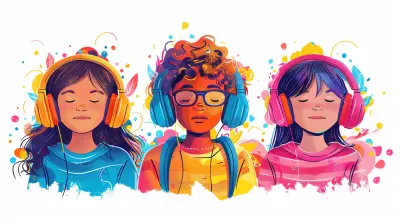
The Role of Digital Portfolios in Student Assessment by 2026
25 April 2026
Picture this: It’s 2026. A student named Alex is applying to college. Instead of sending a dusty transcript and a generic essay, Alex sends a link. Click it, and you’re inside a living, breathing showcase—videos of a science experiment gone hilariously wrong (then fixed), a podcast about ancient Rome with sound effects, and a reflection on why that math test failure actually taught Alex more than the A+. No bubble sheet. No tear-stained report card. Just Alex, unfiltered.
Sound like a fever dream? It’s not. By 2026, digital portfolios won’t just be a "nice-to-have" in education—they’ll be the main course, served with a side of sass. Let’s dive into why your kid’s (or your own) future assessment might look less like a Scantron and more like a Netflix documentary.
Why Traditional Assessment Is So Last Century (And So 2024)
Let’s be real: traditional tests are the mullets of education. Sure, they had a moment in the 80s, but now? They’re awkward, outdated, and nobody really knows why we still have them. A multiple-choice exam tells you if a student can memorize facts for 48 hours. A digital portfolio? It tells you if a student can think, create, fail, iterate, and reflect—all while looking good in a digital frame.By 2026, we’ll have realized that grading a kid on a single Tuesday afternoon performance is like judging a chef by a single burnt toast. Digital portfolios capture the messy, glorious process. They’re the difference between a highlight reel and a blooper reel—and honestly, the blooper reel is where the real learning happens.
The Great Shift: From "What Did You Get?" to "What Did You Make?"
Here’s a rhetorical question for you: When was the last time you used a #2 pencil for anything besides a DIY eyebrow fix? Exactly. The world has moved on. By 2026, student assessment will follow suit. Digital portfolios will replace the "gotcha" culture of testing with a "show me what you got" culture of demonstration.Think of it like this: A test is a Polaroid—a single, frozen moment. A digital portfolio is a TikTok account—constantly updated, layered with personality, and sometimes featuring a dancing dog. And guess what? Colleges and employers are already hungry for that kind of authenticity. They don’t want to know if you can circle "C" for carbon dioxide. They want to see the video of you building a model volcano, the blog post where you explained why it erupted, and the comment where you admitted you used too much baking soda and flooded the garage.
The 2026 Digital Portfolio: What’s Actually Inside?
Let’s get specific. By 2026, a digital portfolio won’t be a glorified PDF of scanned homework. It’ll be a multimedia beast. Here’s what you might find:1. The "Fail Forward" Section
Yes, a dedicated space for screw-ups. Imagine a student posting a video titled "How I Completely Botched My First Coding Project" followed by a reflection: "I spent 12 hours debugging only to realize I forgot a semicolon. But now I’ll never forget it again." This isn’t masochism—it’s metacognition. By 2026, we’ll understand that failure is not the opposite of success; it’s the rough draft.2. Peer Feedback, Not Just Teacher Grades
Forget the red pen. In 2026, portfolios will include comments from classmates, mentors, and even random experts who stumbled upon the work. It’s like Amazon reviews for your brain. "Five stars: This essay on climate change made me cry. Would recommend to my mom."3. AI Co-Creation (Yes, Really)
By 2026, students will be using AI tools like ChatGPT to brainstorm, outline, and even draft parts of their work. But here’s the twist: The portfolio will show the process. A student might include a screenshot of an AI-generated draft, followed by their edits, followed by a note: "The AI gave me a starting point, but I rewrote the entire conclusion because it sounded like a robot having an existential crisis."4. Real-World Impact Metrics
Remember when a grade was just a number? Boring. By 2026, portfolios will track actual impact. Did your science fair project reduce plastic use in your school cafeteria? Did your poetry slam video get 10,000 views? Did your code help a local nonprofit? That’s the new A+.
The Teacher’s New Job: From "Grader" to "Curator"
Here’s a plot twist: By 2026, teachers won’t just grade portfolios—they’ll curate them. Think of it like a museum director. Instead of stamping a "B-" on a paper, a teacher will help a student decide which pieces to include, how to frame them, and what story to tell.This is a massive shift. It means teachers will spend less time hunched over red pens and more time in conversation: "Hey, remember that group project where you almost quit? That’s a portfolio piece. Let’s talk about what you learned when you didn’t quit." It’s assessment as coaching, not as judgment.
And let’s be honest: Isn’t that what we all wanted from school anyway? A guide, not a gatekeeper?
But Wait—Is This Just a Fancy Scrapbook? (The Skeptic’s Corner)
I hear you. You’re thinking, "This sounds like a lot of work. What if students just throw in random stuff? What about cheating? And how do we standardize this madness?"Fair questions. Let’s tackle them like a portfolio entry:
- Cheating: Digital portfolios actually make cheating harder. You can’t fake a video of yourself explaining a concept. You can’t fake a reflection that shows deep thought. Sure, you could use AI to write your reflection, but then you’d have to explain why you wrote it that way. The portfolio becomes a lie detector test for learning.
- Standardization: By 2026, we’ll have rubrics that evaluate portfolios on dimensions like "growth over time," "depth of reflection," and "ability to connect ideas across subjects." It’s not a single number—it’s a profile. Think of it like a nutrition label for learning.
- Workload: Yes, it’s more work upfront. But here’s the secret: Students already do this stuff for fun. They’re making TikToks, building Minecraft worlds, and writing fan fiction. Portfolios just give that creativity a home in the classroom. It’s less "homework" and more "hey, that thing you’re already doing? Let’s call it learning."
The College Admissions Shake-Up (Or: Goodbye, SAT)
By 2026, the SAT will be the educational equivalent of a fax machine—still technically around, but mostly used by people who don’t know better. Colleges are already going test-optional. By 2026, they’ll be portfolio-required.Imagine an admissions officer scrolling through a student’s portfolio. They see a coding project, a painting, and a podcast interview with a local politician. They can hear the student’s voice, see their growth, and sense their passion. Compare that to a transcript full of AP classes but zero personality. Which one would you bet on?
And here’s the kicker: Portfolios democratize access. A student from a low-income school with no AP classes can still build a killer portfolio using free tools. A student with learning differences can show their brilliance in ways a timed test never could. By 2026, assessment will finally be about potential, not privilege.
The Tech Toolbox: What’s Powering All This?
You don’t need a Silicon Valley budget to make this happen. By 2026, the tools will be cheap, easy, and everywhere. Here’s what’s coming:- Voice-to-text journals: Students can dictate reflections while walking to school. "Today I learned that mitochondria is the powerhouse of the cell, but also that I need more sleep."
- Video annotation tools: A student records a presentation, then adds pop-up comments: "Here I forgot my line. Watch me recover like a pro."
- Blockchain for credentials: Yes, blockchain. By 2026, portfolio entries will be time-stamped and verified, so you can’t claim you built a robot in 2024 when you actually did it in 2026 (looking at you, procrastinators).
A Day in the Life of a 2026 Student (Spoiler: It’s Weird and Wonderful)
Let’s live a little. Meet Maya, a 10th grader in 2026.8:00 AM: Maya opens her digital portfolio. She sees a notification: "Your history teacher has added a new artifact to your portfolio—a podcast you made about the Silk Road. Write a 200-word reflection on what you’d do differently."
9:00 AM: In math class, Maya records a 90-second video explaining how she solved a problem. She uploads it to her portfolio under "Problem Solving."
12:00 PM: Lunch. Maya’s friend shares a meme about their biology project. She screenshots it and adds it to her portfolio with the caption: "This is what collaboration looks like when you’re both sleep-deprived."
3:00 PM: Maya’s teacher reviews her portfolio and leaves a voice note: "Love the meme. But let’s talk about your analysis of cell division—I think you’re ready for the advanced project."
8:00 PM: Maya adds a final entry: a photo of her messy desk with the caption: "Today was hard. But I kept going. That counts, right?" The portfolio auto-saves.
By 2026, this isn’t a sci-fi script. It’s Tuesday.
The Emotional Payoff: Why This Actually Matters
Let’s get real for a second. School has historically been a place where you’re told what’s wrong with you. Here’s your grade. Here’s your rank. Here’s why you’re not good enough. Digital portfolios flip that script. They say: "Show us what you can do. Show us who you are."By 2026, students will walk into assessments not with sweaty palms but with pride. They’ll have a story to tell. And isn’t that what education should be? Not a series of hoops, but a journey with a scrapbook at the end?
So, will digital portfolios replace every test by 2026? Probably not entirely. But they’ll be the new normal—the way we finally stopped measuring fish by their ability to climb trees. And if you ask me, that’s a future worth writing about.
all images in this post were generated using AI tools
Category:
Education TrendsAuthor:
Monica O`Neal
Discussion
rate this article
2 comments
Grey Reyes
This article highlights an important shift in how we assess students. Digital portfolios can empower learners to showcase their growth and creativity. Embracing this change can lead to a more personalized and meaningful learning experience, benefiting both students and educators alike.
June 10, 2026 at 12:56 PM
Monica O`Neal
Thanks for your thoughtful comment! I completely agree that digital portfolios can truly enhance the assessment process and foster creativity in students. It's an exciting shift for education.
Gabrielle McPhee
Digital portfolios empower students to demonstrate growth and creativity, shifting assessment from mere grades to meaningful, personalized learning narratives.
April 26, 2026 at 11:35 AM
Monica O`Neal
I completely agree. Digital portfolios truly highlight individual student journeys, making learning more personal and impactful.