The Global Perspective: Bilingual Education Models Around the World
28 June 2026
Let’s face it—language shapes how we view the world. Seriously, think about it! The way we talk, think, and even dream can be driven by the words we know. So when we talk about bilingual education, we’re not just chatting about grammar and vocabulary—we’re opening doors to entirely new perspectives. Bilingual education doesn’t just connect students to two languages; it connects them to two (or more!) cultures, ways of thinking, and even career opportunities.
But here’s the real kicker—not every country teaches bilingualism the same way. The world is a colorful patchwork of bilingual education models, each shaped by its culture, politics, and educational goals. So, buckle up! We're about to take a trip around the globe to look at how different countries handle bilingual education, what we can learn from them, and why bilingualism is more important than ever.
What is Bilingual Education, Anyway?
Let’s start with the basics. Bilingual education is when students are taught in two languages. That’s it in a nutshell. But how it’s done? That’s where things get interesting.There are multiple flavors of this:
- Transitional bilingual education – Start in your native language, ease into a second.
- Dual language immersion – Half the time in one language, half in the other (kind of like linguistic yoga for your brain).
- Language enrichment – Focused on maintaining and developing the minority or heritage language while learning the dominant one.
And then there are programs that flip the script completely depending on where you live. Let’s explore!
Bilingual Education in Europe
Spain: Embracing Diversity Within Its Borders
When you think Spain, you might just think Spanish, right? But hold up—Spain is actually a multilingual nation. Regions like Catalonia and the Basque Country have their own co-official languages: Catalan and Basque.In Catalonia, public schools practice content and language integrated learning (CLIL), where subjects like history or science might be taught in Catalan. Spanish is still taught too, but the local language gets top billing.
The focus here? Preserving culture while promoting a global outlook.
Finland: Where English Isn't Even the Main Focus... But Still Slays
Finland isn’t bilingual across the board, but their approach to language learning in general is legendary. Many Finnish students are exposed to Swedish early on, since it’s one of the two official languages. Oh, and most of them speak English like pros by the time they hit their teens.How do they do it? Through immersive teaching, low-stress environments, and a culture that values education like Sunday brunch.
North America: A Tale of Two Countries
United States: Late to the Party, But Catching Up Fast
The U.S. has had a complicated relationship with bilingual education. For ages, people thought it might confuse kids. (Spoiler alert: it doesn’t.)But in recent years, dual-language immersion programs have become super popular. Think English and Spanish instruction 50/50. Or Mandarin. Or French. You name it.
Some school districts even have waiting lists for these programs—parents are catching on that bilingualism = brain gains.
Pro Tip: States like California and Texas are leading the way with innovative bilingual models that cater to multicultural communities.
Canada: The OG of Dual Language Education
Oh Canada, our friendly neighbor to the north! They’ve nailed the bilingual education game for decades, especially with English and French.Thanks to charter laws and strong cultural policies, students across Canada often have to choose French immersion or core French programs. In some regions, students learn in French first, then add English, or vice versa.
The result? A generation of Canadians who can order poutine in Quebec and debate hockey stats in Vancouver—fluently.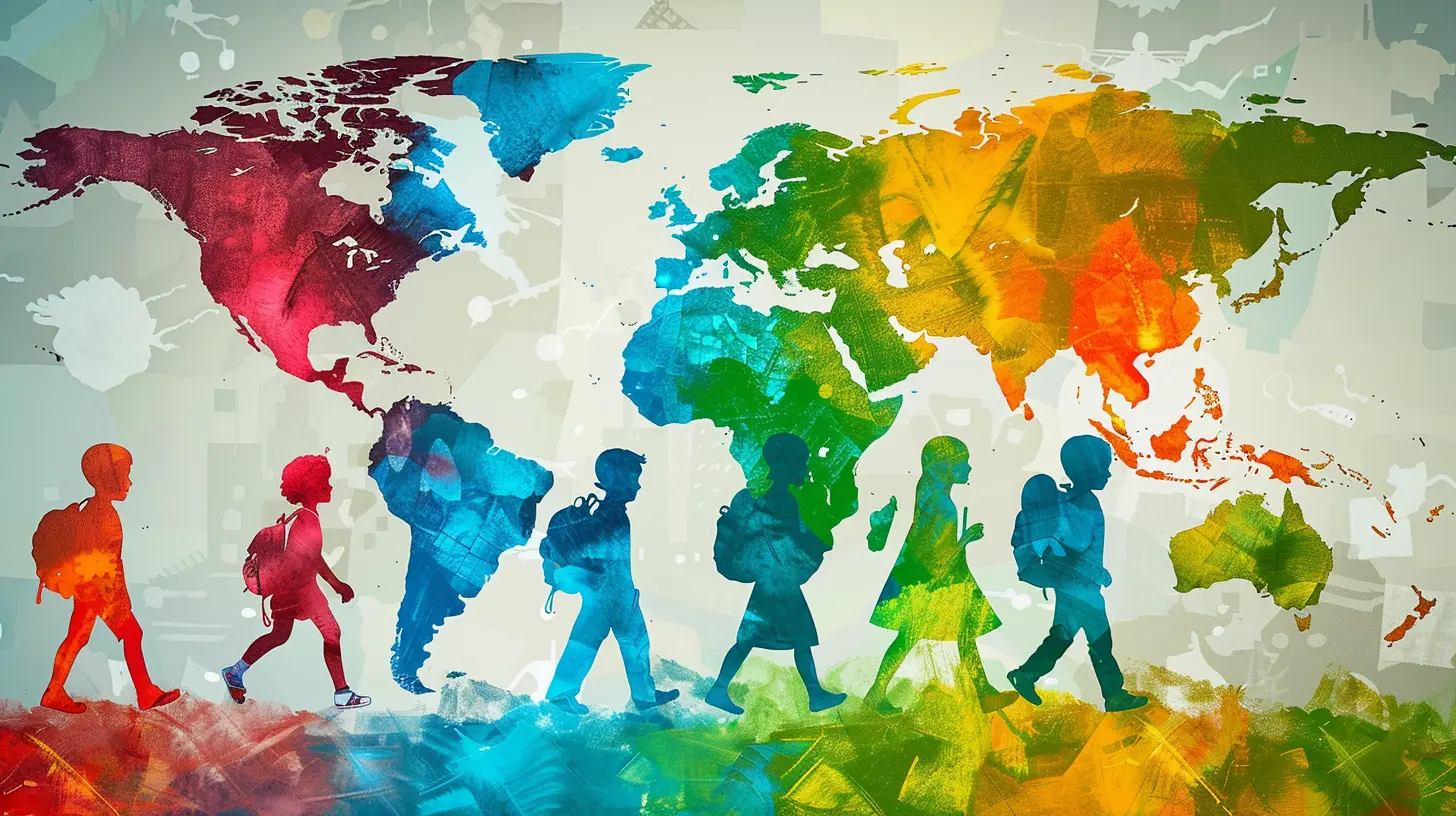
Asia: Complexity, Multilingualism, and Innovation
India: A Linguistic Jungle Gym
India has 22 officially recognized languages, and believe it or not, most students grow up speaking at least two or three. The Indian education system promotes the Three Language Formula: one regional language, Hindi, and English.Public schools often teach in the local language, but many private schools go full throttle in English. The outcome? Kids who switch between Hindi, English, and possibly Tamil, Bengali, or Marathi like they’re flipping channels on Netflix.
It’s chaotic. It’s beautiful. It’s so Indian.
Singapore: English + Mother Tongue = Success
Singapore is like that kid in class who always has perfect handwriting and color-coded notes. Their system is smart, rigorous, and super bilingual.Kids are taught in English, but they also learn a “Mother Tongue” language based on their heritage—usually Mandarin Chinese, Malay, or Tamil.
The model balances economic pragmatism with cultural identity, prepping students to compete globally while staying rooted in their past.
Latin America: Bridging Cultures Through Language
Paraguay: A Minority Language Takes the Lead
You’d never guess that in Paraguay, Guarani—a native Indigenous language—is spoken widely alongside Spanish. In fact, the country is officially bilingual!In schools, both languages are taught from an early age, with a strong push to keep Guarani alive in the modern world. It’s an awesome mix of heritage preservation and practical communication.
This model is proof that a native language doesn’t have to fade away to make space for a more global one.
Bolivia: Multilingualism as a Right
Bolivia is another rockstar when it comes to respecting indigenous languages. With over 30 recognized Indigenous languages, bilingual education is part of the national identity.The government actively supports programs in Quechua, Aymara, and other native languages. Schools often teach in both the local Indigenous language and Spanish, giving students the tools to thrive in both local communities and larger urban centers.
Middle East and Africa: Challenges Meet Creativity
Israel: Hebrew, Arabic, and English
Israel has a unique model. Most Jewish students study in Hebrew and often pick up English as a second language, while Arab students study primarily in Arabic, with Hebrew and English added later.What’s impressive is the push toward bilingual schools where both Jewish and Arab students are taught together in Hebrew and Arabic. These schools are rare but growing—and super powerful in promoting peace and understanding.
South Africa: Navigating 11 Official Languages
Yes, you read that right. South Africa has eleven official languages. That’s not just a trivia fact—it’s a daily reality in their schools.Most children begin education in their mother tongue for the first three years (which is rad), and then switch to English or Afrikaans after that. It’s not perfect, but it’s an attempt at inclusion in one of the most linguistically diverse countries on Earth.
So... Why Should We Care?
You might be thinking, “Okay, cool info, but how does this affect me or my kid?” Great question.Here’s the deal: bilingual education has academic, cognitive, and social benefits that just keep stacking up.
- It improves memory and multitasking.
- It boosts empathy and cultural sensitivity.
- It increases career opportunities in our global economy.
- It keeps heritage languages alive!
Whether you’re living in New York, Nairobi, or New Delhi, investing in bilingual education means investing in a more connected, thoughtful, and flexible next generation.
What Can We Learn From Global Models?
Still with me? Awesome. Because here’s where it gets juicy.Every country has its own take on bilingual education, but some common themes bubble up:
1. Cultural identity matters: Programs work best when they respect and incorporate students’ cultural backgrounds.
2. Start early: The earlier kids are exposed to multiple languages, the more naturally they pick them up.
3. Consistency is key: Switching back and forth without structure can be confusing. Successful programs tend to have clear goals and methods.
4. Community involvement rocks: The best bilingual programs include families, neighborhoods, and other stakeholders.
In essence? Bilingual education doesn’t just teach languages—it builds bridges across cultures, strengthens communities, and shapes global citizens.
Final Thoughts: The Future is Bilingual
We're living in a world where borders are more porous than ever, where jobs might require you to Zoom with someone in Tokyo in the morning and Paris by afternoon. Language, folks, is the passport to participating in that world.Looking at how different countries handle bilingual education is more than just academic curiosity—it’s a guidebook. It shows us what works, what needs tweaking, and how we can raise the next generation to not just speak, but connect.
So whether you're a parent, teacher, student, or just a curious human like me, here's the takeaway: bilingual education is not a luxury. It’s a necessity. A superpower. And it's time we all started training.
all images in this post were generated using AI tools
Category:
Bilingual EducationAuthor:

Monica O`Neal
Discussion
rate this article
1 comments
Honor Campbell
Exploring bilingual education models globally highlights the diverse ways language learning can enhance cognitive skills and cultural understanding. It's a rich field that can inform better practices in our own educational systems.
June 29, 2026 at 11:45 AM
Monica O`Neal
Thank you for your insights. It's fascinating to see how different bilingual education models can shape our understanding of language, cognition, and culture. These perspectives can truly enrich our approach to education.