Sustainable STEM: Teaching Climate Science Through Hands-On Projects
18 January 2026
Let’s be real for a second: when was the last time you got genuinely excited about something you read in a textbook? Probably not recently, right? Especially when it comes to something as colossal and overwhelming as climate change. It’s a big topic. It’s scary. And often, it feels like we’re too small to make any difference.
But what if I told you that students—yes, even middle schoolers—can grab climate change by the horns and actively do something about it through STEM? Not hypothetical stuff. Real, hands-on, mind-churning projects that don’t just teach about the climate crisis but actually offer bite-sized steps to help fight it.
Welcome to the world of sustainable STEM. Grab your safety goggles and your curiosity because we’re diving headfirst into what happens when teaching climate science gets real.
What Exactly Is “Sustainable STEM”?
Let’s break it down. STEM stands for Science, Technology, Engineering, and Mathematics. Add "sustainable" to the equation, and you’re not just solving problems—you’re solving problems that matter for the planet.Sustainable STEM isn’t just about understanding climate science theoretically. It’s about applying concepts in creative ways to tackle real-world environmental problems. Think solar-powered robots, DIY air filters, school gardens that monitor soil health. It’s the perfect recipe of brains, creativity, and action.
Let’s put it this way: it’s like turning students from bored note-takers into climate-saving superheroes.
Why Teaching Climate Science Matters More Than Ever
Now, some might ask, “Do kids really need to know about climate science?” Honestly… can they afford not to?The truth is, today’s students are tomorrow’s engineers, scientists, policy makers, and community leaders. If they don’t understand the climate crisis inside and out, how can we expect them to lead? Teaching climate science now gives them the tools to shape a better future.
But here’s the catch: it can’t be dry and dull. If we want kids to truly care, we need to show them why it matters, and more importantly, how they can be a part of the solution.
The Power of Hands-On Learning
Alright, let’s take a moment to talk about how students learn best. Is it reading 20 pages from a textbook and memorizing terms like “carbon footprint” and “albedo effect”? Or is it getting their hands dirty building a wind-powered machine that lights up a tiny LED?(We both know the answer.)
Hands-on projects are game-changers. They make the topic tangible. Suddenly, climate science isn’t just about melting ice caps in a faraway place—it’s about the code they wrote to monitor temperature in the classroom using a Raspberry Pi.
When learners can see, touch, and manipulate the problem, they understand it on a whole new level. Plus, they remember it. And maybe—just maybe—they get inspired to keep going.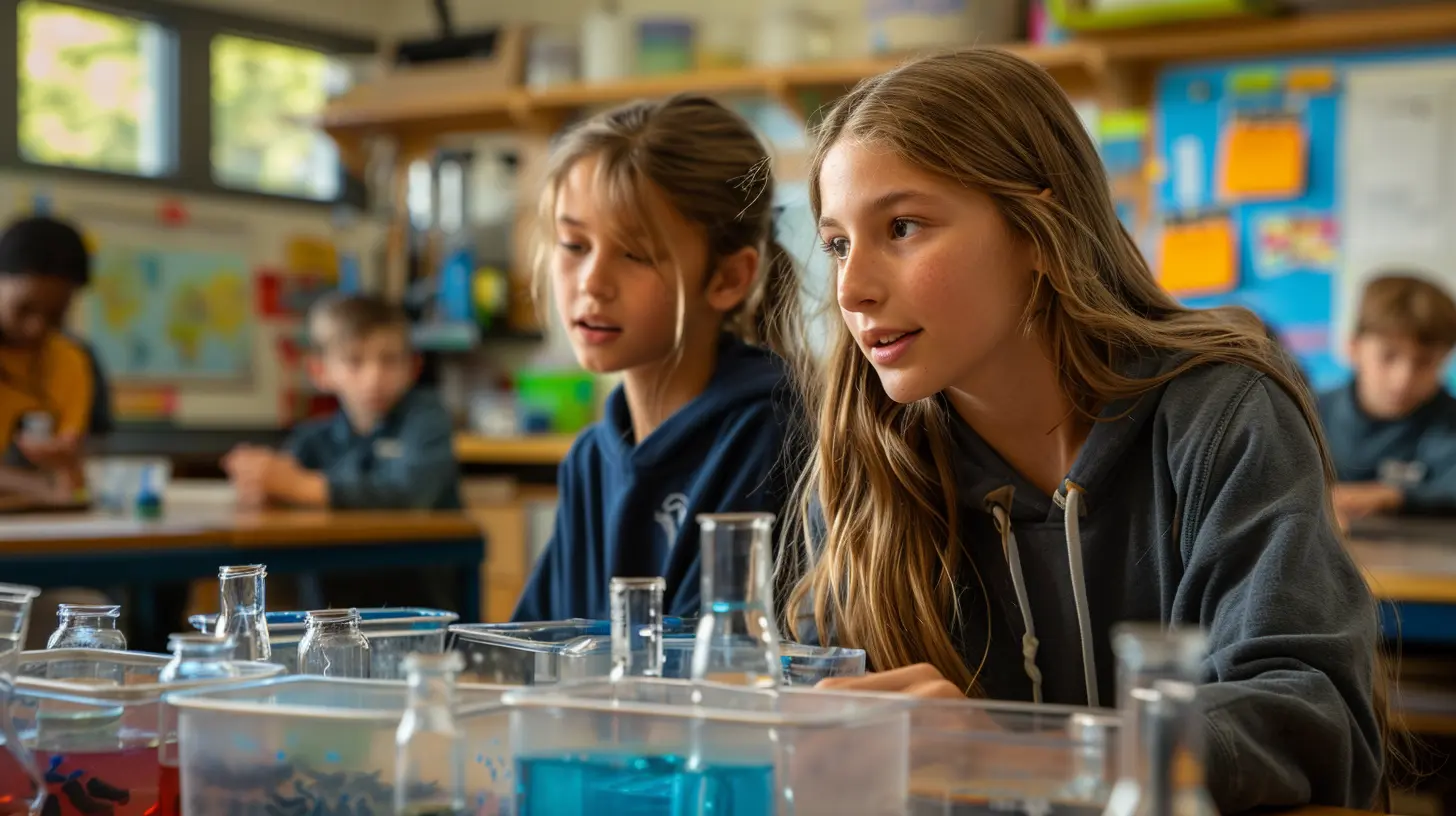
How to Bring Climate Science to Life Through Projects
Alright, so how can educators start integrating sustainable STEM into classrooms without overwhelming kids—or themselves?Here’s the secret sauce: keep it simple, keep it fun, and tie it back to real-world impact. Here are a few project ideas to get the imagination bubbling.
1. Build a Mini Greenhouse
What better way to talk about the greenhouse effect than to actually build a greenhouse?Students can use recycled water bottles, plastic wrap, and popsicle sticks to build mini greenhouses. Then, they plant seeds and observe how temperature and humidity change inside versus outside.
_What they learn_: Heat trapping, sustainability, photosynthesis, and food security—all rolled into one!
2. Design Solar Ovens
This one’s a favorite. Who doesn’t love a hands-on activity that ends in food?Students can build solar ovens using cardboard boxes, aluminum foil, and saran wrap. Not only do they get to test how effectively the sun can cook marshmallows or make nachos, but they also explore energy conversion, reflectivity, and solar power.
_What they learn_: Renewable energy, efficiency, and thinking outside the (pizza) box.
3. Monitor Air Quality with Low-Cost Sensors
Air pollution isn’t just a problem in big cities—it’s everywhere. Using a cheap sensor kit and tools like Arduino or Raspberry Pi, students can program and collect data on particulate matter in the air around their school.Bonus: They can compare data from different school locations and submit suggestions to improve air quality locally!
_What they learn_: Coding, electronics, data analysis, and environmental justice.
4. Engineer Wind Turbines
Here’s where engineering really gets exciting. Students can design and build model wind turbines using simple materials like cardboard, corks, and dowels.They can test different blade shapes and angles to see which produces the most energy. It's a great way to simulate how real wind farms work.
_What they learn_: Mechanical engineering, renewable energy, and problem-solving on the fly.
5. Create a Sustainable School Audit
This project is a deep dive into environmental impact—right at school. Students run an audit to analyze electricity usage, water consumption, waste patterns, and even transportation habits.They can present findings to the school board and propose sustainable solutions like composting, LED lighting, or bike-to-school programs.
_What they learn_: Critical thinking, data collection, environmental science, and advocacy.
Making the Most of Cross-Disciplinary Learning
Who says STEM has to stay in the science lab? Climate change touches everything, and integrating other subjects creates a richer, more meaningful experience.- Language Arts: Students can write persuasive essays, scripts for climate change PSAs, or climate-themed poetry.
- Social Studies: Dive into climate policy, global inequities, and the history of environmental movements.
- Art: Create infographics, murals, or upcycled installations from waste materials.
When students see the full-circle impact of their work—science meeting storytelling, art meeting activism—it clicks. And that’s where transformation happens.
Overcoming the “It’s Too Late” Mentality
Let’s face it—climate doom is real. Teens today are dealing with a lot of eco-anxiety, and who can blame them?But here’s the thing: when students take part in hands-on sustainability projects, that helpless feeling starts to melt away. They begin to see that their choices matter. Their actions add up. And their voices can be loud.
Instead of feeling like the world is ending, they start to feel like maybe—just maybe—they can help save it.
Real Classrooms, Real Impact
Still not convinced? Let’s zoom into a few real-life classrooms that are already making waves.- In Oregon, a middle school integrated a year-long project where students tracked the energy usage of their campus and proposed changes that led to a 15% reduction in electricity consumption.
- A high school in Michigan built a fully functional rain garden to manage stormwater runoff, transforming their barren front yard into a thriving ecosystem.
- In India, students designed low-cost water filters for rural areas using local materials, saving lives and gaining global recognition in the process.
These aren’t just feel-good stories; they’re proof that sustainable STEM works.
The Role of Teachers: From Lecturer to Facilitator
Now here’s a curveball: the teacher doesn’t need to have all the answers.Shocking, right?
In a sustainable STEM classroom, the educator’s role shifts from the “sage on the stage” to the “guide on the side.” It’s about enabling students to explore, wonder, tinker, fail, retry, and ultimately discover.
And don’t worry—there are loads of resources out there to help. From online courses to organizations like NASA's climate initiative, sustainability-based STEM is more accessible than ever.
Building a Generation of Climate Innovators
So where does this all lead? Ideally, we’re not just building science skills—we’re nurturing a mindset.A mindset that asks big questions.
A mindset that sees failure as a step forward.
A mindset that’s not afraid to try something wild in the name of a better planet.
The beauty of sustainable STEM is that it’s not just for honors students or science clubs. Anyone can be a part of it. Because climate change doesn’t check your grades before hitting your hometown—it affects everyone. So shouldn’t everyone be part of the solution?
Final Thoughts: Let’s Make Climate Learning Count
If we want to raise a generation that can face climate change head-on, we can’t afford to keep teaching it from behind a desk. It’s time to get our hands dirty, our brains buzzing, and our students engaged.Let them tinker. Let them test. Let them fail and try again. Because it’s not about finding the perfect answer—it’s about building the confidence to keep asking better questions.
Sustainable STEM isn’t just a teaching strategy. It’s a movement. And guess what? You’re already part of it.
So what hands-on climate science project are you going to kick off next?
all images in this post were generated using AI tools
Category:
Stem EducationAuthor:

Monica O`Neal
Discussion
rate this article
2 comments
Zeth Mason
This article beautifully highlights the importance of integrating hands-on projects into STEM education to teach climate science. Engaging students in real-world problem-solving not only deepens their understanding but also inspires a sense of responsibility towards our planet's future.
February 21, 2026 at 5:16 AM
Monica O`Neal
Thank you! I'm glad you found the article compelling. Integrating hands-on projects truly enhances student engagement and fosters a vital sense of stewardship for our planet.
Isadora Ford
Climate change isn't just a topic—it's a crisis demanding action. By integrating hands-on projects into STEM education, we empower the next generation to innovate solutions. Let's not just teach science; let's ignite a movement for a sustainable future!
January 20, 2026 at 3:33 AM
Monica O`Neal
Absolutely, hands-on projects can inspire and equip students to tackle climate challenges head-on. It's essential we turn knowledge into action for a sustainable future.