Smart Classrooms and Their Role in 2026 Learning Environments
8 September 2026
Walk into a classroom today and you will still see chairs, a whiteboard, and a teacher at the front. Walk into a classroom in 2026 and you might see the same physical layout, but the invisible infrastructure will be completely different. The term "smart classroom" has been thrown around for over a decade, often meaning little more than a projector and a document camera. That era is over. The 2026 learning environment is not about gadgets bolted onto traditional pedagogy. It is about a fundamental rethinking of how space, data, and human interaction converge to support learning.
The shift is not technological. It is philosophical. The smart classroom of 2026 is designed around one question: how do we reduce friction between a learner and the moment of understanding? Everything else, the sensors, the software, the adaptive platforms, is just plumbing.
What Actually Makes a Classroom Smart in 2026
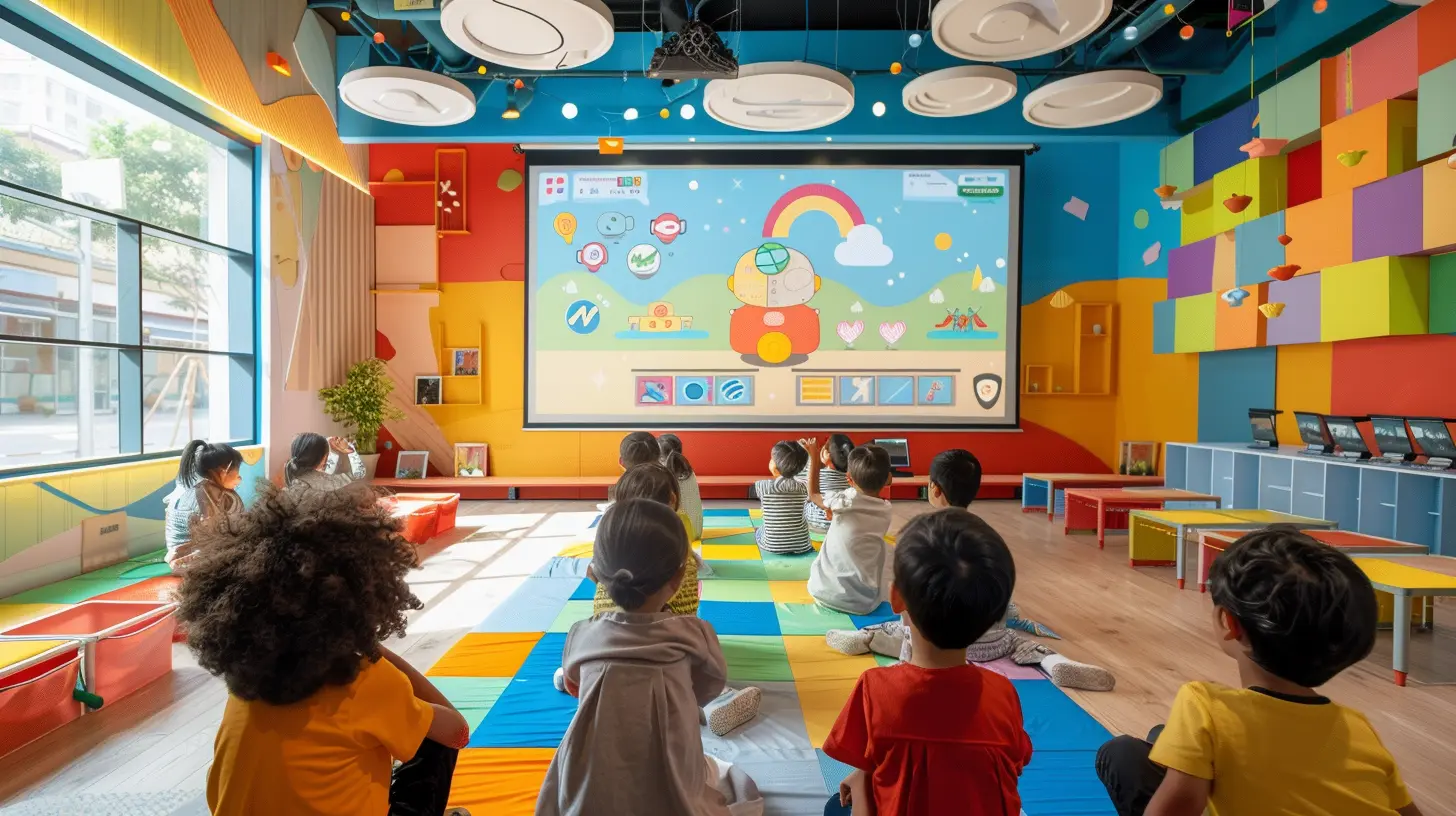
Let me be blunt. A room with a touchscreen and a high-speed internet connection is not smart. It is just connected. A genuinely smart classroom possesses three distinct capabilities that work in concert.First, it has situational awareness. The room knows what is happening. Not through cameras watching for misbehavior, but through environmental and interaction sensors that track engagement patterns, noise levels, lighting conditions, and even carbon dioxide concentration. High CO2 levels directly impair cognitive function. A room that cannot adjust its own ventilation based on the number of occupants and the intensity of group work is not smart. It is just a room.
Second, it has adaptive flow. The technology does not force a single mode of instruction. It adapts to the pedagogical moment. When a teacher shifts from direct instruction to collaborative problem solving, the room responds. Lighting changes subtly to delineate zones. Displays reconfigure from central presentation to peripheral group work. Audio systems adjust to support multiple simultaneous conversations without creating a cacophony.
Third, and most importantly, it has longitudinal memory. The smart classroom does not forget. It captures the artifacts of learning, not just the grades. It tracks which configurations of furniture and which types of digital stimuli correlated with deeper engagement for specific groups of students. This is not surveillance. It is pattern recognition that informs future lesson design.
The common mistake is to think that the smart classroom is about the student device. In 2026, the device is almost irrelevant. It is a window into a much larger ecosystem. The intelligence resides in the orchestration layer, the software that decides what content to push to which screen, when to pause for discussion, and when to allow autonomous exploration.
The Physical Space Is the Interface
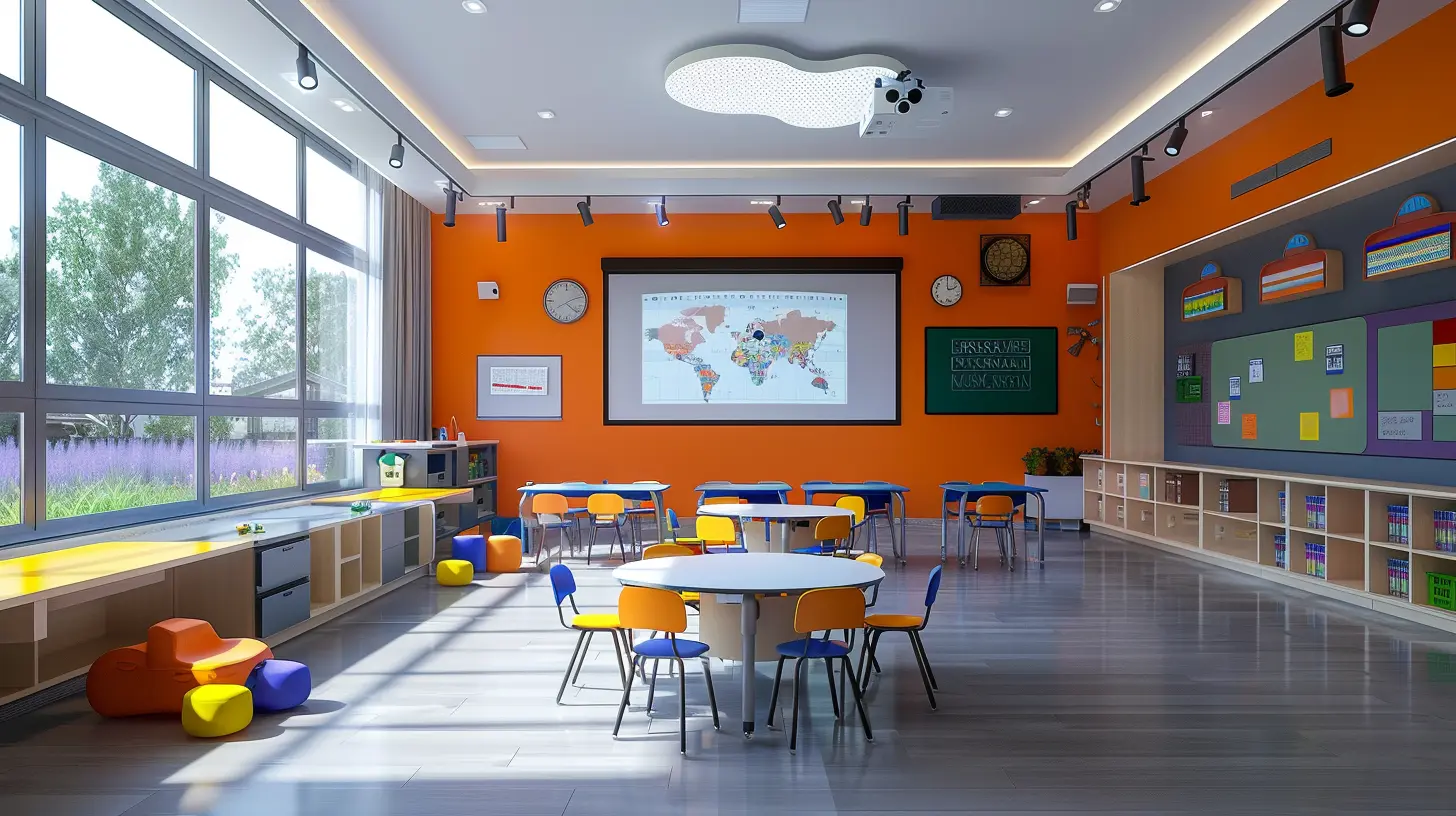
We spent twenty years digitizing content and ignoring the physical container in which learning happens. That was a strategic error. The room itself is the most powerful interface you will ever deploy. It has more surface area, more sensory bandwidth, and more emotional impact than any tablet.In 2026, successful smart classrooms treat furniture as a dynamic input device. Desks that can be reconfigured in under thirty seconds by a single student enable rapid transitions between individual work, pair sharing, and whole-group seminars. But the real innovation is in the embedded sensors. Weight distribution across a collaborative table can indicate whether all members are contributing equally to a physical task. This is not about policing group work. It is about giving the teacher actionable information on which groups are stuck because one student is dominating and another has disengaged.
The acoustic design matters just as much as the visual. Hard surfaces create reverberation that increases cognitive load, especially for students with auditory processing challenges or for those learning in a non-native language. Smart classrooms in 2026 use tunable acoustic panels that can shift the room from a high-energy collaborative space to a quiet examination environment without moving a single chair.
Lighting is another layer that most people get wrong. The old fluorescent tube is a cognitive disaster. It flickers at a frequency that, while imperceptible to conscious awareness, triggers headaches and reduces attention span in a significant portion of the population. The 2026 smart classroom uses tunable LED lighting that follows the circadian rhythm. Bright, cool light in the morning for analytical tasks. Warmer, dimmer light in the afternoon for creative brainstorming and reflection. This is not wellness theater. It is applied neuroscience.
The Role of Artificial Intelligence: Copilot, Not Autopilot
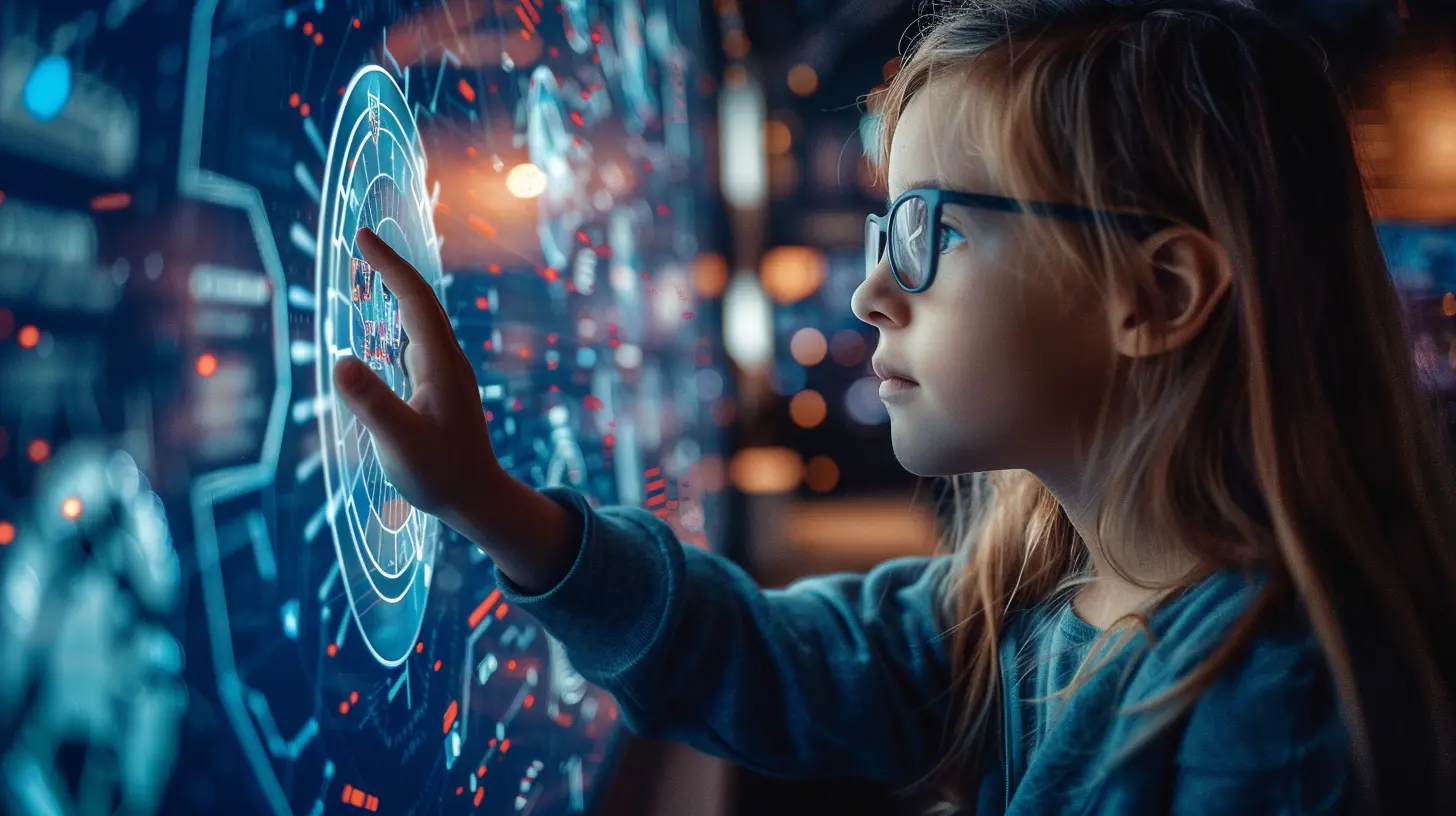
There is a persistent fear that AI will replace teachers. That fear is misplaced. AI in the 2026 smart classroom functions as a copilot. It handles the administrative overhead that consumes roughly forty percent of a teacher's non-instructional time. It drafts differentiated versions of reading materials. It generates practice problems calibrated to each student's current proficiency level. It flags conceptual misunderstandings in real time based on student responses to formative assessments.The critical design principle here is that the AI must be transparent and interruptible. A black box that makes decisions about student placement without explanation is unacceptable. The systems that work best in 2026 are those that provide a clear rationale for every recommendation. The teacher retains final authority. The AI suggests. The teacher disposes.
Consider a real-world scenario. A high school physics class is working on vector addition. The AI notices that six students are making the same error with direction signs. It does not send those six students to a remedial video. Instead, it alerts the teacher that a common misconception has emerged. The teacher pauses the class, draws a single clarifying diagram on the central display, and the misconception dissolves in two minutes. The AI did not replace the teacher. It made the teacher more effective by pinpointing the exact moment of collective confusion.
The danger arises when schools use AI to automate grading of open-ended work like essays. Current natural language processing can assess structure and grammar, but it still struggles with nuance, creativity, and voice. The 2026 best practice is to use AI for initial screening and feedback on mechanical issues, but to reserve human grading for the substantive evaluation of ideas. This is not a limitation. It is a feature. Students need to know that a human being read their work and cared about their thinking.

Data Privacy and the Trust Deficit
The single largest obstacle to the smart classroom is not cost. It is trust. Parents, students, and even teachers are deeply uncomfortable with the idea of continuous data collection. This discomfort is rational. The history of educational technology is littered with vendors who promised privacy and then monetized student data or suffered embarrassing breaches.The 2026 smart classroom must operate on a principle of data minimization. Collect only what is necessary to improve learning outcomes. Do not collect biometric data for marketing purposes. Do not build behavioral profiles that extend beyond the school day. Do not share data with third-party advertisers, ever.
There is a useful analogy here. A smart classroom is like a hospital room. The hospital monitors your vital signs continuously, but that data is protected by strict confidentiality and used solely for your medical benefit. If a hospital sold your heart rate data to an insurance company, you would rightly be outraged. Educational data deserves the same protection.
Implementation matters. Schools that have successfully navigated this challenge use a layered consent model. Parents can opt into different levels of data collection and analysis. The default is the least invasive level that still provides core functionality. Advanced analytics that require more granular data are available only with explicit, informed consent. This approach respects autonomy while still allowing the system to function.
Another practical recommendation is to conduct a privacy audit before purchasing any new technology. Ask the vendor pointed questions. Where is the data stored? In what country? Who has access? How long is it retained? What happens when the contract ends? If the vendor cannot answer these questions clearly and in writing, walk away. There are plenty of alternatives that can.
The Misconception of the Fully Digital Classroom
A significant faction in educational technology believes that the ultimate goal is to eliminate paper, physical textbooks, and even handwriting. This is misguided. The evidence from cognitive science is clear that handwriting, particularly note-taking by hand, engages different neural pathways than typing and leads to better retention for many learners. The 2026 smart classroom is not paperless. It is paper-optional.The best environments support both modalities seamlessly. A student can handwrite notes on a smart surface that digitizes them in real time, preserving the cognitive benefit of handwriting while gaining the searchability and shareability of digital text. Another student can type directly into a laptop. Both students can contribute to the same collaborative whiteboard, whether they are physically present or joining remotely.
This hybrid approach extends to the curriculum itself. Deep reading of complex texts is often better done on paper, where spatial navigation of the physical page supports comprehension. Quick reference and interactive simulations are better done digitally. The smart classroom does not force a choice. It provides the right tool for the right task.
Teacher Training Is the Real Differentiator
Here is an uncomfortable truth. Most smart classroom initiatives fail because of inadequate professional development. Schools purchase expensive systems, install them over the summer, and then offer a single half-day training session in August. By October, the expensive system is being used as a glorified projector. By January, it is collecting dust.The 2026 smart classroom requires a different approach to teacher support. It requires ongoing, embedded professional development that happens within the context of actual lessons. The technology vendor should provide instructional coaches, not just technical support. These coaches work alongside teachers for the first full semester, helping them redesign lessons to leverage the new capabilities.
The learning curve is real. A teacher who has spent twenty years lecturing from the front of the room cannot be expected to master a dynamic, student-centered, technology-rich environment in a week. It takes time, patience, and permission to fail. The schools that succeed are those that create a culture where experimentation is encouraged and where teachers are not punished for lessons that do not work perfectly on the first attempt.
Consider the analogy of learning to drive a car with a manual transmission. At first, you stall. You jerk forward. You feel overwhelmed by the coordination required. But with practice, it becomes automatic. Then you can focus on the road, not the mechanics. The same is true for teaching in a smart classroom. The technology must become invisible, a background hum that supports rather than distracts.
The Cost Conundrum and Equity Concerns
Let us address the elephant in the room. Smart classrooms are expensive. A fully equipped room with adaptive furniture, environmental sensors, integrated displays, and a robust network backbone can cost tens of thousands of dollars. This creates a two-tiered system where affluent schools have cutting-edge environments and under-resourced schools struggle to maintain basic infrastructure.This equity gap is real and must be confronted honestly. However, the solution is not to abandon smart classrooms entirely. It is to prioritize investments based on pedagogical impact, not on flashy features. A school with a limited budget can achieve seventy percent of the benefit with ten percent of the cost by focusing on a few key elements.
The highest-impact, lowest-cost intervention is the network infrastructure. A reliable, high-bandwidth wireless network is the foundation upon which everything else is built. Without it, nothing works. With it, students can bring their own devices and access cloud-based resources that level the playing field.
The second priority is the interactive display, not as a replacement for the whiteboard, but as a shared space for collaborative thinking. A single large display, properly integrated, can transform a classroom more than a dozen tablets ever could.
The lowest priority is the individual student device. Most schools already have some form of one-to-one program or can leverage bring-your-own-device policies. The marginal benefit of purchasing the latest, most expensive device is negligible. The device is a window. The view depends on what is on the other side.
Real-World Examples: What Works and What Does Not
Let me give you a concrete example of a smart classroom implementation that works well. A middle school in a suburban district redesigned its science classrooms around a central "collaboration hub." The hub is a large, horizontal touchscreen that four to six students can gather around. The screen displays a shared simulation, and each student has a handheld controller. The teacher can push different parameters to different groups, allowing for differentiated challenges within the same lesson.The key design decision was to make the hub the center of the room, not the front. There is no traditional teacher desk at the front. The teacher moves freely, observing group interactions and intervening where needed. The system tracks which groups are making progress and which are stuck, alerting the teacher via a subtle notification on a wearable device. The result has been higher engagement and better collaboration skills, not just better test scores.
Now consider a failed example. A high school spent millions equipping every classroom with individual AI-powered tutoring systems. The software was sophisticated, but the implementation was top-down. Teachers were not consulted. They were told to use the system for a minimum of thirty minutes per day. Students quickly learned that the system rewarded gaming behavior, clicking through answers to reach the next level without actually learning. Within two semesters, the teachers had reverted to their traditional methods, and the expensive system was used only for test prep drills.
The lesson is clear. Technology cannot be imposed. It must be adopted because it solves a problem that teachers and students actually face. The failed implementation did not address a real need. It was a solution in search of a problem.
The Future Is Not the Classroom
As we look toward 2026 and beyond, we must recognize that the classroom is no longer the sole locus of learning. The smart classroom of the future is a node in a larger network that extends into the home, the community, and the digital world.The classroom is where synchronous, social learning happens. It is where students learn to collaborate, to debate, to present, and to receive immediate feedback from a human expert. But the individual practice, the review of videos, the reading of background material, this can happen anywhere. The smart classroom must be designed to connect seamlessly with this extended learning environment.
This means that homework is no longer a set of static worksheets. It is a set of interactive challenges that feed data back to the classroom system. When students arrive the next day, the teacher does not ask, "Did anyone have trouble with the homework?" The system already knows which students struggled with which concepts. The teacher can immediately form targeted intervention groups.
This also means that the classroom must accommodate a mix of physical and remote learners. The pandemic accelerated the acceptance of remote learning, but most schools have reverted to a fully in-person model. The 2026 smart classroom is designed for hybrid from the start, with cameras and microphones that make remote participants feel genuinely present, not like they are watching a video of a class they cannot join.
Practical Recommendations for Implementation
If you are reading this and considering how to move forward, let me offer some practical, actionable advice.Start with a pedagogical vision, not a technology list. Write down what you want students to experience that they are not experiencing today. Do you want more collaborative problem solving? More personalized pacing? More immediate feedback? Then find technology that supports those specific goals.
Run a pilot in a small number of classrooms with enthusiastic teachers. Do not roll out district-wide in the first year. The pilot will reveal issues that you cannot anticipate in the abstract. The pilot teachers will become your champions and your best source of honest feedback.
Measure what matters. Do not just track test scores. Track engagement, attendance, collaboration quality, and student self-efficacy. These are harder to measure, but they are more predictive of long-term success.
Plan for the total cost of ownership. The initial purchase is only the beginning. There are licenses, maintenance, upgrades, and professional development. A budget that covers only the hardware is a recipe for failure.
Have a clear exit strategy for every piece of technology. What happens if the vendor goes out of business? Can you export your data? Can you switch to a different platform without losing years of accumulated student work? If not, that is a risk you need to mitigate before you sign the contract.
The Human Element Remains Non-Negotiable
In all of this discussion of sensors, algorithms, and adaptive systems, we must never lose sight of the fundamental truth. Learning is a human activity. It is driven by curiosity, by social connection, and by the desire to make sense of the world. Technology can amplify these drives, but it cannot replace them.The best smart classroom in 2026 is not the one with the most advanced technology. It is the one where a skilled teacher uses technology to create moments of genuine intellectual excitement. It is the one where a struggling student receives exactly the right support at exactly the right moment. It is the one where the room itself disappears and all that remains is the pure joy of figuring something out.
The smart classroom is a tool. It is a powerful tool, but it is still a tool. The master craftsman is the teacher. The raw material is the curiosity of the student. And the finished product is a lifelong learner who is not afraid of the future, because they have learned how to learn.
We will get the smart classroom right when we stop talking about the technology and start talking about the learning. The technology is the easiest part. The hard part is understanding how people learn, how they motivate themselves, and how they connect with one another. That is the work that matters, and it is the work that will define education for the next generation.
all images in this post were generated using AI tools
Category:
Education TrendsAuthor:

Monica O`Neal
Discussion
rate this article
2 comments
Jamie McAleer
Smart classrooms are not just a trend; they are the heartbeat of modern education. Embracing technology in learning environments is essential for preparing students to thrive in an ever-evolving world. Let's lead, not follow.
September 27, 2026 at 11:23 AM
Monica O`Neal
I completely agree. Smart classrooms are crucial for engaging students and enhancing their learning experience. Embracing technology is key to preparing them for the future.
Oren McMeekin
Smart classrooms are essential for enhancing engagement and personalized learning in 2026.
September 22, 2026 at 12:54 PM