Inspiring a Love of Learning with a Growth Mindset
14 June 2026
Let’s be real here: learning isn’t always a walk in the park. Sometimes it feels more like hiking up a steep hill… in flip-flops… during a thunderstorm. But what if we told you there’s a magical way to turn that uphill battle into an exciting adventure? That’s where the concept of a growth mindset comes in!
In this article, we’re diving into how we can inspire a deep love of learning using a growth mindset. Whether you're a parent, teacher, student, or just someone looking to level up your brain game, this one’s packed with insights (and fun metaphors) to help make learning feel less like a chore and more like a journey worth taking.
What is a Growth Mindset, Anyway?
Let’s start with the basics. A growth mindset is the belief that intelligence and abilities can develop over time. It’s not about being the smartest person in the room; it’s about believing you can get smarter with effort, strategies, and help from others.On the flip side, a fixed mindset is when you believe your skills and smarts are set in stone. “I’m just not good at math,” sound familiar? That’s a fixed mindset talking.
Now compare that with: “I’m not good at math… yet.” That little “yet” changes everything, doesn’t it?
Why a Growth Mindset is the Secret Sauce to Loving Learning
Let’s be honest. We all love being good at stuff. But when we believe we have to be good at something the first time around? That’s pressure. And pressure sucks the fun right out of learning.A growth mindset lifts that pressure. Mistakes become part of the process. Effort matters more than immediate success. Suddenly, learning becomes a challenge – in the fun, puzzle-solving kind of way, not the “bang-your-head-against-the-wall” kind.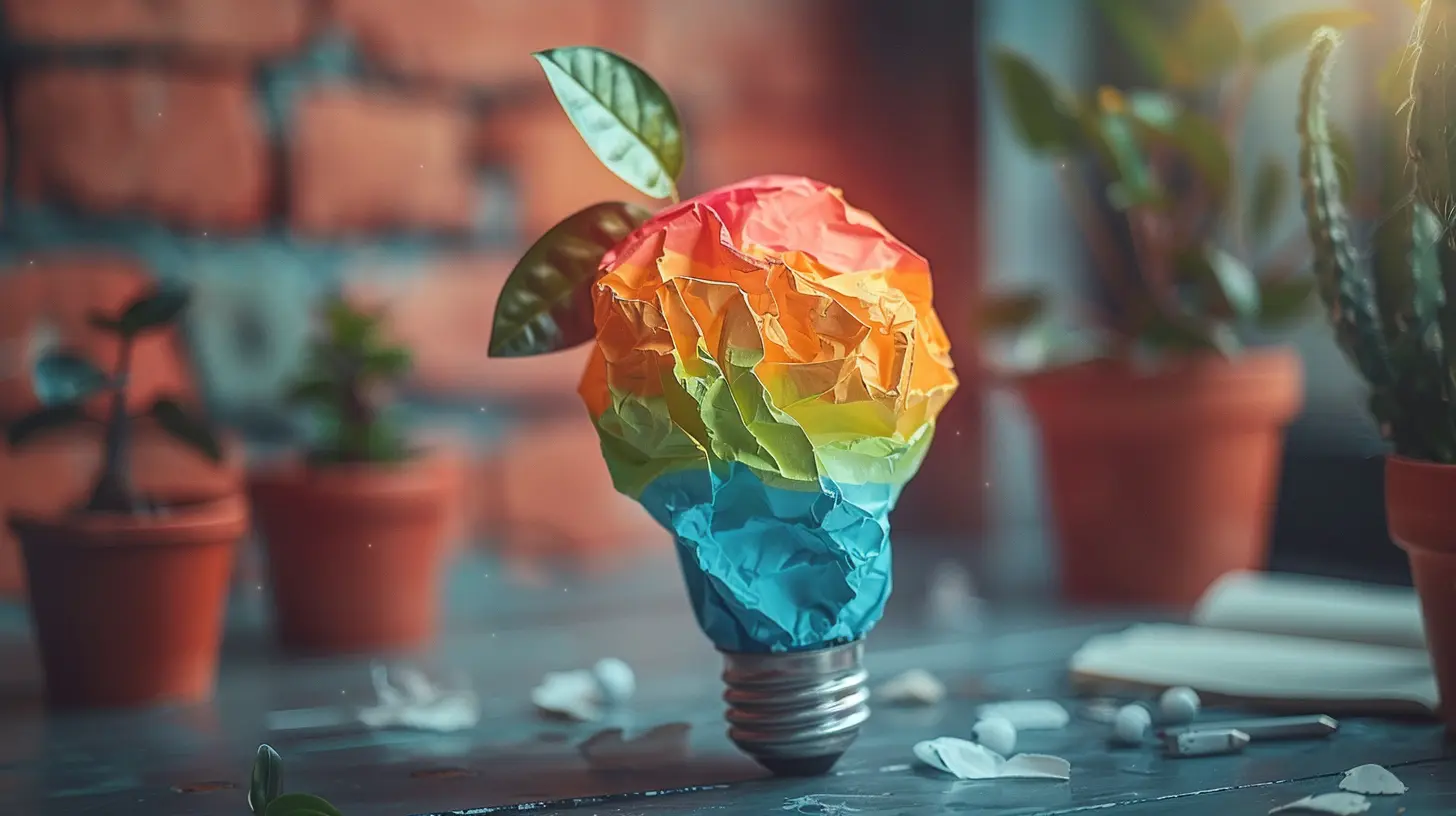
Turning “I Can’t” into “I Can… Eventually”
The journey from “I’m terrible at this” to “Hey, I’m getting better!” is where the magic happens. Here are some examples of how a growth mindset can literally flip the script:- "I don’t understand this subject" → "I don’t understand this yet, but I will if I keep at it."
- "I failed the test" → "I found out what I need to study more."
- "They’re naturally talented" → "They’ve probably practiced a lot to get there."
See the difference? One mindset shuts the door. The other one kicks it open and says, “Bring it on!”
How to Spark That Love of Learning (Even If You're Not a Teacher)
You don’t need a classroom or a chalkboard to inspire a love of learning. Whether you’re a parent, mentor, big sibling, or cool aunt/uncle, you can help others shift into growth gear. Here’s how:1. Celebrate Effort Over Outcome
Instead of saying, “You’re so smart!” go with, “Wow, you worked really hard on that!” Why? Because the first praises something a child can’t control. The second praises what they can control — their effort.2. Normalize Mistakes
Mistakes are signs that you’re stretching yourself. They’re the brain’s version of “muscle burn” at the gym. So don’t hide your own mess-ups — flaunt them! Laugh them off, learn from them, and show others that messing up is part of leveling up.3. Ask Curious Questions
Spark curiosity with questions like, “What was the coolest thing you learned today?” or “What part confused you the most?” These questions aren’t about grades or performance — they’re about the process. That’s where the gold is.4. Model a Growth Mindset Yourself
Let’s say you’re trying to fix the Wi-Fi router (again). Saying, “Ugh, I’m so bad at tech,” reinforces a fixed mindset. But saying, “Alright, I haven’t figured it out YET, but I’m not giving up,” shows resilience — and that’s contagious.Growth Mindset in the Classroom: Teachers, Here’s Your Toolkit
Teachers, you are the myth-busting superheroes of education. You literally have the power to change how students perceive learning. Here are a few down-to-earth but powerful strategies:1. Embrace the Power of “Yet”
Add “yet” to your classroom vocabulary. When a student says, “I can’t do this,” pause and say, “Yet. You can’t do it yet.” It’s a small word with massive motivational mojo.2. Reframe Failure as Feedback
Change the narrative from “You failed” to “You’ve found something to work on.” Create an environment where failure is feedback, not condemnation.3. Use Real-Life Role Models
Talk about famous people who struggled before succeeding. J.K. Rowling was rejected by 12 publishers. Michael Jordan didn’t make his high school varsity team. Boom — real-world proof that struggles precede success.4. Set Growth-Oriented Goals
Instead of “Get an A on the test,” aim for “Understand the main concepts by the end of the week.” Skills over scores, always.Encouraging a Growth Mindset at Home: Parents, Take the Lead
Hey parents, you’re the original teachers — and trust me, your kids are always watching. Want to foster a love of learning at home? You’ve got this.1. Be the Growth Role Model
Talk out loud about your challenges. Say things like, “Hmm, I’m still figuring out how to bake this cake, but I’ll get it right!” Showcase your learning process — and your stumbles.2. Read Books About Growth Mindset
There are tons of kid-friendly books out there that spark great conversations. Titles like “The Girl Who Never Made Mistakes” or “Your Fantastic Elastic Brain” are fun, relatable, and mindset-boosting.3. Praise the Process
Instead of focusing on report cards, talk about what your child enjoyed learning most. Make learning a shared curiosity, not a performance contest.4. Limit the Comparison Game
It’s tempting to say, “Look how fast your brother learned that!” But comparisons tend to dampen motivation. Instead, focus on individual progress: “You’ve come such a long way since last month!”Fun Learning Activities with a Growth Twist
Let’s spice things up. Introducing learning as play? That’s a growth mindset power move! Here are a few fun ways to light that spark:1. Growth Mindset Jenga
Write reflective questions or challenges on Jenga blocks:- "What’s something new you tried this week?"
- "Describe a time you didn’t give up."
It’s part game, part inspiration!
2. “New Skill” Challenges
Take on a weekly challenge to try something brand new: juggling, drawing, coding, baking. Document the journey. Laugh at the hiccups. Celebrate the breakthroughs.3. Family “Try-and-Fail” Nights
Yep — an evening dedicated to trying something you’re probably going to stink at. Origami, karaoke, improv games. The point? Enjoying the process, even when you're hilariously bad at it.Switching the Script on Self-Talk
One of the most overlooked areas of growth mindset magic? The way we talk to ourselves. That inner voice can be your biggest cheerleader or your harshest critic.Here’s how to start swapping out the negative chatter:
- Instead of “I’m not good at this,” say “This is tough, but I’ve done hard things before.”
- Instead of “I keep messing up,” say “Every attempt is helping me improve.”
- Instead of “I’ll never get this,” say “I might not get it yet, but I will.”
We’re not talking about toxic positivity. It’s not about pretending things are easy. It’s about reminding yourself that progress is possible — and likely — with effort.
Growing Lifelong Learners: The Big Picture
At the end of the day, inspiring a love of learning isn’t about worksheets and grades. It’s about lighting a fire that lasts beyond the classroom walls.Whether you're 9 or 90, that spark of curiosity — of wanting to improve, grow, and understand the world better — is what makes life exciting. A growth mindset isn't just an educational tool; it's a way to live a fuller, braver, more resilient life.
And the coolest part? It’s contagious. When you embrace a growth mindset, others around you can’t help but catch a little of that magic, too.
Final Thoughts: Mindset is the Game-Changer
So, next time you're helping with homework, tackling a tough class, or trying something new — remember: talent is helpful, but mindset? That’s the game-changer.Learning is a lifelong ride. And with a growth mindset, it becomes a ride worth taking — full of twists, turns, and a whole lot of “Wow, I didn’t think I could do that!”
So go ahead. Make mistakes. Embrace the struggle. And keep growing.
Because you haven't failed. You're just not there... yet.
all images in this post were generated using AI tools
Category:
Growth MindsetAuthor:

Monica O`Neal
Discussion
rate this article
1 comments
Inez O'Neal
Great insights! Love the growth mindset approach.
June 15, 2026 at 10:42 AM
Monica O`Neal
Thanks for the kind words! I'm glad the growth mindset resonates with you.