How Multilingual Education Will Gain Traction by 2027
29 April 2026
Let’s be honest: learning a second language in school used to feel like being force-fed broccoli while everyone else ate cake. You’d sit in Spanish class, conjugating verbs like a robot, wondering when you’d ever use “¿Dónde está la biblioteca?” in real life. Spoiler alert: you never did. But hold onto your textbooks, folks, because the winds are shifting. By 2027, multilingual education isn’t just going to be a trendy buzzword—it’s going to be the cool kid on the block, the one everyone wants to hang out with. And I’m here to tell you why, with a wink and a nudge, because this isn’t your grandma’s language lesson.

The Great Babel Awakening: Why Now?
You might be thinking, “Didn’t people try this before? What’s so special about 2027?” Well, imagine you’re at a party, and suddenly everyone starts speaking a mix of English, Mandarin, and Spanish. That’s not a fever dream—it’s the global economy on steroids. By 2027, the world will be more connected than a smartphone glued to your hand. Remote work, international startups, and TikTok influencers from Timbuktu to Tokyo are making monolingualism feel like showing up to a rave wearing a tuxedo. It’s awkward, outdated, and frankly, a bit embarrassing.Here’s the kicker: technology is finally catching up with our dreams. AI translation tools? They’re good, but they’re not human. You can’t charm a client in Mandarin with a robot voice. You can’t crack a joke in Portuguese with a Google Translate app. By 2027, schools will realize that teaching kids to speak multiple languages isn’t just about vocabulary—it’s about empathy, cultural street smarts, and making friends in places you’ve never visited. Think of it as upgrading your brain’s software from dial-up to 5G.

The “Broccoli” No More: How Language Learning Gets Fun
Remember when language classes were all about memorizing lists and getting red marks on pop quizzes? That’s dying faster than a flip phone. By 2027, multilingual education will ditch the drudgery and embrace the chaos. Picture this: instead of conjugating verbs, students will be playing immersive video games where they have to negotiate a peace treaty in French or trade spices in Arabic. Or imagine virtual reality field trips where you haggle in a Moroccan souk without leaving your classroom.The secret sauce? Gamification. Kids love games more than they love oxygen. By turning language learning into a quest—complete with levels, rewards, and boss battles—schools will trick brains into absorbing vocabulary like sponges. And it’s not just for kids. Adults will jump on this bandwagon too, because who wouldn’t want to learn Japanese through anime subtitles or Italian by cooking virtual pasta? By 2027, the phrase “language homework” will sound as quaint as a cassette tape.
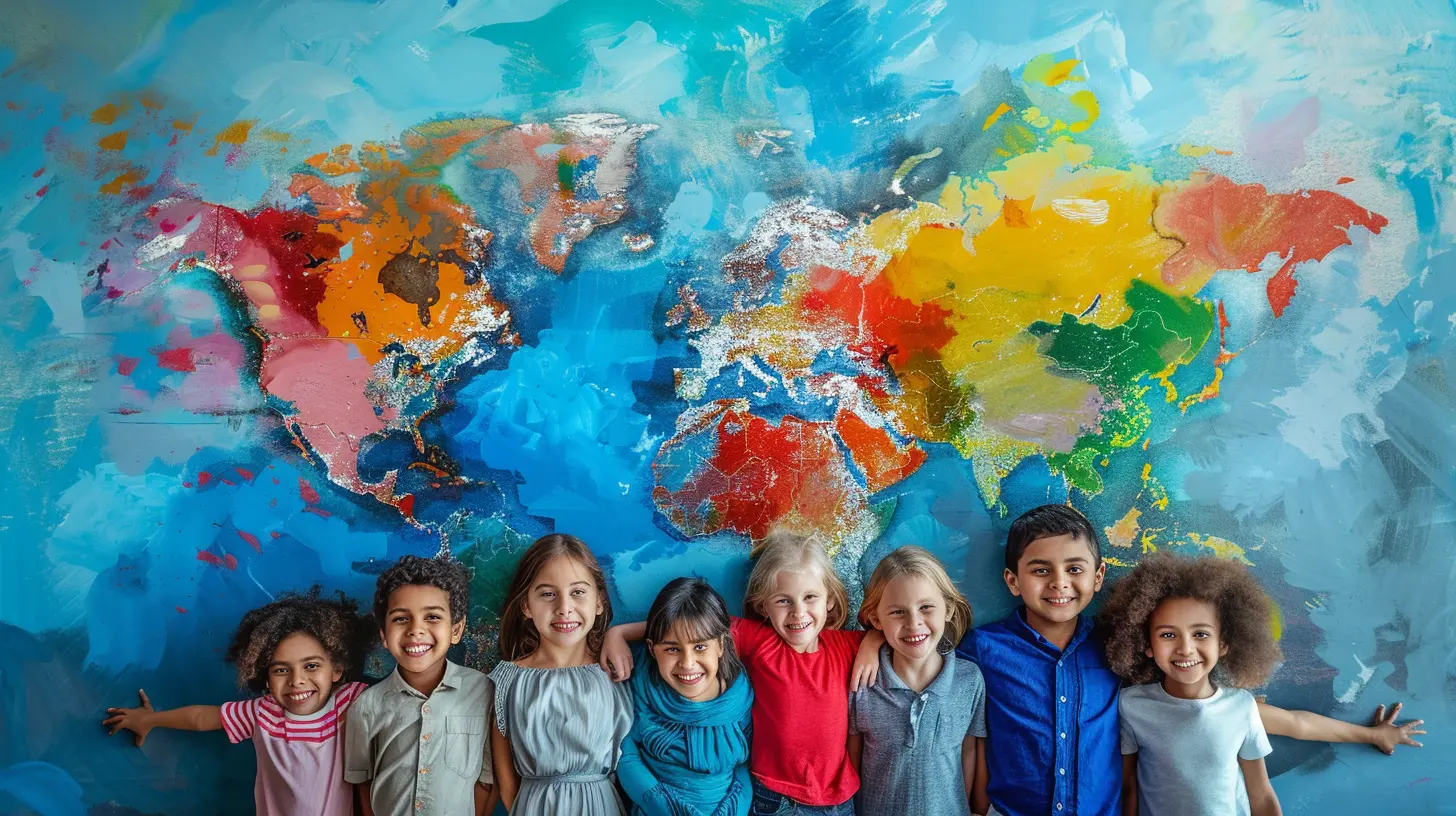
The Economy Is Speaking in Tongues (And Your Wallet Should Too)
Let’s talk money, honey. If you think being bilingual is just a nice bonus on a résumé, you’re living in the past. By 2027, companies will pay a premium for employees who can switch between languages like a DJ switches tracks. Why? Because the global market is a hungry beast, and it wants to snack on every culture’s pie. A business that can market in Spanish, Hindi, and Arabic? That’s not just smart—it’s a money printer.Here’s a wild statistic: by 2027, the global economy will be worth over $100 trillion (give or take a few billion). The lion’s share of growth will come from Asia, Africa, and Latin America. If you can’t speak the language of your customer, you’re basically trying to sell ice to an Eskimo—but the Eskimo speaks Inuktitut and you’re miming. Multilingual education will become the golden ticket to high-paying jobs in tech, diplomacy, and even healthcare. Doctors who can explain symptoms in two languages? That’s a lifesaver. Literally.
The Brain on Languages: Why You’ll Be Smarter Than Your Friends
Here’s a fun fact: learning a second language is like giving your brain a daily workout at the mental gym. Studies show that bilinguals have better problem-solving skills, delayed dementia, and a knack for multitasking that would make a circus juggler jealous. By 2027, schools will push this angle hard because parents love anything that makes their kids seem like geniuses.But let’s get real: the benefits go beyond test scores. Speaking multiple languages makes you a better listener, a more creative thinker, and—dare I say—a more interesting person at dinner parties. You know that awkward silence when someone mentions a foreign film? Bam! You can discuss it in its original language. It’s like having a superpower, minus the cape. And by 2027, this superpower will be as common as having Wi-Fi.
The Death of the “One-Size-Fits-All” Curriculum
The old model of education was built for the industrial age: teach everyone the same thing, in the same way, and hope they don’t rebel. By 2027, that’s going up in flames. Multilingual education will be tailored to each student’s interests, background, and even their vibe. Imagine a curriculum where you can choose to learn German because you love engineering, or Swahili because you plan to volunteer in Kenya.Schools will use AI to create personalized language journeys. If you’re a visual learner, you’ll get flashy infographics. If you’re a clumsy learner (like me), you’ll get hands-on activities where you mess up and laugh. The goal isn’t perfection—it’s connection. And that’s a game-changer. No more “Juan has a pencil” drills. Instead, you’ll learn to say, “I need a coffee before I start this project” in five languages. Practical? Yes. Hilarious? Also yes.
The Parent Trap: Why Moms and Dads Are All In
Parents are the ultimate wildcard in education. They can make or break a trend. And by 2027, they’ll be screaming for multilingual programs. Why? Because they’ve seen the future, and it’s scary competitive. The kid next door is learning Mandarin through a VR app while yours is still mastering cursive. Panic sets in.But it’s not just about fear—it’s about pride. Parents want their kids to be global citizens, not just locals with a passport. They want them to order dumplings in Beijing, flirt in Paris, and argue in Berlin. Multilingual education will become a status symbol, like having a Tesla or a backyard pool. And schools will cash in on this by offering dual-language immersion programs from kindergarten onward. By 2027, you’ll see signs like “Learn Spanish by Age 5 or Your Money Back!” (Okay, maybe not, but close.)
The Technology Tango: AI, Apps, and the Human Touch
Let’s give credit where credit’s due: technology will be the wingman for multilingual education. Imagine apps that correct your pronunciation in real-time, chatbots that argue with you in French, and voice assistants that switch languages mid-sentence. By 2027, these tools will be so seamless that you’ll forget you’re even learning.But here’s the catch: tech can’t replace humans. You can’t hug a chatbot. You can’t share a laugh over a mistranslation with an AI. The real magic happens when students practice with native speakers—via video calls, pen pals, or class exchanges. By 2027, schools will partner with sister institutions in other countries, making language learning a global slumber party. You’ll learn to say “I’m sorry” in Japanese while accidentally insulting a classmate’s grandmother. That’s the messy, beautiful reality of human connection.
The Rise of “Third Culture” Kids
Here’s a term you’ll hear a lot by 2027: “third culture kids.” These are children who grow up speaking multiple languages because their parents moved for work, love, or adventure. They’re the ultimate ambassadors of multilingual education. They don’t just speak languages—they live them. They code-switch like DJs, mixing accents and idioms with ease.Schools will start designing programs specifically for these kids, celebrating their hybrid identities instead of trying to stuff them into one linguistic box. Imagine a classroom where a kid from Brazil, a kid from Korea, and a kid from Kenya all teach each other their mother tongues. That’s not just education—it’s a mini United Nations. And by 2027, this model will spread like wildfire.
The Pitfalls: What Could Go Wrong?
Now, I’m not here to sugarcoat things. Multilingual education has its gremlins. For one, it’s expensive. Training teachers, buying resources, and implementing tech costs money that many schools don’t have. By 2027, there will be a gap between rich districts that offer ten languages and poor ones that struggle with one. That’s a real problem.Another issue? Language fatigue. Learning two or three languages at once can fry your brain like an egg on a hot sidewalk. By 2027, educators will need to balance intensity with fun, or risk turning students off entirely. And let’s not forget the politics: some countries see multilingualism as a threat to national identity. You think it’s easy teaching English in France? Sacré bleu!
But here’s the thing: every revolution has bumps. The key is to embrace the chaos, laugh at the mistakes, and keep moving forward. By 2027, we’ll look back at today’s monolingual classrooms and wonder how we ever survived.
The 2027 Classroom: A Sneak Peek
Close your eyes and imagine a typical classroom in 2027. The walls are covered in maps, flags, and QR codes that link to songs in Swahili. Students wear headsets that translate whispers in real-time. The teacher starts the day with a greeting in three languages, and no one blinks.During math, you solve problems in Japanese. During history, you debate the Cold War in Russian. At lunch, you trade sandwiches with a kid from Mexico while practicing your Spanish. It’s chaotic, loud, and absolutely wonderful. The best part? No one is afraid to make mistakes. You stumble over a word, and someone high-fives you anyway. That’s the spirit of multilingual education by 2027: messy, human, and unstoppable.
How to Jump on the Bandwagon (Before It Leaves You Behind)
So, you’re convinced. You want in. But how do you prepare for this linguistic revolution? Start small. Download a language app today. Watch a foreign film with subtitles. Talk to your neighbor who speaks another tongue. By 2027, you’ll have a head start that’ll make your friends jealous.For schools, the advice is simpler: think like a child. Make it fun. Make it social. Make it relevant. And for goodness’ sake, stop teaching languages like they’re a chore. By 2027, the schools that get this will thrive. The ones that don’t will be as relevant as a fax machine.
The Final Word: Why 2027 Is the Year of the Polyglot
Here’s the bottom line: multilingual education isn’t just gaining traction—it’s about to explode. By 2027, it will be the norm, not the exception. The reasons are clear: a global economy, smarter tech, eager parents, and a generation that values connection over isolation.But let’s not forget the most important reason: it’s fun. Learning a new language is like unlocking a secret door to another world. You get to be a different version of yourself—more confident, more curious, more alive. And by 2027, everyone will want that key. So, what are you waiting for? Start conjugating, mispronouncing, and laughing your way to fluency. The future is multilingual, and it’s got a sense of humor.
all images in this post were generated using AI tools
Category:
Education TrendsAuthor:

Monica O`Neal
Discussion
rate this article
2 comments
Renata McCabe
This article highlights a crucial shift in education. The rise of multilingual programs can truly enhance students' learning experiences and cultural understanding. I can't wait to see how schools embrace this approach and foster a more inclusive environment for everyone by 2027!
June 23, 2026 at 2:32 AM
Monica O`Neal
Thank you for your thoughts! It's exciting to see the potential of multilingual programs in shaping a more inclusive educational landscape. Let's hope for meaningful progress by 2027.
Wendy Sharpe
Embracing multilingual education opens doors to diverse perspectives and opportunities! By 2027, let’s harness the power of language to unite cultures and empower future generations, fostering understanding and collaboration across our global community.
April 29, 2026 at 10:15 AM
Monica O`Neal
Absolutely! Multilingual education is key to building bridges between cultures and enhancing global collaboration. Let's make it happen by 2027!