How Learning Analytics Will Guide Instruction by 2027
15 April 2026
Remember those old-school progress reports? The ones that arrived like a quarterly financial statement, telling you—long after the fact—whether your learning “investment” had paid off? Yeah, those are about to go the way of the chalkboard. We’re standing at the edge of a seismic shift in education, one driven not by gut feelings or standardized snapshots, but by a continuous, compassionate stream of insight. By 2027, learning analytics won’t just be a buzzword in a faculty meeting; it will be the trusted co-pilot for every educator, quietly revolutionizing how we guide students toward success. Let’s pull back the curtain on this not-so-distant future.

From Rearview Mirror to GPS: The Fundamental Shift
For the longest time, educational assessment has been like driving a car while only looking in the rearview mirror. You get a clear picture of where you’ve been—"Oh, look, we struggled with fractions three miles back!"—but it’s hopeless for navigating the road ahead. A quiz, a mid-term, a final grade: these are all historical documents. They tell a story that’s already been written, often when it’s too late to change the plot.Learning analytics flips the script entirely. Imagine swapping that rearview mirror for a real-time GPS designed for the human mind. This GPS doesn’t just shout “recalculating!” after a wrong turn (a failed test). It sees the hesitation in your speed when a new concept is introduced, notices when you take a scenic route through a topic you love, and gently suggests a rest stop when it senses cognitive fatigue. By 2027, this shift from retrospective judgment to proactive guidance will be the bedrock of effective instruction. We’ll stop asking “How did you do?” and start asking “How are you doing, and what do you need right now?”
The Engine Room: What’s Actually Being Analyzed?
So, what’s fueling this sophisticated GPS? It’s more than just test scores. We’re talking about a rich tapestry of data points that, together, paint a holistic portrait of the learning journey:* Engagement Metrics: How long does a student interact with a digital textbook chapter? Do they rewatch lecture snippets? Which forum posts spark their comments? It’s like seeing which exhibits in a museum make a visitor stop, ponder, and return.
* Process & Pathway Data: The steps a student takes to solve a complex math problem in an adaptive platform. The sequence of links they follow in a research module. This reveals their strategic thinking—or where their strategy breaks down.
* Social Learning Patterns: Analytics can map the collaborative networks in a classroom. Who is a hub of explanation? Who is quietly benefiting from peer support? Learning is a social act, and this data makes the invisible web of collaboration visible.
* Affective & Biometric Signals (with big ethical guardrails!): This is the frontier. Could anonymized, aggregate data on pace (suggesting confusion or flow) or even voluntary use of wellness check-in apps inform when a class is collectively stressed? The key is using such data to offer support, never to penalize.

The Classroom of 2027: A Day in the Life
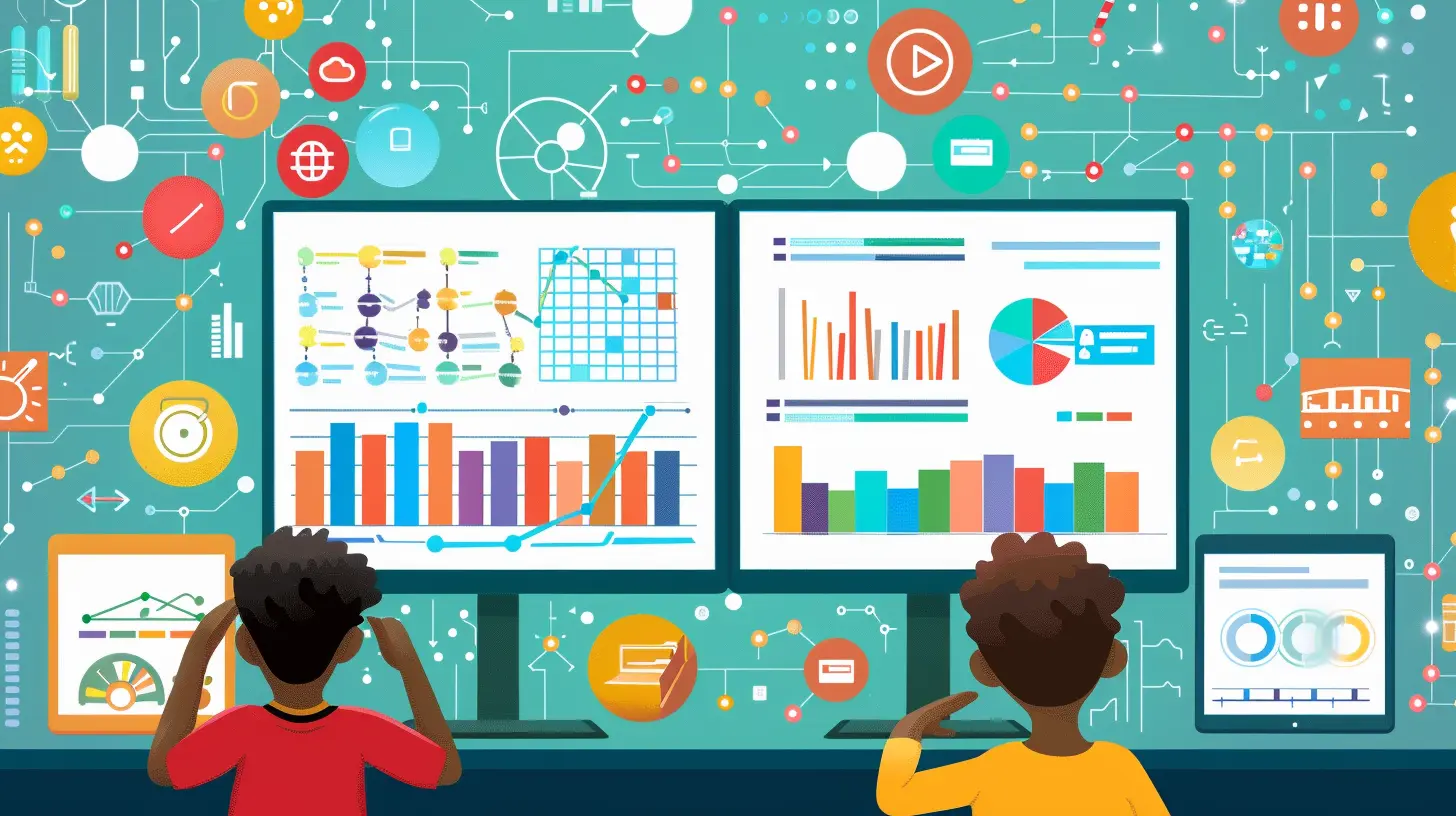
Let’s get concrete. Meet Ms. Alvaro, a 10th-grade biology teacher in the (very near) future of 2027.7:45 AM: Her dashboard glows softly on her tablet. Before her first class, she reviews the overnight analytics from her students’ interaction with a pre-lab simulation. A green glow surrounds most names—they’ve mastered the virtual procedure. But a gentle, amber pulse highlights two students: Leo and Chloe. The system isn’t flashing red alarms; it’s hinting. For Leo, it notes repeated attempts at the same step, suggesting a procedural misunderstanding. For Chloe, it shows she skipped the introductory theory section entirely, maybe due to time or overconfidence.
8:00 AM - Class Begins: Ms. Alvaro doesn’t start with a blanket review. She uses a quick, anonymous pulse poll: “Rate your confidence with today’s lab setup from 1 to 5.” The results graph instantly on the board, confirming the dashboard’s hint—most are at 4s and 5s, but there’s a small cluster at 2. She smiles. “Okay, I see most of you are ready to rock and roll. For our lab ninjas at a ‘4’ or ‘5,’ your mission is to huddle and predict three possible outcomes of the experiment. For our crews who want a quick refresher, meet me at the back bench for a 5-minute turbo demo.” Differentiation isn’t a labor-intensive guess anymore; it’s a data-informed, graceful pivot.
1:00 PM - Planning Period: Ms. Alvaro looks at the unit analytics. The data shows that 80% of her students aced the content on cellular respiration, but a concept about ATP energy transfer is causing a subtle but consistent slowdown in assignment completion. It’s not a full-stop failure, just a collective “speed bump.” She decides to swap tomorrow’s planned lecture for a short, hands-on analogy activity using rubber bands and marbles to model energy transfer. The instruction is guided by the learners’ actual journey, not just the pre-set syllabus.
Beyond the Dashboard: The Human Touch, Amplified
Here’s the most beautiful part: this isn’t about replacing teachers with robots. It’s about freeing teachers from being data clerks and detectives so they can do what only humans can do. The analytics handle the “what” (Chloe skipped the theory) and the “where” (the ATP energy transfer bump). This liberates Ms. Alvaro to focus on the “why” and the “how to help.”* Why did Chloe skip the theory? A quick, caring chat reveals she was helping her younger sibling with homework and ran out of time. Connection made, support offered.
* How can we overcome the ATP confusion? She crafts that clever analogy, using her empathy and creativity to build a bridge over the conceptual gap the data identified.
The analytics are the instrument panel; the teacher remains the pilot, the navigator, and the compassionate voice of mission control. By 2027, this partnership will allow educators to be more human, not less.
Navigating the Ethical Labyrinth: Guardrails for the GPS
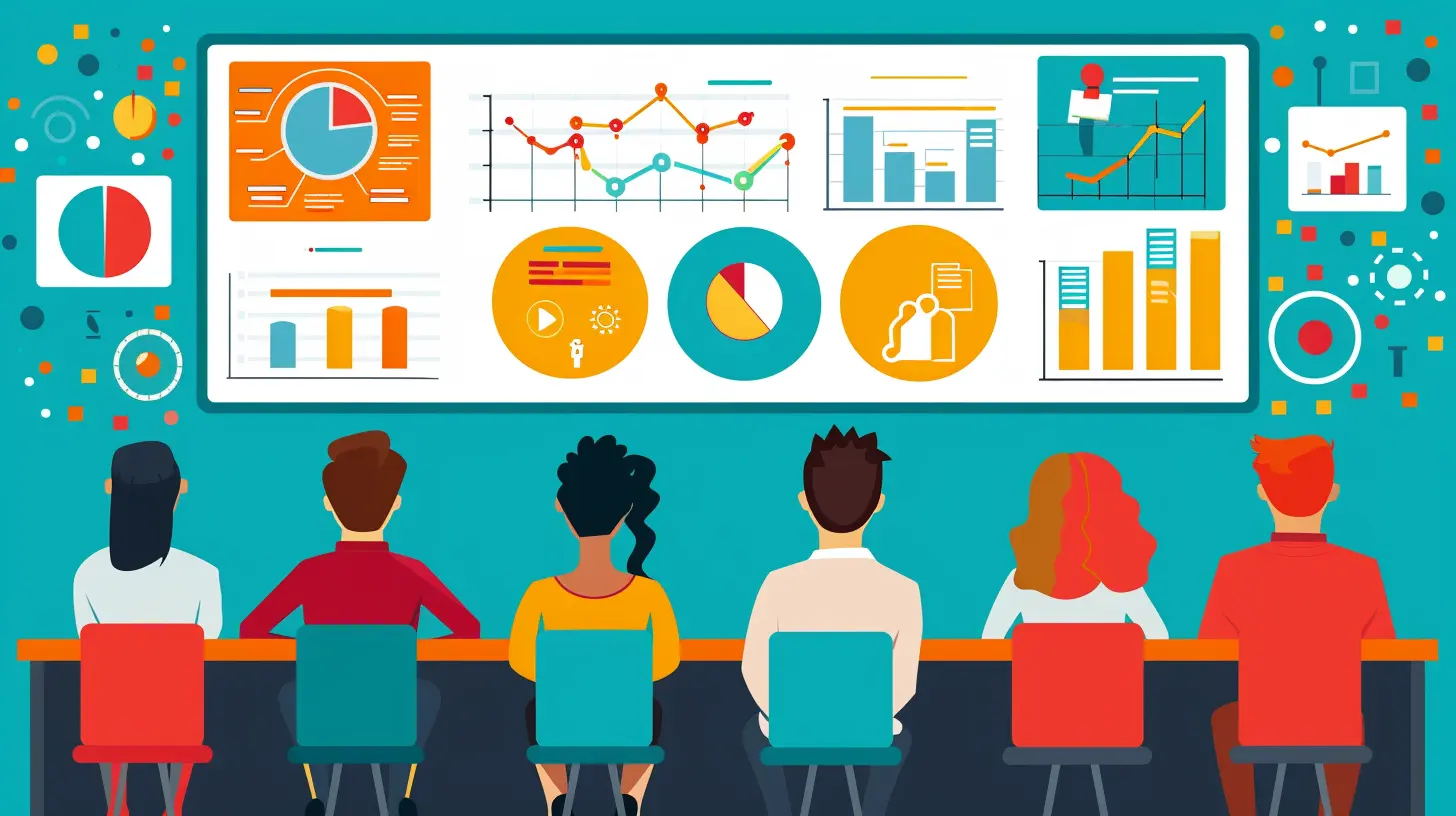
Of course, with great data comes great responsibility. The path to 2027 is paved with critical ethical questions we must answer:* Privacy & Consent: Data must be anonymized, aggregated, and used transparently. Students and families should own their data and understand how it’s used to help them.
* Bias & Fairness: Algorithms can perpetuate human bias. We must constantly audit our systems to ensure they aren’t unfairly labeling students or limiting their pathways based on historical patterns.
* The Danger of the "Label": Analytics must describe, not prescribe. A student is not a “low-engagement profile”; they are a person who, the data suggests, might need a more engaging pathway. The human interprets the story behind the number.
The goal is a “minimally invasive” analytics model—one that gathers enough insight to be helpful but respects the sanctity of the learning process and the individual learner’s agency.
The Student’s Story: Owning Your Learning Journey
In 2027, this isn’t just a teacher’s tool. Imagine Leo, our student from earlier, having his own learner-facing dashboard. It’s not a gradebook; it’s a fitness tracker for his mind. He can see:* “You’ve spent 5 hours this week mastering quadratic equations. Your persistence is up 20%!”
* “Your collaborative score is high—your peers really value your input in group projects.”
* “Based on your strengths in logical patterning and design, here are two potential project ideas for the upcoming unit.”
He’s no longer a passive recipient of instruction. He’s an active participant in his own growth, with a mirror that shows not just his face, but his potential. The analytics guide him toward self-awareness and metacognition—the ultimate goals of education.
The Ripple Effect: Systemic Change on the Horizon
This shift will ripple far beyond individual classrooms. By 2027, we’ll see:* Curriculum Design: Districts will use longitudinal analytics to identify which curriculum resources truly lead to durable learning, moving beyond publisher claims to real evidence.
* Professional Development: PD will become personalized. A teacher’s dashboard might suggest, “Your students excel in direct instruction but show lower engagement in peer-led reviews. Here’s a micro-course on facilitating student-led discussions.”
* The End of the “One-Size-Fits-All” Textbook: Learning materials will be fluid, modular, and adaptive, assembled in real-time by analytics engines to suit the needs of each class, even each student.
Getting From Here to There: It’s a Journey, Not a Flip of a Switch
We won’t wake up on January 1, 2027, in this brave new world. The transition is happening now, in the teachers who use simple poll apps, the platforms that offer basic engagement metrics, and the growing conversations about data ethics. The key is to start with a mindset, not just a software purchase: a mindset of curiosity over judgment, guidance over grading, and empowerment over surveillance.So, whether you’re an educator, an administrator, or a lifelong learner, the question isn’t if learning analytics will guide instruction by 2027. The train has left the station. The real question is: Will we be passive passengers, or will we help steer this powerful tool toward a future that’s more equitable, more human, and more focused on the unique spark within every single learner? Let’s choose to be the guides. The map is being drawn in real-time, and it leads to a destination called potential.
all images in this post were generated using AI tools
Category:
Education TrendsAuthor:

Monica O`Neal
Discussion
rate this article
2 comments
Maddox Huffman
Empowering educators through data-driven insights.
April 25, 2026 at 10:43 AM
Monica O`Neal
Absolutely. The goal is to make data a tool for teacher intuition, not a replacement for it.
Destiny Diaz
This article beautifully highlights the exciting potential of learning analytics! The thought of data-driven insights shaping our classrooms by 2027 is both inspiring and a little intimidating—can’t wait to see it unfold!
April 21, 2026 at 4:11 AM
Monica O`Neal
Thank you! I share your excitement and hope as we explore the transformative power of learning analytics in education. The future is indeed bright!