How Bilingualism Enhances Students' Problem-Solving Skills
25 June 2026
Ever met someone who effortlessly switches between two languages? It's kind of like watching a mental gymnast perform impressive flips. But bilingualism isn't just cool party trick material—it actually rewires the brain in some fascinating ways. One of the biggest perks? Enhanced problem-solving skills.
In today's global world, being bilingual (or even multilingual) is an increasingly valuable asset. But many people don’t realize that it extends far beyond simply knowing how to order tacos in Spanish or ask for directions in French. Research shows that students who speak more than one language often outperform their monolingual peers in areas like critical thinking, decision-making, and yep—you guessed it—problem-solving.
So, what’s the secret sauce behind this mental superpower? Let’s break it down.
What is Bilingualism, Anyway?
Before we dig into the juicy brain benefits, let’s clear up a quick question: What exactly is bilingualism?Simply put, bilingualism is the ability to use two languages proficiently. Sometimes it's learned from early childhood (think growing up in a multilingual household), and other times it’s picked up later—like in school or through travel. Either way, juggling two languages takes some serious brain work.
And that brain work? It's like a workout for your mind.
The Cognitive Edge: How Bilingual Brains Work Differently
Imagine your brain is a computer. Now, imagine that learning a second language installs a new operating system.When students speak two languages, their brains become experts at filtering, switching, and organizing information. Scientists call this "cognitive control." Why? Because bilingual minds are constantly managing two linguistic systems—and that takes sharp mental coordination.
Here’s how this plays out:
- Filtering Distractions: Bilinguals are better at ignoring irrelevant information. Why? They’re used to choosing the right language at the right time, which sharpens their focus.
- Switching Attention: Jumping between languages builds mental flexibility. This “language-switching” skill translates to quicker shifts between tasks and ideas.
- Finding Patterns: Bilingual brains often notice language patterns more easily, a skill that overlaps heavily with logical reasoning.
All of these cognitive functions are crucial when it comes to solving problems.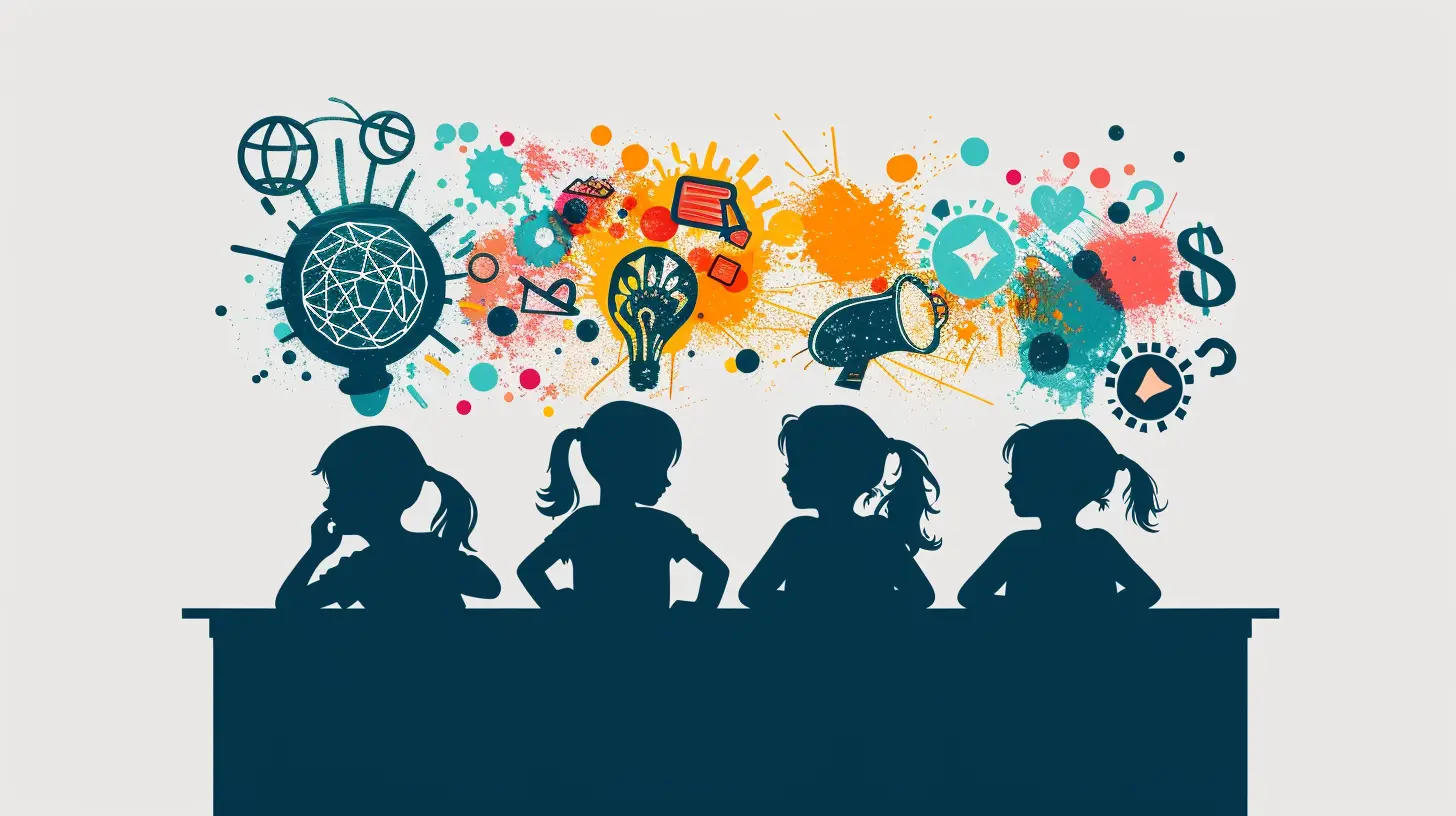
Language and Logic: A Surprisingly Strong Link
Ever tried solving a tricky math puzzle or writing a persuasive essay? These tasks may not seem like they have much to do with speaking French or Mandarin—but they actually do.A big chunk of our problem-solving ability relies on how we use language: defining the problem, building a strategy, comparing options, and evaluating outcomes. For bilingual students, this linguistic toolkit is more advanced. They process information from multiple perspectives, often using their linguistic background to creatively approach solutions.
Think of bilingualism as having two lenses through which you can view the world. If one perspective isn’t working, switch the lens. Boom—new insight.
Bilingualism Boosts Working Memory
Let’s talk about memory. Specifically, “working memory”—a fancy term for the short-term mental notes we keep while processing info.Working memory is kind of like a mental sticky note that helps you keep track of things temporarily. Solving problems requires juggling criteria, steps, and variables—all in real-time.
Studies have shown that bilingual individuals often have stronger working memory. Why? Because toggling between languages demands constant mental note-taking. This makes them natural-born jugglers when it comes to problem-solving tasks.
The Real-World Advantage in the Classroom
Okay, so all this brainy stuff is great in theory. But how does it show up in real classrooms?Here are some real-life examples:
- Math Problems: Bilingual students often break down math problems in creative ways. They may use reasoning strategies from both language frameworks, which helps them see multiple paths to the answer.
- Science Experiments: The ability to process complex data, question assumptions, and form hypotheses is often stronger among bilinguals. Their brains are wired to explore options and identify patterns.
- Group Work: Ever worked on a team project? Communication is everything. Bilingual students can navigate diverse groups more easily, especially in multicultural classrooms. They tend to be better listeners and more adaptive speakers.
- Test Taking: Standardized tests throw curveballs with tricky wording. Bilingual students are used to parsing meaning from context, which helps them comprehend and respond more accurately.
So while bilingualism might not show up on the class syllabus, it quietly powers up students across subjects.
Cultural Flexibility = Mental Flexibility
Here's another awesome side effect of bilingualism: cultural flexibility.Language and culture are tightly woven together. Learning a new language often comes with exposure to new traditions, habits, and ways of thinking. This openness to different perspectives enhances empathy and broadens the mind.
And guess what? An open mind is a major key when it comes to problem-solving.
Think of problem-solving as a kind of mental chess game. The more perspectives you can see, the more possible moves you can make. Bilingual students are better at this because they’ve been trained—through language and culture—to think beyond the obvious.
Enhanced Creativity: Thinking Outside the (Language) Box
You know how some people are just naturally better at coming up with out-of-the-box solutions? Bilingual students often fall into that category.Switching between languages isn’t just a translation task—it’s actually a creative process. It involves choosing words, reworking sentence structures, and adapting ideas to fit different audiences. This linguistic creativity spills over into other areas.
When bilingual students face a problem, they're more likely to brainstorm multiple solutions and reframe the challenge in a new way. That’s gold when it comes to innovation.
Emotional and Social Intelligence Play a Role Too
Let’s not forget the emotional dimension.Bilingual students often have higher emotional intelligence. Why? Because they’ve been exposed to diverse cultural norms and ways of expression. They develop keen observational skills to interpret tone, body language, and context—all of which help in reading social situations.
Now ask yourself: Have you ever solved a problem without understanding the people involved? Probably not.
Empathy and clear communication are often the hidden glue in effective problem-solving. Bilingual students tend to have a leg-up in these areas because they’ve practiced navigating different social settings.
Long-Term Benefits: Bilingualism As a Lifelong Asset
The perks of bilingualism don’t disappear after graduation. In fact, students who grow up bilingual carry these problem-solving benefits into adulthood.In the future workplace, bilingual professionals bring enhanced attention to detail, better multitasking skills, and a global mindset. They’re often trusted in leadership roles due to their adaptability and communication prowess.
Even better? Lifelong bilingualism has been linked to delayed onset of cognitive decline and diseases like Alzheimer’s. So not only are you sharpening your brain now—you're investing in its long-term health.
Potential Challenges (And Why They’re Worth It)
Let’s be real for a second—being bilingual isn't always easy. Students might mix up grammar rules, struggle with vocabulary, or feel like they don’t fully ‘fit’ in either language group.But here’s the thing: those challenges are part of the brain-training process. Every time a bilingual student navigates through confusion, they’re fine-tuning their problem-solving muscles.
Struggle = growth. And the bilingual mind is like a phoenix—it grows stronger through the hurdles.
So, Should Schools Promote Bilingualism?
Absolutely. If we know that bilingualism enhances cognitive flexibility, improves memory, and strengthens problem-solving skills, why wouldn’t we integrate it into education systems more intentionally?Encouraging language learning in schools isn’t just about preparing students for vacations or international business deals. It’s about developing sharper thinkers who can tackle complex problems from multiple angles.
By introducing bilingual education or even offering second-language classes early on, schools can unlock this powerful cognitive upgrade for more students.
Final Thoughts
Let’s wrap this up.Bilingualism isn’t just a party trick or a professional bonus—it’s a full-blown brain upgrade. From enhanced memory and flexibility to better creativity and empathy, bilingual students are uniquely equipped to tackle problems in smart, unconventional ways.
We’re living in a world that thrives on innovation and adaptability. So, nurturing bilingualism might just be one of the smartest moves educators, parents, and students themselves can make.
Next time you hear someone speaking two languages fluently, just remember: you’re not only hearing words—you’re witnessing a brain in high gear.
all images in this post were generated using AI tools
Category:
Bilingual EducationAuthor:

Monica O`Neal
Discussion
rate this article
1 comments
Karly McQuade
Bilingualism boosts creativity and flexibility in students' problem-solving abilities.
June 27, 2026 at 2:35 AM
Monica O`Neal
Absolutely! Bilingualism opens up new perspectives, allowing students to approach problems with greater creativity and adaptability.