How AI Will Personalize Education by 2027
20 May 2026
Let me paint you a picture. It's a Tuesday morning in 2027. Your kid, let's call her Maya, wakes up at 7:30 AM. She doesn't rush to grab a backpack crammed with textbooks. Instead, she opens her tablet, and a friendly voice says, "Hey Maya, ready to pick up where you left off yesterday with that tricky algebra problem? Or do you want to start with the history video about ancient Rome you saved last night?"
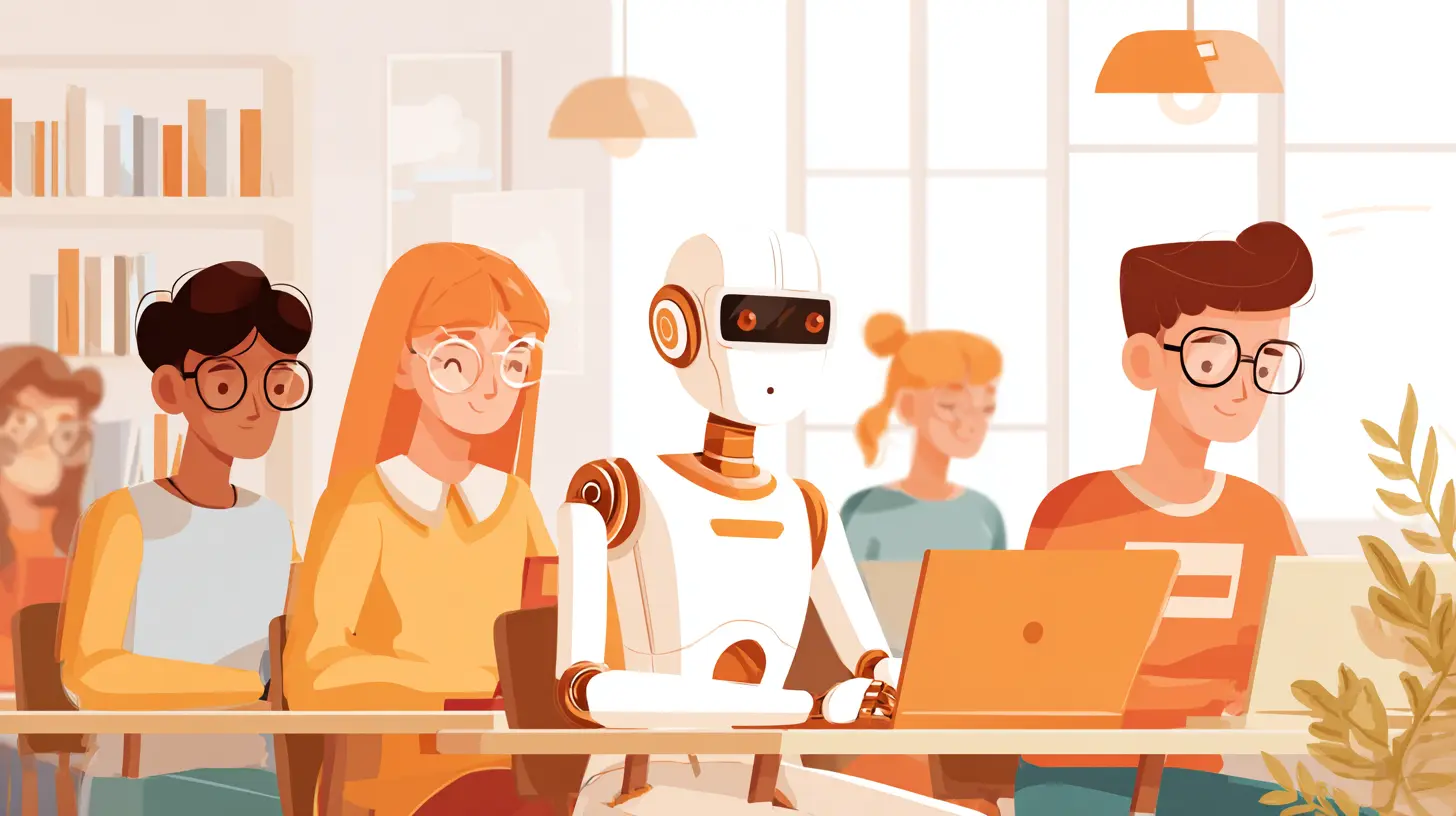
This isn't science fiction. This is the quiet revolution that's already creeping into classrooms and living rooms around the world. By 2027, AI won't just be a fancy add-on to education. It will be the invisible hand that shapes every lesson, every quiz, and every "aha" moment. And I'm not talking about some cold, robotic tutor. I'm talking about a system that knows when you're bored, when you're frustrated, and when you need a good old-fashioned pep talk.
The One-Size-Fits-All Lie We've Been Sold
Let's be honest. For decades, we've pretended that 30 kids sitting in rows, all reading the same page, all taking the same test, is a good way to learn. It's not. It's a factory model from the Industrial Revolution. It works great if you're making widgets. But we're not making widgets. We're raising humans with different brains, different speeds, and different passions.I remember sitting in a math class in 10th grade, completely lost. The teacher was explaining quadratic equations, and I was still trying to figure out why we needed to care. Meanwhile, the kid next to me was already bored because he'd mastered it three weeks ago. We both suffered. He was bored. I was confused. That's the old way.
By 2027, AI will look at that classroom and say, "Hold on. These two kids need completely different things." And it won't just say it. It will deliver it.
How AI Will Actually Read Your Mind (Sort Of)
You might be thinking, "Okay, but how does a computer know if I'm struggling or not? It's not a mind reader." True. But it doesn't need to be. AI will use something called adaptive learning algorithms. Think of it like a GPS for your brain.When you start a lesson, the AI watches. It sees how fast you answer questions. It notices if you pause before hitting "submit." It tracks which topics you revisit. It even picks up on subtle patterns, like whether you learn better from videos in the morning or text at night.
Here's the kicker. By 2027, this won't be clunky or obvious. It will feel natural. You'll open a module on photosynthesis, and the AI will say, "I see you're a visual learner. Let me show you a 3D animation of how a leaf turns sunlight into energy." Or it might say, "You seem to be zoning out. Let me throw in a quick game to wake you up."
This isn't about surveillance. It's about understanding. It's like having a teacher who has 10,000 hours of data on how you learn, but never makes you feel watched.
The End of "Boring" Homework
Let's talk about homework. The word alone makes people groan. But by 2027, homework will look completely different. Instead of a worksheet with 20 identical problems, you'll get a personalized set of challenges.Imagine you're learning French. The AI knows you love soccer. So instead of translating random sentences about "the cat is on the table," it gives you a paragraph about a French soccer match. You're suddenly engaged because it connects to your life. You're not just learning a language. You're learning how to talk about something you actually care about.
And here's the best part. If you get stuck on a problem, the AI doesn't just give you the answer. It shows you a video of someone explaining the exact step you're missing. Or it gives you a hint that's tailored to your mistake. It's like having a tutor who never gets tired, never judges, and never says "you should have known this by now."
The Teacher's New Role (And Why It's Better)
I know what some of you are thinking. "Does this mean teachers will be replaced?" Absolutely not. In fact, teachers will become more important than ever. But their job will change.Right now, a teacher spends 70% of their time on things like grading, lesson planning, and administrative tasks. By 2027, AI will handle most of that. The teacher will be free to do what they do best: connect with students, inspire curiosity, and provide that human touch that no machine can replicate.
Think of AI as the assistant coach, not the head coach. The head coach (the teacher) focuses on motivation, mentorship, and big-picture guidance. The assistant coach (AI) handles the drills, the stats, and the personalized feedback. Together, they're unstoppable.
I've talked to real teachers who are already using AI tools. One told me, "It's like I finally have 30 extra hours in my week. I can actually sit with a struggling student and have a real conversation instead of rushing to grade papers."
The Quiet Revolution in Special Education
This is where AI will truly shine. For students with learning differences, the traditional classroom can feel like a battlefield. Dyslexia, ADHD, autism spectrum disorders... these aren't obstacles that a one-size-fits-all curriculum can handle.By 2027, AI will be a game-changer here. Imagine a student with dyslexia. The AI can instantly adjust the font, the spacing, and even the color of the text to make reading easier. It can read text aloud in a natural voice, highlight words as they're spoken, and offer alternative formats like audio or video.
For a student with ADHD, the AI can break down a 30-minute lesson into five-minute chunks with movement breaks and interactive elements. It can detect when attention is waning and switch to a different activity. It's not punishing the student for being distracted. It's working with their brain, not against it.
This isn't just about making things easier. It's about leveling the playing field. Every kid deserves a chance to shine, and AI will help make that happen.
The Global Classroom Without Borders
Here's another thing that gets me excited. By 2027, AI will break down the walls of the traditional classroom. Imagine a kid in rural India learning from the same AI tutor as a kid in New York City. The content adapts to their local context, their native language, and their personal interests.Language barriers will start to crumble. AI-powered translation is already good, but by 2027 it will be seamless. A student in Brazil can take a history lesson written in Japanese, and the AI will not only translate it but also explain cultural references. It's like having a universal translator for education.
And this isn't just about rich kids with fancy devices. AI will be optimized to work on low-cost tablets and even smartphones. The cost of delivering personalized education will drop dramatically. For the first time in history, a kid in a remote village could have access to the same quality of education as a kid in a wealthy suburb.
The "Flow" State and AI
Have you ever been so absorbed in something that you lost track of time? That's called a flow state. It's when you're working at the perfect level of challenge. Not too hard that you get frustrated, not too easy that you get bored.By 2027, AI will be able to guide students into that flow state with remarkable precision. It will adjust the difficulty in real time. If you're flying through a lesson, it will ramp up the complexity. If you're struggling, it will back up and fill in the gaps.
Think of it like a video game. A good game doesn't let you win every level easily. It pushes you, but it also gives you the tools to succeed. That's exactly what AI will do for learning. It will make education feel less like a chore and more like an adventure.
I've seen early versions of this in apps like Duolingo and Khan Academy. They're already good. By 2027, they'll be eerily good. The AI will know that you need exactly three more practice problems on fractions before you're ready to move on. It will know that you learn better with music playing in the background. It will know that you get a confidence boost when you see a progress bar fill up.
The Emotional Side of Learning
Let's not pretend that education is just about facts and figures. It's deeply emotional. Fear of failure, anxiety about tests, the joy of finally understanding something... these feelings matter.By 2027, AI will start to recognize and respond to emotions. No, not with creepy cameras staring at your face. But through patterns. If a student consistently gets anxious before math tests, the AI can offer calming exercises or adjust the test format. If a student is excited about a topic, the AI can dive deeper and feed that passion.
I'm not saying AI will replace a school counselor. But it can be a first line of support. It can notice when a student seems withdrawn and gently check in. It can celebrate small victories with encouraging messages. It's like having a supportive friend who always has your back, but never gets in your face.
The Parents' New Dashboard
If you're a parent, you know the struggle of helping with homework. "I don't understand this new math!" is a common refrain. By 2027, you'll have a dashboard that shows you exactly what your child is learning, where they're struggling, and how you can help.But here's the twist. The AI won't just dump data on you. It will give you actionable advice. "Try asking your daughter to explain the Pythagorean theorem in her own words. She's close, but she's mixing up the legs and the hypotenuse." Or, "Your son is really into dinosaurs. Use that to teach him about geological time scales."
It's like having a co-parent who speaks the language of education. You won't need to be a math expert or a history buff. You just need to be present, and the AI will guide you.
The Skeptics and the Challenges
I'm not naive. There are real concerns. Privacy is a huge one. If AI is tracking every click, every pause, every mistake, who owns that data? How is it protected? By 2027, we need strong regulations. Schools and companies must be transparent. Students and parents should have control over their data.Another concern is equity. If AI-powered education becomes a premium product, we risk widening the gap between rich and poor. That's why it's crucial that governments and nonprofits invest in making this technology accessible to everyone. It's not enough to have a great tool. It has to be available to the kids who need it most.
And then there's the human touch. Can AI really replace the warmth of a teacher who says, "I believe in you"? No. But it can free up that teacher to say it more often. The goal isn't to eliminate humans. It's to amplify them.
What 2027 Actually Looks Like
Let me give you a concrete example. It's 2027. A student named Alex is working on a biology project about cell division. The AI notices that Alex is struggling with the concept of mitosis. Instead of giving him a textbook definition, the AI pulls up a short, funny animation that compares mitosis to a dance battle. Alex laughs, watches it three times, and suddenly it clicks.Then the AI asks, "Want to test your knowledge?" Alex says yes. The quiz is five questions, but they're not random. The AI chooses questions that target the exact concepts Alex misunderstood. He gets three right, two wrong. The AI immediately offers a mini-lesson on the two wrong answers, using a different format this time.
After the lesson, the AI says, "Great job, Alex. You're now 87% proficient in this topic. Want to challenge yourself with a bonus question?" Alex says yes. The bonus question is harder, but it's framed as a puzzle. Alex solves it and feels a surge of pride.
This whole interaction took 15 minutes. It was efficient, engaging, and tailored. And Alex's teacher got a summary that said, "Alex mastered mitosis but needs review on meiosis. He responded well to visual content."
That's the future. Not a robot taking over, but a system that makes every minute count.
The Lasting Impact
By 2027, the way we think about education will shift. We'll stop asking "What grade did you get?" and start asking "What did you discover today?" The focus will move from memorization to mastery, from compliance to curiosity.AI won't fix everything. It won't solve poverty, inequality, or the challenge of keeping kids motivated. But it will give us the tools to meet each student where they are. It will make learning feel less like a forced march and more like a personal journey.
I think about Maya, the kid from the beginning of this article. By 2027, she won't remember a time when education wasn't personalized. She'll take for granted that her lessons adapt to her mood, her pace, and her interests. She'll think it's normal that her teacher has time to sit and chat because the AI handles the busywork.
And that's the goal, isn't it? To make the extraordinary feel ordinary. To give every kid a fair shot at falling in love with learning. AI is just the tool. The heart of education will always be human. But by 2027, that human heart will have a much smarter friend.
So, are you ready? Because it's coming faster than you think. And honestly, I can't wait.
all images in this post were generated using AI tools
Category:
Education TrendsAuthor:

Monica O`Neal
Discussion
rate this article
1 comments
Nym Cruz
As we approach 2027, the landscape of education will transform in ways we can't yet imagine. Will AI become our greatest ally or an unseen force shaping our learning experiences? Only time will reveal the truth...
May 25, 2026 at 3:27 AM
Monica O`Neal
You're right, the next few years will be pivotal. AI has the potential to enhance education significantly, but we need to stay mindful of its impact on learning. Let's hope for a future where it supports rather than hinders.