How AI Tutors Will Change Classrooms by 2027
21 May 2026
Let me paint you a picture. It's a Tuesday morning in 2027, and a classroom looks different than anything you remember. No rows of desks where kids stare at a whiteboard. No teacher standing at the front, trying to keep thirty different brains on the same page at the same time. Instead, each student has a screen, a pair of headphones, and a quiet conversation with an AI tutor that knows them better than any human teacher ever could.
Sound like science fiction? It's not. The shift is already happening, and by 2027, the way we think about teaching and learning will be turned upside down. Not because technology is taking over, but because AI tutors will finally solve the problem that has haunted classrooms for centuries: how do you teach thirty unique minds with one lesson plan?
You've probably felt the frustration yourself. Maybe you sat in a math class, completely lost, while the kid next to you was bored out of their mind because they already knew the material. That's the old system. By 2027, that system will be a relic.
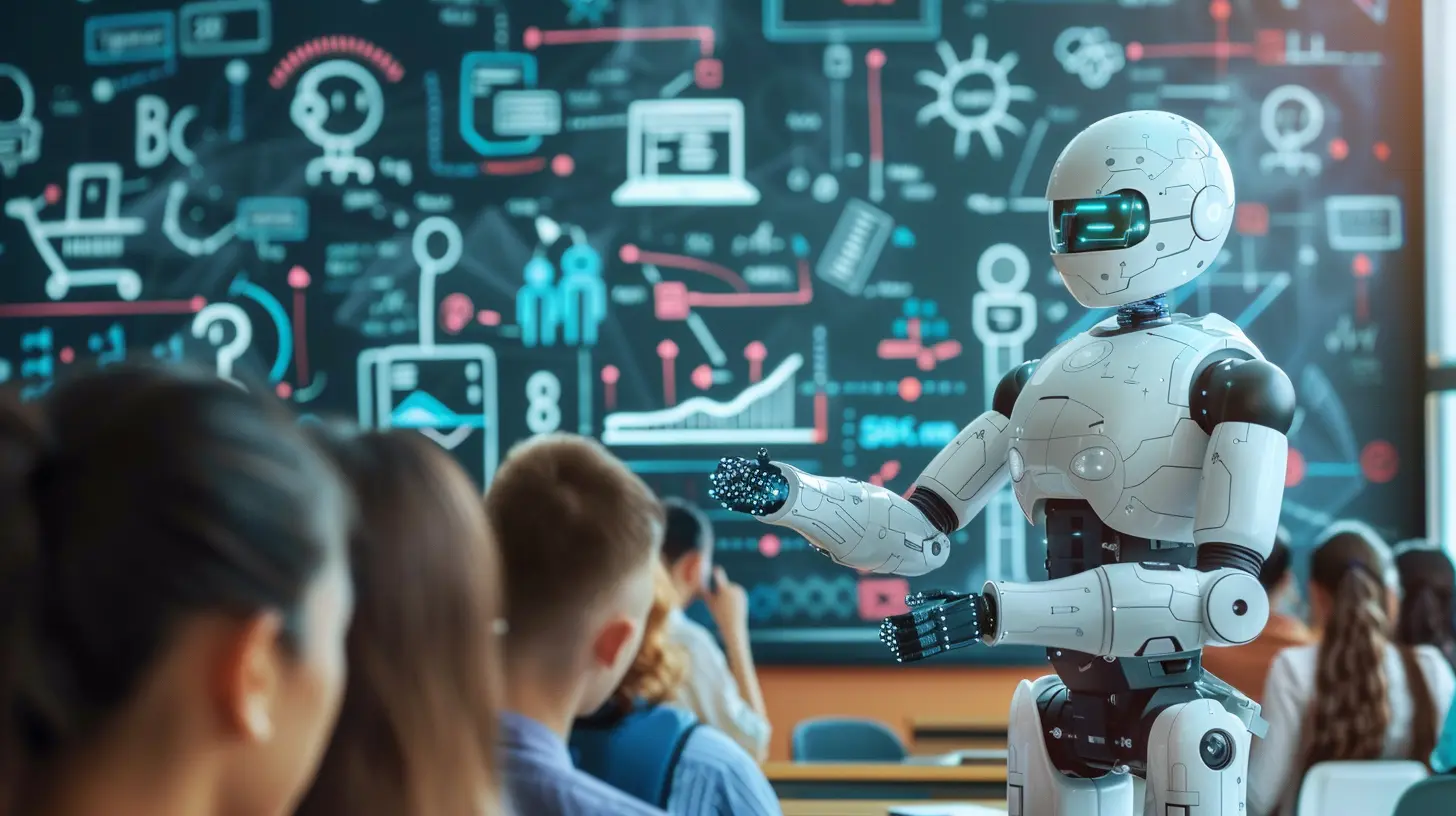
The One-Size-Fits-All Classroom Is Dying
Think about the last time you tried to learn something new. Maybe you picked up a guitar, tried a new language on an app, or watched a YouTube tutorial to fix a leaky faucet. Did you follow a strict, pre-planned schedule? No. You went at your own pace. You skipped the parts you already understood. You repeated the tricky parts until they clicked. You asked questions when you got stuck.That's how humans learn best. But traditional classrooms don't work that way. They force everyone into the same mold. The teacher talks, you listen. The teacher assigns homework, you do it. If you fall behind, you're left in the dust. If you're ahead, you're held back.
AI tutors flip that entirely. By 2027, every student in a classroom will have a personal AI companion that adapts in real time. The AI notices when you're struggling with fractions and immediately slows down, offering extra examples. It notices when you ace algebra and fast-forwards you to the next challenge. No more waiting for the rest of the class to catch up. No more feeling stupid because you need more time.
This isn't about replacing teachers. It's about giving teachers the superpower of being everywhere at once.
How AI Tutors Actually Work (Without the Jargon)
Let's strip away the technical buzzwords. An AI tutor is basically a smart software program that talks to a student the way a patient, knowledgeable friend would. It asks questions. It gives hints. It praises you when you get something right and gently corrects you when you're wrong.But here's the kicker: it remembers everything. Every mistake you made last week. Every concept that tripped you up. Every time you zoned out during a lesson. The AI builds a detailed map of your learning journey, and it uses that map to predict what you need next.
Think of it like a GPS for your brain. You punch in the destination (say, understanding quadratic equations). The AI knows where you are right now (maybe you're shaky on basic algebra). It plots the most efficient route, avoids the potholes, and reroutes when you hit a wall. And unlike a human tutor, it never gets tired, never gets frustrated, and never judges you for asking the same question five times.
By 2027, these AI tutors will be embedded in every subject. History, science, literature, art. They'll even help with creative writing by suggesting vocabulary or pointing out logical gaps in your essay. The days of "I don't get it" being met with a sigh from the teacher are numbered.
The End of Homework as We Know It
Let's be honest. Homework is a mess. It's often busywork, assigned because the teacher ran out of time in class. It punishes kids who don't have help at home. It creates anxiety and burnout. And let's face it, how much do you actually retain from a worksheet you filled out at 10 PM while half asleep?AI tutors will kill the homework model. Instead of sending kids home with a stack of papers, classrooms will use AI to handle practice during class time. The AI gives each student the exact problems they need to work on. Some kids get ten easy problems. Others get three hard ones. Some get a video explanation first, then a quiz. It's all personalized, all in real time.
What about after school? That's where the magic really happens. The AI tutor isn't confined to the classroom. It lives on the student's phone, tablet, or laptop. If a kid gets stuck on a problem at 7 PM, they just ask the AI. It walks them through it step by step, without judgment. No more frustrated parents trying to remember high school math. No more kids giving up because they're too embarrassed to ask for help.
By 2027, the concept of "homework help" will be replaced by "AI coaching." And the best part? The AI reports back to the teacher. It says, "Hey, 80% of your class struggled with this concept. You might want to review it tomorrow." That's data a human teacher could never gather on their own.
Teachers Become Mentors, Not Lecturers
Here's the part that scares some people. "Will AI replace teachers?" No. Absolutely not. But it will change what teachers do. And honestly, that's a good thing.Right now, teachers spend most of their time on stuff that doesn't require a human heart. Grading papers. Writing lesson plans. Managing behavior. Delivering the same lecture three times a day. By 2027, AI will handle the bulk of that. Grading becomes instant. Lesson plans are generated from student data. Lectures become optional because the AI can explain the basics better than any human.
So what's left for the teacher? The human stuff. The stuff that no algorithm can replicate.
Teachers will become mentors. They'll sit with small groups of students, discussing ideas, asking deep questions, and sparking curiosity. They'll notice when a kid seems withdrawn and pull them aside for a chat. They'll inspire passion for a subject that no AI can fake. They'll be the ones who say, "I believe in you," and mean it.
Think of it like a flight instructor. The autopilot flies the plane most of the time. But the instructor is there for takeoff, landing, and emergencies. The AI handles the routine. The teacher handles the critical moments. That's a huge upgrade for both students and educators.
The Special Needs Revolution
This is where AI tutors will have the most profound impact. For students with learning disabilities, ADHD, dyslexia, or autism, traditional classrooms can be a nightmare. The pace is wrong. The instructions are confusing. The social pressure is overwhelming.AI tutors are a game-changer for these students. They can slow down the audio. They can change the font size. They can break instructions into tiny steps. They can offer a calm, patient voice that never gets annoyed when you need to hear something ten times. They can even detect when a student is getting frustrated and suggest a break or a different approach.
By 2027, every classroom will have tools that adapt to the neurodiversity of its students. No more labeling kids as "problem students" because they don't fit the mold. The mold will be gone. The AI will bend to fit each child.
I've seen this in early pilot programs. One kid with severe dyslexia went from hating reading to devouring books because the AI tutor read aloud while highlighting words. Another student with ADHD couldn't sit still for a 45-minute lecture, but the AI broke lessons into five-minute chunks with movement breaks. The results aren't just academic. They're emotional. These kids start believing they can learn.
The Language Barrier Crumbles
Walk into any diverse classroom today, and you'll hear a dozen languages. Teachers do their best, but they can't speak every language. Non-native speakers often fall behind, not because they're not smart, but because the instruction is in a language they're still learning.AI tutors solve this instantly. They translate on the fly. A student can ask a question in Spanish and get the answer in Spanish. The AI can explain a concept in simple English, then switch to the student's native language for the tricky parts. By 2027, language will no longer be a barrier to learning. It will be a bridge.
This doesn't just help immigrant students. It helps everyone. Imagine a kid in rural Kansas learning Mandarin from an AI tutor that speaks with perfect pronunciation. Or a student in Brazil learning coding from a tutor that switches between Portuguese and English seamlessly. The world shrinks. Opportunities expand.
What About Cheating? The Honest Truth
You're probably wondering about the elephant in the room. If every student has an AI tutor that can answer any question, won't they just cheat? Won't they copy answers and never learn anything?It's a fair concern. But here's the thing: AI tutors are designed to teach, not to give answers. A good AI doesn't just spit out the solution. It asks, "What do you think the first step is?" or "Why do you think that answer is wrong?" It scaffolds the learning process. If a student tries to cheat by asking for the answer directly, the AI can refuse or give a hint instead.
By 2027, schools will have systems in place. Assessments will shift from "memorize and regurgitate" to "apply and create." Instead of a multiple-choice test, students might be asked to solve a real-world problem using the skills they learned. The AI helps them practice, but the final demonstration of knowledge is done in a controlled environment, often with human oversight.
Cheating will always exist in some form, but AI tutors actually reduce the incentive. When learning is personalized and engaging, students are less likely to look for shortcuts. They actually want to understand. It's the boring, one-size-fits-all system that makes kids cheat. AI makes learning feel like a game, not a chore.
The Cost Question: Will Only Rich Schools Get This?
Let's address the elephant's cousin. Will AI tutors widen the gap between rich and poor schools? It's a legitimate worry. New technology always starts with the wealthy.But here's the hopeful part: AI is getting cheap fast. By 2027, the cost of running an AI tutor for a student will be pennies per day, not dollars. Open-source models, government subsidies, and nonprofit initiatives will push this into every classroom. In fact, AI tutors might actually close the gap. A kid in a underfunded rural school will have access to the same quality of instruction as a kid in a wealthy private school. The AI doesn't care about your zip code.
Will there be bumps? Sure. Early adoption will be uneven. Some schools will have great internet; others won't. But the trend is clear. AI tutors are a democratizing force. They give every child a personal tutor, something that was previously a luxury only the rich could afford.
The Emotional Side: Kids Need Humans
I've been talking a lot about what AI can do. But let's not forget what it can't do. AI can't give a hug. It can't laugh at a silly joke. It can't notice that a student is sad and ask, "Are you okay?" It can't model empathy, kindness, or courage.That's why the classroom of 2027 won't be a sterile room full of kids staring at screens. It will be a vibrant, collaborative space where students work together, talk to each other, and learn from a human teacher who guides the experience. The AI handles the mechanics. The human handles the magic.
I think that's the most important takeaway. AI tutors will change classrooms, but they won't dehumanize them. If anything, they'll make them more human. Teachers will have time to be present. Students will get individual attention. Learning will become a personal journey, not an assembly line.
The Big Picture by 2027
So where will we be in just a few years? Let me sum it up.Every student will have a personal AI tutor that adapts to their pace, style, and needs. Homework will be replaced by real-time practice and AI coaching. Teachers will shift from lecturers to mentors. Students with special needs will finally get the support they deserve. Language barriers will disappear. And the cost of all this will be low enough that every school, rich or poor, can participate.
Will it be perfect? No. There will be glitches, ethical debates, and growing pains. Some teachers will resist. Some parents will worry. But the trajectory is clear. Classrooms are about to become places where every child can thrive, not just the ones who fit the mold.
And that's not just a technological change. It's a human one.
So the next time you hear someone say "AI is taking over," remember this: AI isn't taking over the classroom. It's finally giving every kid a fair shot. And that's a future worth getting excited about.
all images in this post were generated using AI tools
Category:
Education TrendsAuthor:

Monica O`Neal
Discussion
rate this article
1 comments
Zephyra Pruitt
This article presents an intriguing look at the potential of AI tutors in classrooms by 2027. The emphasis on personalized learning and enhanced student engagement is exciting. It will be interesting to see how educators adapt these tools for effective teaching.
May 27, 2026 at 10:39 AM
Monica O`Neal
Thanks for your thoughts! It's definitely an exciting time for educational tech, and I believe AI tutors will transform how we engage with students in the classroom.