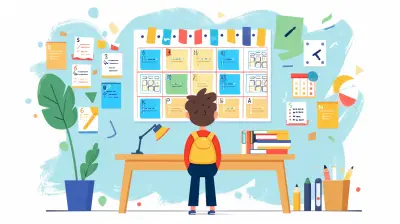
Education Policy and the Shift Toward Competency-Based Learning
25 February 2026
Education is evolving. As the world changes, so do the needs of students, teachers, and employers. One of the most significant shifts in recent years is the move toward competency-based learning (CBL). If you haven't heard of it yet, don't worry—you're not alone. But trust me, this is a game-changer in education policy.
In this article, we’ll dive deep into what competency-based learning is, why it’s becoming such a popular approach, and what this means for the future of education. So, buckle up!

What is Competency-Based Learning?
Before we go any further, let’s clarify what we mean by competency-based learning. In a nutshell, CBL is an educational model where students progress based on their ability to demonstrate mastery of a skill or subject, rather than how much time they spend in a classroom.Think about it: In traditional education, students are often judged by how many hours they sit in class or whether they can pass a standardized test. But does that really mean they’ve learned the material? Not necessarily. Competency-based learning flips this on its head by focusing on real understanding and skill acquisition.
Key Characteristics of Competency-Based Learning
To break it down further, here are some key characteristics that differentiate CBL from the traditional education model:1. Learning at Your Own Pace: Students can move faster or slower based on their mastery of the topic.
2. Mastery Over Time: The emphasis is on mastering specific competencies rather than time spent in the classroom.
3. Personalized Learning: Each student has a learning path tailored to their strengths and weaknesses.
4. Clear Learning Objectives: Students know exactly what they are expected to learn and achieve.
5. Real-World Skills: The focus is on skills that are applicable in real-life situations.
In short, competency-based learning is all about ensuring that students learn what they need to know, at a pace that works for them, instead of forcing them into a one-size-fits-all model.

Why the Shift Toward Competency-Based Learning?
Now that we know what CBL is, the big question is why we’re seeing such a strong push toward it in education policy. Well, there are several reasons for this shift, and they're all pretty compelling.1. Traditional Education Isn’t Working for Everyone
Let’s be real: The traditional education system has its flaws. For decades, the standard model has been based on seat time (the number of hours a student spends in class) and standardized tests. But these methods don’t always paint an accurate picture of a student’s abilities.Take, for example, someone who struggles with test anxiety. They might know the material inside and out, but when faced with a timed exam, they freeze. Does that mean they haven’t mastered the subject? Of course not! Competency-based learning allows these students to demonstrate their knowledge in a way that works for them.
2. The Workforce is Evolving
Another reason for the shift is the changing nature of the workforce. Employers are no longer just looking for candidates who can pass a test—they want people who can actually do the job. Competency-based learning aligns more closely with the skills employers are looking for, focusing on practical, real-world abilities rather than theoretical knowledge alone.In fact, many industries are now adopting competency-based models for training their employees. So, it makes sense that our education system would follow suit. After all, what’s the point of education if it doesn’t prepare students for the real world?
3. Flexibility and Inclusivity
CBL is also a more flexible and inclusive approach to education. Not all students learn at the same pace, and not all students have the same learning styles. Competency-based learning allows for more personalized education, giving students the opportunity to learn in the way that works best for them.This can be especially beneficial for students with learning disabilities or those who have non-traditional educational paths. By focusing on competencies, rather than time or rigid curriculum structures, CBL provides a more equitable learning environment.

How Competency-Based Learning is Being Implemented
Alright, now that we know why there’s a shift toward CBL, let’s look at how it’s actually being implemented in schools and universities. Spoiler alert: It’s not a one-size-fits-all solution. Different institutions are adopting CBL in various ways, depending on their specific needs and goals.1. K-12 Schools
In K-12 education, competency-based learning is still relatively new, but it’s gaining traction. Schools that have adopted CBL often use a combination of project-based learning and personalized learning plans to help students achieve mastery in different subjects.For example, instead of moving on to the next math unit just because the calendar says it's time, students will only progress once they’ve mastered the current topic. This ensures that no one is left behind, but it also allows advanced students to move ahead without being held back.
2. Higher Education
The shift toward competency-based learning is perhaps most evident in higher education. Colleges and universities are increasingly offering competency-based degree programs, where students earn credits by demonstrating mastery of specific skills, rather than by completing a set number of credit hours.This is especially appealing to adult learners who may already have some of the skills needed for a degree but don’t have the time or resources to sit through traditional classes. It’s also a great option for students who want to fast-track their education and jump into the workforce more quickly.
3. Online Learning Platforms
CBL is also a major player in the world of online education. Platforms like Coursera, Khan Academy, and edX are already incorporating competency-based models into their courses. These platforms allow learners to move through material at their own pace, often with assessments that let them demonstrate mastery before moving on to the next topic.In many ways, online learning lends itself perfectly to the CBL model. It offers the flexibility, personalization, and skill-based focus that CBL champions.

Challenges of Competency-Based Learning
Of course, like any educational model, competency-based learning isn’t without its challenges. While it has a lot of potential, there are still some hurdles that need to be overcome for it to be fully effective on a large scale.1. Assessment
One of the biggest challenges is figuring out how to assess competencies. In a traditional model, assessment is pretty straightforward—students take a test, and if they score above a certain threshold, they pass. But in CBL, assessment needs to be more nuanced. It’s not just about passing a test; it’s about truly demonstrating understanding.This requires more complex assessment methods, like portfolio reviews, project-based assessments, and even peer evaluations. These methods can be time-consuming and difficult to standardize, which is why some schools are hesitant to adopt CBL on a large scale.
2. Teacher Training
Another challenge is that teachers need to be trained in how to implement CBL effectively. It’s not enough to just change the curriculum—educators need to understand how to guide students through the process of mastering competencies.This shift requires a new approach to teaching, one that is more focused on mentoring and providing individualized feedback than on delivering lectures or grading tests. That’s a big change, and it’s not something that can happen overnight.
3. Equity and Access
While CBL has the potential to be more inclusive, there’s also the risk that it could widen the achievement gap if not implemented carefully. Students from under-resourced schools or those without access to technology might struggle to succeed in a CBL environment, especially if it relies heavily on online learning or self-directed study.This is why it’s crucial for policymakers to ensure that all students have the support they need to thrive in a competency-based model, whether that’s through additional resources, tutoring, or access to technology.
The Future of Competency-Based Learning
So, where do we go from here? While competency-based learning is still in its early stages, it’s clear that it’s here to stay. As more schools, universities, and employers recognize the benefits of this model, we’re likely to see it become even more widespread in the coming years.That said, it’s important to remember that CBL isn’t a magic bullet. It won’t solve all the problems of the education system, and it won’t work for every student. But it’s a promising step in the right direction, one that prioritizes real learning, real skills, and real-world applications.
In an ideal world, competency-based learning and traditional education would coexist, offering students a variety of pathways to success. After all, education isn’t one-size-fits-all, and neither should the solutions be.
Conclusion
Competency-based learning represents a significant shift in education policy, one that has the potential to transform the way we think about teaching and learning. By focusing on mastery, personalization, and real-world skills, CBL offers a more flexible, inclusive, and effective approach to education.However, like any new model, it comes with its own set of challenges. From assessment to teacher training to ensuring equity, there’s still a lot of work to be done before CBL can be fully realized on a large scale. But with the right policies and support, it could lead to a brighter future for students everywhere.
all images in this post were generated using AI tools
Category:
Education PolicyAuthor:

Monica O`Neal
Discussion
rate this article
2 comments
Kassandra McKinley
The shift toward competency-based learning in education policy emphasizes personalized learning and skill mastery, promoting student agency and addressing diverse learning needs, ultimately fostering lifelong learners.
March 25, 2026 at 5:19 AM
Monica O`Neal
Thank you for your insightful comment! I agree that competency-based learning indeed prioritizes personalized approaches and skill mastery, which are crucial for nurturing lifelong learners.
Seth Sanders
Learning by doing? Count me in!
February 26, 2026 at 4:09 AM
Monica O`Neal
Absolutely! Engaging in hands-on experiences is key to mastering competencies in education. I'm glad to have you on board!