Common Misconceptions About Bilingual Education
27 February 2026
Bilingual education tends to stir up a lot of opinions. Some people treat it like a superpower (and honestly, it kinda is), while others view it with suspicion, like it’s some sort of educational black magic that will confuse kids and mess up their grammar forever. But here’s the deal—most of the fear and skepticism comes from good ol' fashioned myths and misunderstandings.
So buckle up, language lovers (and skeptics too!), because we’re about to unravel the quirky world of bilingual education and call out the biggest misconceptions that have been floating around like urban legends at a high school sleepover.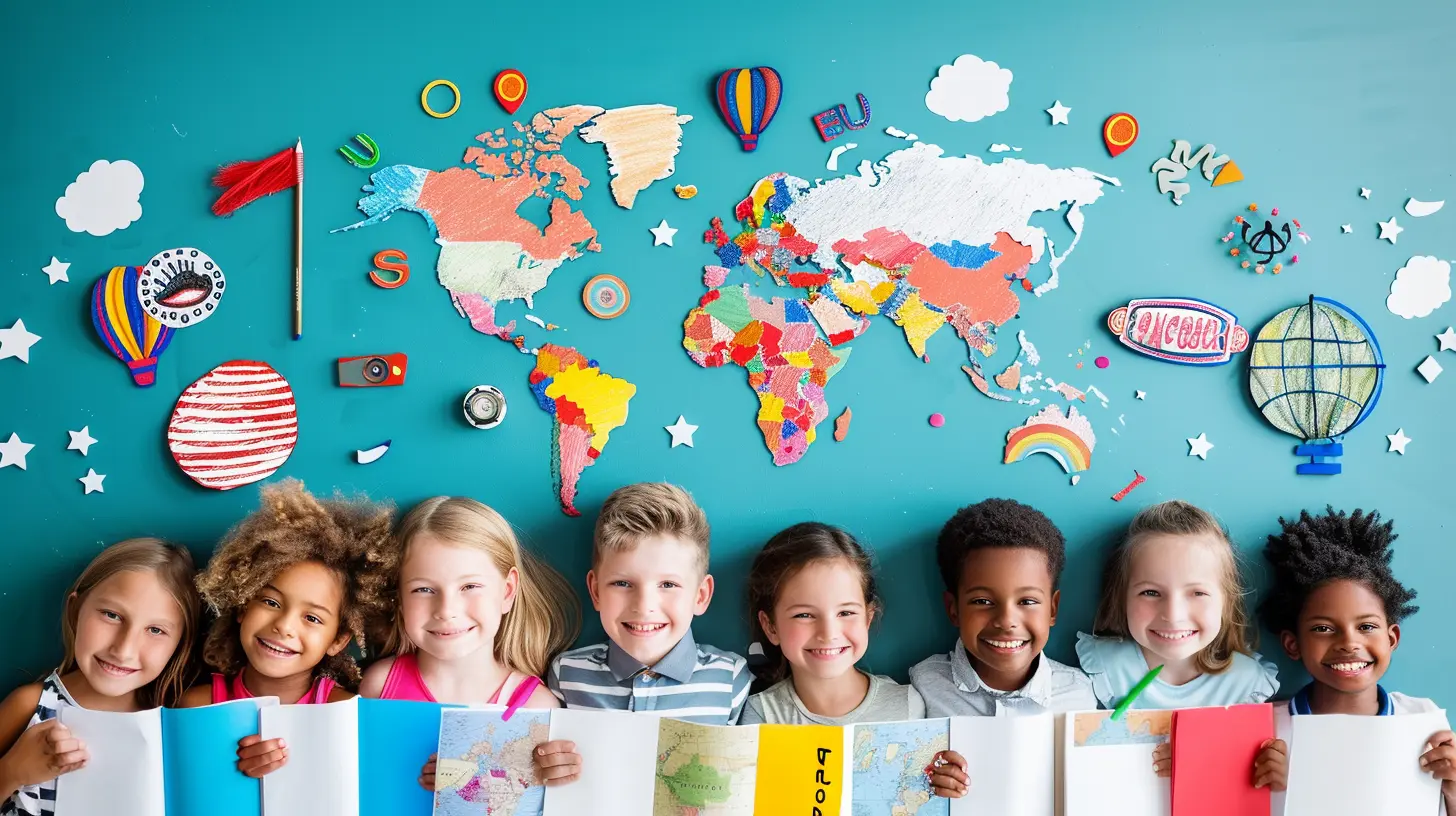
Table of Contents
1. “Kids Will Get Confused If They Learn Two Languages”2. “Bilingual Education Slows Down Academic Progress”
3. “Only Immigrant Kids Need Bilingual Education”
4. “You Have to Be Fluent in Both Languages at Home”
5. “Bilingualism Delays Language Development”
6. “Bilingual Education Is Just About Learning Another Language”
7. “Bilingual Programs Are All the Same”
8. “Students Will Lose Their First Language”
9. “There’s No Real Benefit to Being Bilingual”
10. Wrapping It All Up
“Kids Will Get Confused If They Learn Two Languages”
Let’s just go ahead and pop this myth like a balloon at a birthday party.This one’s probably the heavyweight champ of bilingual education myths. The idea is that teaching children two languages at the same time will somehow tangle their little brains into a spaghetti bowl of confusion. Reality check? Kids are incredibly adaptable. Their brains are like sponges—super absorbent and ready to soak up all kinds of information without keeling over from confusion.
Yeah, sometimes they might mix languages in one sentence (it's called code-switching), but that’s actually a sign of high linguistic competence, not confusion. Think of it like switching gears while driving—it’s a skill, not a malfunction.
“Bilingual Education Slows Down Academic Progress”
Whoa, hold your horses! This is another classic.People often assume that if kids are learning in two languages, they’re getting half as much instruction in each subject. As if their mental CPU can’t process math in Spanish and science in English. But research tells a different story.
In fact, kids in well-designed bilingual programs tend to match—or even outperform—their monolingual peers over time. Why? Because learning multiple languages strengthens cognitive flexibility, memory, attention control, and problem-solving. It's like mental cross-training for the brain.
So no, your child won’t fall behind because they’re tackling multiplication tables in French.
“Only Immigrant Kids Need Bilingual Education”
This idea? It’s as outdated as dial-up internet.Sure, bilingual education can absolutely help immigrant students maintain their native language while learning a new one—but that’s just one facet. Bilingual programs benefit ALL students, regardless of background. In fact, many monolingual English-speaking families are actively seeking out dual-language programs to give their kids a global edge.
Why? Because speaking more than one language opens up a whole new world—literally. Think travel, job opportunities, and understanding diverse perspectives. In the 21st century, being bilingual isn’t just helpful… it’s kinda essential.
“You Have to Be Fluent in Both Languages at Home”
This one can guilt-trip parents like a pro.Many folks believe if you’re not already speaking both languages fluently at home, you’ve missed the bilingual boat. Not true. What matters most is creating a language-rich environment, whether that’s through books, music, conversations, or simply supporting your child’s education.
Schools, teachers, communities, and tech tools (hello, Duolingo owl) all play a part. You don’t need to be a walking dictionary in both tongues—you just need to stay engaged, patient, and supportive.
“Bilingualism Delays Language Development”
The irony? This myth is the opposite of reality.Some parents worry that learning two languages will cause speech delays or language disorders. But study after study shows bilingual kids hit major language milestones just fine—sometimes they take a teensy bit longer at first, but they’re gathering double the vocabulary, so the slight delay is no cause for alarm.
It’s kind of like loading two apps at once instead of just one; it might take a second longer, but the result is a more versatile tool.
“Bilingual Education Is Just About Learning Another Language”
Nope. Nada. Nicht richtig.Bilingual education isn’t just a language class. It’s not like learning to say "Where is the library?" in Spanish and then calling it a day. True bilingual programs integrate both languages into core academic subjects—math, science, reading, social studies—you name it.
It’s not about memorizing vocabulary lists. It’s about thinking, problem-solving, and expressing complex ideas in both tongues. And that, my friend, is where the magic happens.
“Bilingual Programs Are All the Same”
That’s like saying all pizzas are the same. We all know there’s a world of difference between a New York slice and a Chicago deep dish.Bilingual education comes in many flavors: transitional bilingual programs, dual-language immersion, heritage language programs, and more. Each has different goals, structures, and teaching methods.
Some aim to transition students into full English instruction, while others promote long-term bilingualism and biliteracy. So when someone says, “bilingual education,” it’s smart to ask—what kind?
“Students Will Lose Their First Language”
It’s totally possible. And that’s exactly why bilingual education matters so much.When students from non-English-speaking backgrounds are placed in English-only environments, they can start to lose proficiency in their home language. This is called language attrition, and it’s real. That’s like inheriting a treasure map and then forgetting how to read it.
But here’s the cool part—bilingual programs are designed to keep that native language alive and thriving. And preserving cultural identity while mastering a second (or third!) language? That’s a winning combo.
“There’s No Real Benefit to Being Bilingual”
Honestly, this one makes linguists cry into their multilingual dictionaries.The benefits of bilingualism are massive and well documented. From improved cognitive function and greater empathy, to better job prospects and a deeper understanding of the world—being bilingual is like unlocking cheat codes for life.
Need more convincing? Bilingual individuals often earn more, delay symptoms of dementia longer, and can communicate with a wider range of people. It’s not just a language skill—it’s a life skill.
Wrapping It All Up
So there you have it—ten of the most common myths about bilingual education officially busted.The truth is, bilingual education is not about confusion—it’s about connection. Not about holding kids back—it’s about propelling them forward into a bigger, brighter, and more interesting world.
Is it always easy? Heck no. Learning multiple languages takes effort, dedication, and support from everyone involved. But is it worth it? Absolutely.
So the next time someone tells you bilingual education causes confusion, delays learning, or “just isn’t necessary”—you’ve got the facts (and a whole lotta sass) to set the record straight.
Because speaking two languages isn’t confusing—it’s empowering.
all images in this post were generated using AI tools
Category:
Bilingual EducationAuthor:

Monica O`Neal
Discussion
rate this article
2 comments
Marigold Frye
Two languages, one brain freeze!
March 28, 2026 at 11:48 AM
Monica O`Neal
Bilingualism can feel overwhelming at times, but it's all part of the learning journey. Embrace the challenge!
Levi Yates
This article sheds light on intriguing misconceptions about bilingual education. I'm excited to learn how these insights can reshape our understanding and appreciation of multilingualism!
March 5, 2026 at 4:54 AM
Monica O`Neal
Thank you for your enthusiasm! I'm glad the article resonates with you and hope it sparks further appreciation for the benefits of bilingual education.