Bilingualism and Its Influence on Executive Function in Children
22 September 2026
Let’s face it—kids have amazing brains. They’re like little sponges, soaking up every bit of information around them. And when it comes to learning multiple languages at once? That’s like giving their brains a full-on workout. The topic of bilingualism in children has been buzzing in educational and psychological circles for years, and for good reason.
But here’s the big question: Does being bilingual actually help kids become better thinkers, planners, and problem-solvers? In other words, how does bilingualism influence what we call “executive function” in children?
Well, if you’ve ever caught a child effortlessly flipping between two different languages (and doing it better than most adults), you’re probably already guessing the answer. But let’s dive into the details and see what the science – and common sense – tells us.
What is Executive Function, Anyway?
Okay, before we get too deep into the bilingual brain, let’s take a second to talk about what executive function actually means.Think of executive function as the "CEO" of your brain. It’s responsible for helping you manage your thoughts, actions, and emotions to get things done. Executive functions are like the control panel or dashboard that helps kids:
- Focus their attention
- Remember instructions
- Switch gears between tasks (aka cognitive flexibility)
- Inhibit impulse responses
So, it’s a pretty big deal—especially in early childhood when these skills are just starting to develop.
The Bilingual Advantage: What’s the Hype All About?
Now, here’s where it gets interesting. Researchers have noticed something super cool over the years: kids who grow up bilingual often show stronger executive functioning skills than their monolingual peers. Why?Well, when you’re bilingual, your brain is constantly doing something wild—it’s managing two languages at once. It’s like conducting a symphony where two instruments are always ready to play, but only one can take the spotlight at a time. This brain juggling act seems to give kids a bit of a mental edge.
Let’s break down how that works.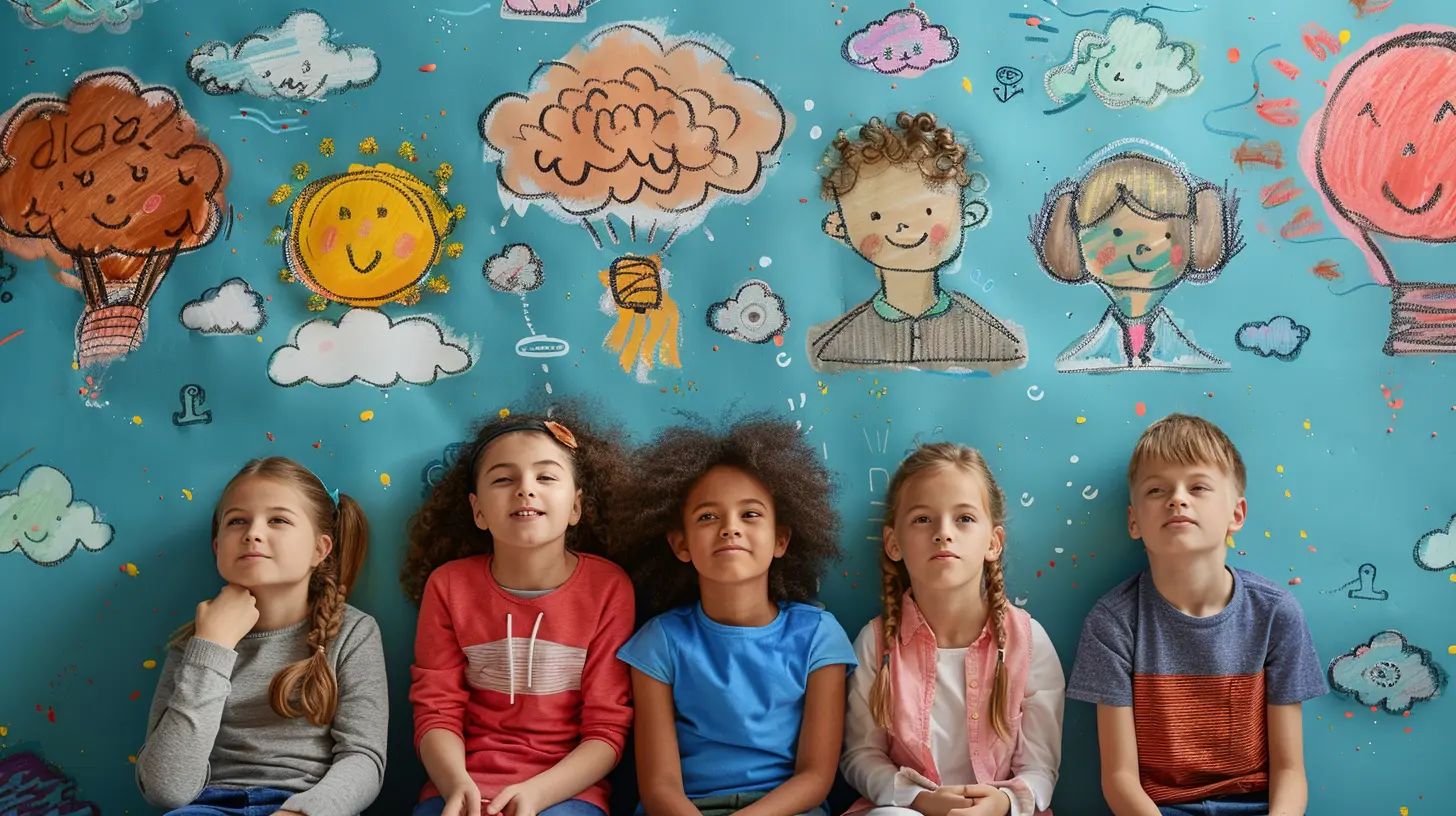
Cognitive Flexibility: Switching Gears Like a Pro
One of the star players in executive function is cognitive flexibility—the ability to switch between tasks, rules, or perspectives without getting mentally “stuck.”Bilingual kids do this naturally. Imagine being able to talk to Grandma in Spanish, then turning to speak with a friend in English without missing a beat. That constant practice has shown to sharpen their mental gear-shifting skills.
Research has shown that bilingual children often do better on tasks that require them to adapt quickly to changing rules or patterns. Why? Because they’ve been practicing that kind of mental flexibility for years—without even realizing it.
Inhibitory Control: Holding Back the Wrong Word
Next up, let’s talk about self-control, or what scientists call “inhibitory control.” This is your brain’s ability to say, “Wait, don’t do that,” or “Oops, wrong language! Use the other one instead.”For bilingual kids, this happens daily. Their brains need to constantly select the correct language while suppressing the one they’re not using at the moment. Over time, this gives a solid boost to their self-control skills—not just for languages, but in general.
It’s kind of like going to the gym and always working on your “brain muscles.” The more you practice, the stronger they get.
Working Memory: Juggling More Than Just Words
Working memory is another important part of executive function. It’s what helps kids keep track of information temporarily, like remembering what someone just said while figuring out how to respond.Since bilingual children are managing multiple vocabulary systems and grammar rules, they tend to show more robust working memory. They’re constantly storing, updating, and accessing information from both languages—a workout most monolingual kids don’t get as often.
And just like actual workouts, the more you do it, the better you become at it—even with other types of cognitive tasks.
Language Switching: A Mental Tug-of-War
Let’s paint a picture.Imagine your brain is a tightrope walker, and it needs to balance between two different languages at all times. It has to focus, stay steady, and know precisely when to switch from one language to the other. This mental balancing act isn’t just impressive—it actually rewires the brain in beneficial ways.
Studies using brain imaging have shown that bilingual people often have more activity in the prefrontal cortex, the area known for handling executive functions. Talk about brain power!
Does Age Matter? You Bet It Does
Here’s something else to consider: the age at which a child becomes bilingual seems to matter quite a bit.When kids are exposed to multiple languages early in life (say, from infancy or toddlerhood), their executive functions often show more significant boosts. It’s like planting two languages into a young brain while it’s still wide open and super adaptable.
That said, even kids who become bilingual a little later (think mid-childhood or early teens) can still gain some of these brain-based benefits. It might just take a bit more time and practice.
The Role of Culture and Environment
Let’s be real for a second. Language doesn’t exist in a vacuum. It’s tied up with culture, environment, and daily interactions. A child growing up bilingual in a household where both languages are actively spoken, read, and celebrated will likely experience different outcomes than a child who only hears their second language in school.So, the quality and consistency of bilingual exposure really matter. It’s not just about knowing two languages—it’s about living them.
Bilingualism Isn’t a Magic Wand
Alright, time for a quick reality check.While bilingualism can bring many cognitive perks, it’s not a one-size-fits-all solution or some magical brain enhancer. Not every bilingual child will automatically outperform their monolingual peers in every area. It’s one piece of a complex puzzle that includes personality, environment, health, and educational access.
But when nurtured properly, bilingualism absolutely has the potential to boost key areas of mental function that can serve kids well for the rest of their lives.
Bilingual Homes and Classrooms: What Can Parents and Teachers Do?
If you're raising or teaching bilingual children, your role is huge. Here are some real-world tips to support bilingual development and executive function:- Make both languages meaningful: Use them in real-life settings—not just during “language time.”
- Be consistent: Try to keep a routine with both languages. Maybe one language at home and another at school, or both used interchangeably.
- Use storytelling, games, and songs: These are fantastic for building language skills and cognitive flexibility.
- Encourage conversation: Give kids the chance to express themselves in both languages, even if they mix them sometimes.
- Support them emotionally: Sometimes bilingual kids may feel confused or bored, especially if others around them don’t speak one of the languages. Patience and encouragement go a long way.
So… Do Bilingual Kids Have Super Brains?
Maybe not "super" in the superhero sense (cape optional), but definitely more trained in certain cognitive areas. Executive function is one of the most important skillsets kids need—not just for academics, but for life. And bilingualism? It’s like enrolling their brain in a VIP training program.From better task-switching to stronger self-control and memory, the benefits are pretty compelling.
And the best part? This isn’t just something for a select few. With the right support, access, and encouragement, many more children can enjoy the cognitive benefits of bilingualism.
Closing Thoughts: A Smarter, More Flexible Future
In a world that’s becoming more interconnected by the day, being bilingual isn’t just cool—it’s practical. But beyond the ability to talk with more people or watch foreign cartoons without subtitles, bilingualism gives kids a mental edge that lasts a lifetime.It trains their brain to think in more flexible, focused, and adaptable ways. And the earlier it starts, the more pronounced those benefits seem to be.
So whether you’re a parent, teacher, or simply someone curious about how kids learn and grow—remember, supporting bilingualism isn’t just about words. It’s about helping shape better thinkers and doers for tomorrow.
all images in this post were generated using AI tools
Category:
Bilingual EducationAuthor:

Monica O`Neal